
Tag Archives: ensino de língua Inglesa
Sobre a novela “Orgulho e Paixão”
Essa novela da Rede Globo é uma adaptação do romance famoso “Orgulho e Preconceito ” de Jane Austen, famosa escritora britânica.
Segue abaixo a lista de assuntos que uma mulher desse século deveria estudar para se tornar uma Dana.
(Abaixo segue em inglês)
Características da educação feminina
A educação feminina teria incluído o seguinte:
Leitura (embora os romances fossem uma fonte potencial de perigo – veja a Abadia Northanger de Jane Austen pelos efeitos nocivos de ler muita literatura gótica)
Dançando
Idiomas – principalmente francês , mas também italiano.
Caligrafia
Alguma história e geografia
Aritmética básica
Música – piano, harpa e canto eram favoritos
Desenho e pintura
Bordado
Muitas dessas “realizações” permitiram que jovens mulheres demonstrassem qualidades femininas desejáveis: graça, comportamento, elegância, bom gosto, sensibilidade. Valores como piedade religiosa e castidade, modéstia em vez de vaidade, moderação em vez de excesso, submissão obediente e inocência também foram incutidos em mulheres jovens.
Features of female education
Female education would have included the following:
• Reading (although novels were a potential source of danger—see Jane Austen’s Northanger Abbey for the ill effects of reading too much Gothic literature)
• Dancing
• Languages—primarily French, but also Italian
• Handwriting
• Some history and geography
• Basic arithmetic
• Music—piano, harp, and singing were favourites
• Drawing and painting
• Needlework
Many of these ‘accomplishments’ allowed young women to demonstrate desirable feminine qualities: grace, deportment, elegance, fine taste, sensibility. Values such as religious piety and chastity, modesty rather than vanity, moderation rather than excess, obedient submission, and innocence were also instilled in young women.
Um pouquinho de poesia.
If you want happiness for an hour, take a nap.
If you want happiness for a day, go fishing.
If you want happiness for a year, inherit a fortune.
If you want happiness for a lifetime, help somebody.
A Chinese proverb
(Actually, I’m not sure that this really is a Chinese proverb – but I like it anyway!)
“Most people are about as happy as they make up their minds to be.”
Abraham Lincoln
Em Português
Se você quer felicidade por uma hora, tire uma soneca.
Se você quer felicidade por um dia, vá pescar.
Se você quer felicidade por um ano, herde uma fortuna.
Se você quer felicidade por toda a vida, ajude alguém.
Um provérbio chinês
(Na verdade, eu não tenho certeza se isso realmente é um provérbio chinês – mas eu gosto mesmo assim!)
“A maioria das pessoas é tão feliz quanto se decide.”
Abraham Lincoln
Source: Activity Village.co.uk
Tudo o que vc precisa saber sobre gramática
Pronoun
A word which is used instead of a noun perhaps because you have already talked about the person or thing, eg I, they, which.
Verb
A word which describes an action or a state of being, eg eat, like, know.
Adverb
A word which describes or gives more information about a verb or an adjective, eg he walked quickly, she danced well.
Adjective
A word which describes something or someone, eg beautiful, happy, long.
Preposition
A word which is used with a noun or pronoun to show time, place or direction, eg at, on, in.
Conjunction
A word which connects words and phrases in a sentence, eg but, and, although.
Determiner
A word which is used before a noun to show which particular example of the noun you are referring to, eg this pencil, your shoes.
Interjection
An interjection is a word that is used to
express emotion, eg Oh no! Gosh! Ow!
Part of speech
Learners need to know what type of word (noun, verb, adjective) they are learning so that they know how to put it into a sentence.
Meaning
What idea the word shows and what contexts the word applies to.
Pronunciation
Learners need to know how to say the word, how many syllables there are and which is stressed, eg ed-u-CA-tion.
Spelling
Learners need to know how to write the word.
Connotation
Learners need to know if the word has a positive or a negative sense to it. For example, the words ‘slim’ and ‘skinny’ both mean thin but one has a positive connotation (slim) and the other (skinny) doesn’t.
Collocation
Learners need to know which words go with the word they are learning. For example, we make beds but do housework.
Word families
Learners need to know other words that are formed from the same word, for example, kind, unkind, kindness, kindly.
Register
Learners need to know if the word should be used in formal or informal situations. For example, assist and help have the same meaning but assist is more formal than help.
Syllable
A part of a word that usually contains a vowel sound, eg pen = one syllable; teacher = two syllables – teach/er; umbrella = three syllables – um/brell/a.
Connected speech
Spoken language in which the words join to form a connected stream of sounds. In connected speech some sounds in words may be left out or some sounds may be pronounced in a weak way or some words might join together, eg Is he busy? /ɪzibɪzi/.
Phoneme
The smallest sound unit which can make a difference to meaning eg /p/ in pan, /b/ in ban. Phonemes have their own symbols (phonemic symbols), each of which represents one sound.
Phonemic symbols
The characters we use which represent the different sounds or phonemes, eg /ɜː/, /tʃ/, /θ/. Words can be written in phonemic script (usually the International Phonetic Alphabet or IPA), eg /dɒktə/ = doctor.
Consonant
1 A sound in which the air is partly blocked by the lips, tongue, teeth etc., eg /θ/ in ‘thing’, /b/ in ‘boy’.
2 Any letter of the English alphabet which represents consonant sounds, eg d = /d/, c = /k/.
Diphthong
Diphthongs are vowel sounds. They are a combination of two single vowel sounds said one after the other to produce a new sound; eg /aɪ/ as in ‘my’ is pronounced by saying /æ/ and /ɪ/ together. There are eight diphthongs in English: /iə/(eg ear), /eɪ/(eg play), /ʊə/(eg tourist), /ɔɪ/(eg boy), /əʊ/ (eg go), /eə/(eg air), /aɪ/(eg life), /aʊ/ (eg now).
Vowels
1 A sound in which the air is not blocked by the tongue, lips, teeth etc., eg /i:/ (eat), /ə/ (about), /e/ (egg), /ʌ/ (fun). Movement or vibration is felt in the throat because the voice is used.
2 In the alphabet, the letters a, e, i, o, u are vowels.
Intonation
The way the level of a speaker’s voice changes to show meaning such as how they feel about something; eg the level of your voice when you are angry is different from the level of your voice when you are pleased. Intonation can be rising or falling or both.
Stress
Pronouncing part of a word (syllable) or part of a sentence louder and longer than other parts, eg VEGetable, I LOVE baNAnas. Some parts of words and sentences are stressed (those in capital letters in these examples) and some are unstressed.
Sentence stress
Sentence stress is about the way some words in a sentence are stressed and some are unstressed. The stressed words are usually the information-carrying words or content words such as nouns, verbs, adjectives and adverbs. For example, It was a LOVely EVEning, and the TEMperature was PERfect (the parts of the words in capitals are stressed).
Word stress
Word stress is about which syllable of a word is pronounced louder and longer – eg umBRELLa /ʌmˈbrelə/.
Phonemic chart
A poster or diagram of the phonemic symbols arranged in a particular order. Below is an example of the International Phonetic Alphabet or IPA. 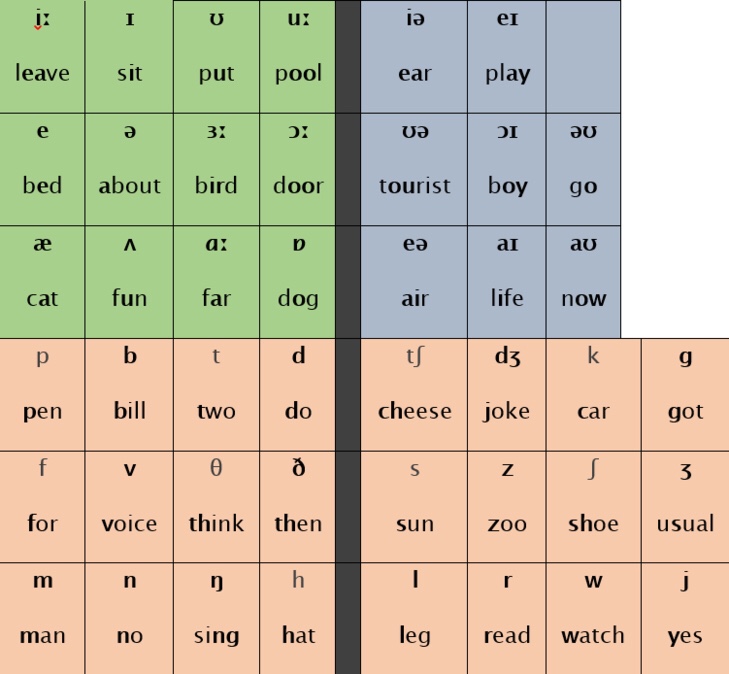
Source : © UCLES 2018
Terminologia sobre Plano de Aula e Gerenciamento da aprendizagem
Segue um glossário com uma lista de termos usados na confecção de um plano de aula eficaz, necessário para uma boa aula com a interação e motivação do aluno.
Lesson aim
What the teacher wants to achieve in the lesson or in the course. The main aim is the most important aim.
Stage aim
The aim or purpose of a stage, step or short section of a lesson.
Subsidiary aim
The secondary focus of the lesson, less important than the main aim. It could be the language or skills learners use in order to achieve the main aim of the lesson, or a skill or language area which is practised while the teacher is working on achieving the main lesson aim.
Personal aim
What the teacher would like to improve in his/her teaching.
Anticipated problems and solutions
When teachers are planning a lesson, they think about what their learners might find difficult about the lesson and about how they can help them learn more effectively at certain points in the lesson.
Assumptions
When teachers think about what they believe their learners will or will not know or how they will behave in a particular lesson.
Class profile
A description of the learners and information about their learning, including their age, ability, strengths and weaknesses in language and skills.
Interaction patterns
The different ways learners and the teacher work together in class, e.g. learner to learner in pairs or groups, or teacher to learner in open class, in plenary. When teachers plan lessons, they think about interaction patterns and write them on their plan.
Language analysis
A breakdown of vocabulary and grammar covered in the lesson which provides information about the structure of the language, what it means and how it is used.
Procedures
A set of actions that describes the way to do something. Teachers write lesson plans and provide details of exactly what is going to happen in each stage of a lesson. The details of the different actions are the procedures of the lesson.
Resources
The materials or tools which teachers use in class to help learners learn.
Stage
A section of a lesson. Lessons have different stages or steps such as lead-in, presentation, practice.
Timetable fit
Teachers plan timetables which provide details of the lessons they will teach in the near future. Timetable fit is about how a lesson fits logically into the sequence of lessons in a timetable.
Timing
The likely time different activities or stages in a lesson plan should take. When teachers plan lessons, they think about how long each activity will take and they usually write this on their plan.
Differentiation
This is when teachers identify and address the different needs, interests or abilities of their learners by providing a range of activity types and using a range of approaches.
TTT
This is the commonly accepted abbreviation for teacher talk time and refers to the amount of time in a lesson that the teacher talks to the learners. It is important that TTT is helpful to the learners.
STT
This is the commonly accepted abbreviation for student talk time and refers to the amount of time in a lesson that the students talk. There needs to be a balance of TTT and STT in a language lesson.
Grading language
This is when teachers use language they know the students have already studied to ease the cognitive load. This can be done by avoiding informal, colloquial language or complex grammar structures.
Eliciting
When the teacher asks learners questions, or prompts them, to come up with ideas or language. It can be used to activate their existing knowledge of a language point in order to base new knowledge on what they already know.
Monitoring
When the teacher observes learners during an activity to check their understanding of the activity and assess their progress.
Feedback
This happens at the end of the activity cycle when the teacher gives the learners feedback on their performance by going through the answers with the class and/or finding out what they have talked about. This stage can be used for further clarification if the learners still need help with the language point.
Source: British Council
© UCLES 2018
Terminologia e Dicas sobre Reading
Segue um excelente material explicando sobre a importância das etapas do aprendizado de leitura,como coerência, coesão, fluência, etc. Feito pela British Council
Reading for gist/Skimming
Reading quickly to get a general understanding of a written text, eg reading a description of a city to find out if it sounds like somewhere you’d like to visit.
Reading for specific information/Scanning
Searching for a particular piece of information in a written text, eg reading a description of a city only to find out which country it’s in.
Reading/listening for detail
Reading or listening more carefully so that you get a full understanding of the text, eg reading a description of a city to find out everything about it.
Listening for gist
Getting a general understanding of something you hear, eg listening to the weather forecast and deciding you might need to take an umbrella when you go out.
Listening for specific information
Listening for a particular piece of information, eg listening to the weather forecast to find out what the temperature will be tomorrow.
Inferring meaning
Making guesses about what is not stated explicitly in a text, eg listening or reading a conversation and deciding that the people are brother and sister without them saying so.
Coherence
Organising ideas in a logical way when speaking or writing so that the listener or reader can follow our ideas.
Cohesion
Joining sentences together using words like and, but and because so our language flows more easily.
Interactive strategies
Strategies we use when we are speaking, eg showing you are listening to other people by saying things like, mmmm or uh-uh or oh!
Turn taking
An interactive strategy which is about knowing when you can join in a conversation and signalling when you think someone else should speak.
Fluency
For speaking; this is speaking without a lot of hesitation and too many long pauses. For writing; this means you can write without stopping for a long time to think about what to write.
Sobre Amor 💝 ❤️
It’s All About Love …
“They invented hugs to let people know you love them without saying anything.”
Bil Keane
“All you need is love. But a little chocolate now and then doesn’t hurt.”
Charles M Schulz
“The Eskimos had fifty-two names for snow because it was important to them: there ought to be as many for love.”
Margaret Atwood
“Only from the heart can you touch the sky.”
Rumi
“The law of love could be best understood and learned through little children.”
Mahatma Gandhi
“It didn’t matter how big our house was; it mattered that there was love in it.”
Peter Buffett
Q: What do you call a very small valentine?
A: A valentiny!
Source: https://www.activityvillage.co.uk/?utm_source=newsletter&utm_medium=email&utm_campaign=general
Em português
É tudo sobre amor …
“Eles inventaram abraços para que as pessoas saibam que você os ama sem dizer nada”.
Bil Keane
“Tudo o que você precisa é amor. Mas um pouco de chocolate de vez em quando não dói”.
Charles M Schulz
“Os esquimós tinham cinquenta e dois nomes para a neve porque era importante para eles: deveria haver tantos para o amor”.
Margaret Atwood
“Somente do coração você pode tocar o céu”.
Rumi
“A lei do amor pode ser melhor compreendida e aprendida através de crianças pequenas”.
Mahatma Gandhi
“Não importava o tamanho da nossa casa, importava que houvesse amor nela”.
Peter Buffett
P: O que você chama de namorada muito pequena?
R: Uma namoradinha!
Fonte: https://www.activityvillage.co.uk/?utm_source=newsletter&utm_medium=email&utm_campaign=general
Ano Chinês do Cachorro
Um conto para celebrar o Ano Novo Chinês
The Emperor of Ch’in Shih Huang-ti
Built a wall
From the hills to the sea.
He built it wide,
He built it stout,
To keep his subjects in
And the Tartars out.
The Emperor of Ch’in.
Meng Jiangnu, one sad day
From her own dear home
A thousand leagues away
To the wall did come.
Weary and worn
She wept and she cried:
“Where is my dear love Buried inside?”
She wept and she cried
And her tears did fall,
Till down, down tumbled
That great big wall.
Em Português
O Imperador de Ch’in Shih Huang-ti
Construí uma parede
Das colinas ao mar.
Ele o construiu de largura,
Ele o construiu forte,
Para manter seus assuntos em
E os tártaros estão fora.
O Imperador de Ch’in.
Meng Jiangnu, um dia triste
De sua própria casa querida
A mil leguas de distância
Chegou à parede.
Cansada e desgastada
Ela chorou e ela chorou:
“Onde está meu querido amor enterrado dentro?”
Ela chorou e ela chorou
E suas lágrimas caíram,
Até embaixo, caiu
Esse grande muro grande.
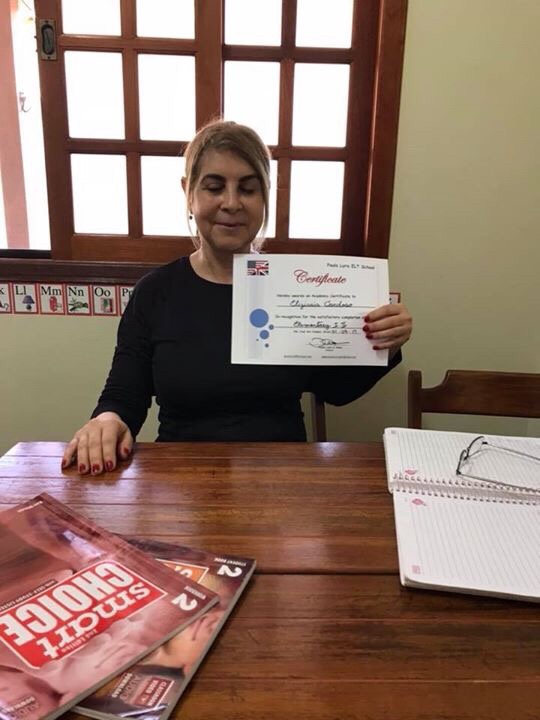
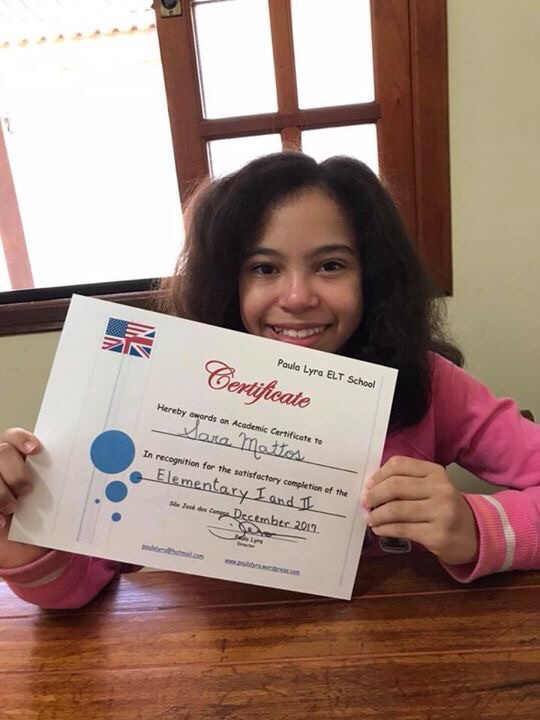
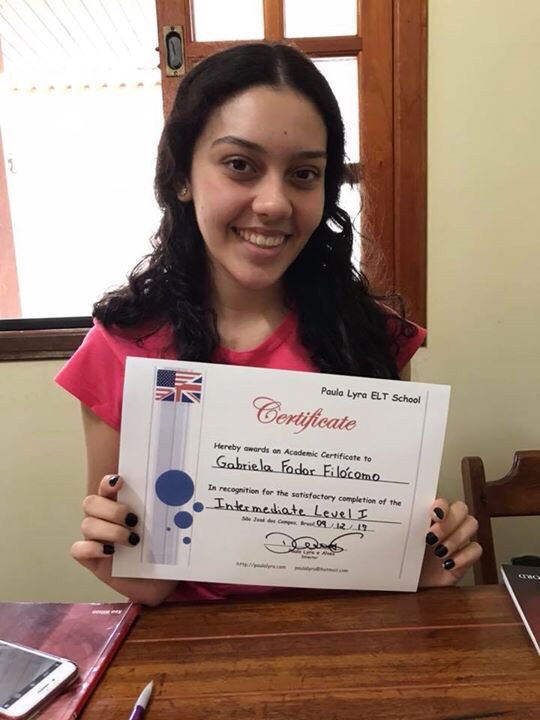
Alunos que se formaram em 2017
Alguns de meus queridos alunos que com esforço e dedicação terminaram mais um ano letivo. Parabéns a todos!


Tradições de Ano Novo pelo mundo
Algumas dessas tradições, nós tbm fazemos no Brasil, outras já estudamos durante as aulas. Vale conferir e praticar sua leitura.
Many New Year traditions that we take for granted actually date back to ancient times. This year, ring out the old and ring in the new with a new New Year tradition—or two!
MAKE SOME NOISE
Making a lot of noise—from fireworks to gun shots to church bells—seems to be a favorite pastime around the world.
• In ancient Thailand, guns were fired to frighten off demons.
• In China, firecrackers routed the forces of darkness.
• In the early American colonies, the sound of pistol shots rang through the air.
• Today, Italians let their church bells peal, the Swiss beat drums, and the North Americans sound sirens and party horns to bid the old year farewell.
EAT LUCKY FOOD
Many New Year traditions surround food. Here are a few:
• The tradition of eating 12 grapes at midnight comes from Spain. Revelers stuff their mouths with 12 grapes in the final moments of the year—one grape for every chime of the clock!
• In the southern US, black-eyed peas and pork foretell good fortune. See our recipe for Good Luck Hoppin’ John!
• In Scotland—where Hogmanay is celebrated—people parade down the streets swinging balls of fire.
• Eating any ring-shaped treat (such as a doughnut) symbolizes “coming full circle” and leads to good fortune. In Dutch homes, fritters called olie bollen are served.
• The Irish enjoy pastries called bannocks.
• In India and Pakistan, rice promises prosperity.
• Apples dipped in honey are a Rosh Hashanah (Jewish New Year) tradition.
• In Swiss homes, dollops of whipped cream, symbolizing the richness of the year to come, are dropped on the floors—and allowed to remain there!
HAVE A DRINK
Although the pop of a champagne cork signals the arrival of the New Year around the world, some countries have their own beverage-based traditions.
• Wassail, a punch-like drink named after the Gaelic term for “good health,” is served in some parts of England.
• Spiced “hot pint” is the Scottish version of Wassail. Traditionally, the Scots drank to each others’ prosperity and also offered this warm drink to neighbors along with a small gift.
• In Holland, toasts are made with hot, spiced wine.
GIVE A GIFT
New Year’s Day was once the time to swap presents.
• Gifts of gilded nuts or coins marked the start of the new year in Rome.
• Eggs, the symbol of fertility, were exchanged by the Persians.
• Early Egyptians traded earthenware flasks.
• In Scotland, coal, shortbread and silverware were traditionally exchanged for good luck.
PUT YOUR BEST FOOT FORWARD
In Scotland, the custom of first-footing is an important part of the celebration of Hogmanay, or New Year’s Eve Day.
After midnight, family and friends visit each other’s home. The “first foot” to cross a threshold after midnight will predict the next year’s fortune. Although the tradition varies, those deemed especially fortunate as “first footers” are new brides, new mothers, those who are tall and dark (and
handsome?) or anyone born on January 1.
TURN OVER A NEW LEAF
The dawn of a new year is an opportune time to take stock of your life.
• Jews who observe Rosh Hashanah make time for personal introspection and prayer, as well as visiting graves.
• Christian churches hold “watch-night” services, a custom that began in 1770 at Old St. Georges Methodist Church in Philadelphia.
• The practice of making New Year’s resolutions, said to have begun with the Babylonians as early as 2600 B.C., is another way to reflect on the past and plan ahead.
NEW YEAR’S FOLKLORE
Some customs and beliefs are simply passed down through the ages. Here are some of our favorite age-old sayings and proverbs.
• On New Year’s Eve, kiss the person you hope to keep kissing.
• If New Year’s Eve night wind blow south, It betokeneth warmth and growth.
• For abundance in the new year, fill your pockets and cupboards today.
• If the old year goes out like a lion, the new year will come in like a lamb.
• Begin the new year square with every man. [i.e., pay your debts!] –Robert B. Thomas, founder of The Old Farmer’s Almanac
So, whether we resolve to return borrowed farm equipment (as did the Babylonians) or drop a few pounds, we’re tapping into an ancient and powerful longing for a fresh start!
HAPPY NEW YEAR!!!!
 Paula Lyra ELT School