O Poder dos Testes

Vivemos em um mundo onde as pessoas têm opiniões diferentes sobre a sociedade. Isto é especialmente verdadeiro quando se trata de entender onde está o poder e quem o exerce.

Leia os dois extratos seguintes dos livros que abordam a questão do uso social e político dos testes de linguagem.

Extrato 1. De Elana Shohamy (2000). O poder dos testes. Longman: Harlow, pp. 15-17.

“Os usos dos resultados dos testes têm efeitos prejudiciais para os participantes, já que tais usos podem criar vencedores e perdedores, sucessos e fracassos, rejeições e aceitações. As pontuações dos testes são muitas vezes os únicos indicadores para colocar pessoas em níveis de classe, para conceder certificados e prêmios, para determinar se uma pessoa será autorizada a continuar em estudos futuros, para decidir sobre uma profissão, para participar de aulas de educação especial, para participar de honra. aulas, para ser aceito no ensino superior e para obter empregos … Os testes são usados como um método de impor certos comportamentos sobre aqueles que estão sujeitos a eles. Os testes são capazes de ditar aos participantes o que eles precisam saber, o que aprenderão e o que aprenderão. Os candidatos estão dispostos a fazê-lo, a fim de maximizar suas pontuações, tendo em conta os efeitos prejudiciais que os resultados podem ter sobre suas vidas ”

Extrato 2: Glenn Fulcher (2015). Reexaminar os testes de linguagem: uma pesquisa filosófica e social. Londres e Nova York: Routledge, p. 155.

“Embora testes e avaliações pressupor desigualdade, é uma desigualdade de resultados, não de oportunidades. Kariya e Dore (2006) fazem uma distinção entre os ‘igualitaristas comunais’ revolucionários que distribuem a renda, o prestígio e o poder igualmente entre todos os membros da sociedade, e ‘igualitaristas meritocráticos que estão interessados principalmente na igualdade de oportunidades para competir por resultados que possam ser Embora o qualificador “vastamente” possa ser questionável em uma democracia moderna, é o que hoje chamamos de igualitarismo meritocrático que motivou a compreensão vitoriana da igualdade. Significava a remoção do privilégio, a provisão de tal educação que levaria ao sufrágio universal e oportunidade para todos na sala de exame, sujeita ao impacto inevitável do background socioeconômico (como a capacidade de pagar por aulas particulares). Em suma, essas foram as características críticas de uma sociedade democrática, e o teste é uma parte essencial do mecanismo que faz com que funcione. ”(Fulcher, 2015, p. 155).

In English

The power of tests

We live in a world where people hold different views about society. This is especially true when it comes to understanding where power lies and who exercises it.

Read the following two extracts from books that address the question of the social and political use of language tests.

Extract 1. From Elana Shohamy (2000). The Power of Tests. Longman: Harlow, pp. 15 – 17.

“The uses of test results have detrimental effects for test takers since such uses can create winners and losers, successes and failures, rejections and acceptances. Test scores are often the sole indicators for placing people in class levels, for granting certificates and prizes, for determing whether a person will be allowed to continue in future studies, for deciding on a profession, for entering special education classes, for participating in honour classes, for getting accepted into higher education and for obtaining jobs….Tests are used as a method of imposing certain behaviours on those who are subject to them. Tests are capable of dictating to test takers what they need to know, what they will learn and what they will be taught. Test takers are willing to do so in order to maximize their scores, given the detrimental effects the results may have on their lives”

Extract 2: Glenn Fulcher (2015). Re-examining Language Testing: A Philosophical and Social Inquiry. London & New York: Routledge, p. 155.

“Although testing and assessment presupposes inequality, it is an inequality of outcomes, not of opportunities. Kariya and Dore (2006) make a distinction between the revolutionary ‘communal egalitarians’ who would distribute income, prestige and power equally among all members of society, and ‘meritocratic egalitarians who are interested primarily in equality of opportunity to compete for outcomes that may be vastly unequal.’ While the qualifier ‘vastly’ may be objectionable in a modern democracy, it is nevertheless what we now call meritocratic egalitarianism that motivated the Victorian understanding of equality. It meant the removal of privilege, the provision of such education as would lead to universal suffrage and opportunity for all in the examination hall, subject to the inevitable impact of socioeconomic background (such as the ability to pay for private tuition). In short, these were the critical features of a democratic society, and testing is an essential part of the mechanism that makes it work.” (Fulcher, 2015, p. 155).
Inglês será sempre a língua Global?

Global business speaks English

Segue excelente matéria. Não deixe de conferir.

With the continuing globalisation of trade and commerce, many organisations, from great multinationals to small companies do business around the world and need to communicate with clients and competitors, many of whom may have a different first language. Very often, the language adopted as a common language or lingua franca is English.

As a recent article in the Harvard Business Review puts it, ‘Global Business Speaks English’.

This is an additional video, hosted on YouTube.

The video is also available here if you are unable to access YouTube.

Reflection – the role of English in global business

Do you agree with Dr Tsedal Neeley about the role of English in global business? Are there any negative implications of adopting English as a company lingua franca?

What do you understand by the terms ‘dial up’ and ‘dial down’ in relation to language use? Do you agree that native speakers need to ‘dial down’ and non-native speakers need to ‘dial up’? If so, how would they do this?

Who has the authority nowadays to set the rules for what is correct and what is incorrect English?

The unprecedented spread of one language as an international lingua franca has socio-economic, political and ideological consequences.

Two key issues debated include:

  • whether the spread of English as an international means of communication serves to sustain the privilege and power of its native speakers (what Phillipson refers to as ‘linguistic imperialism’ (1992)) or whether reasons for learning English now are more pragmatic than ideological in nature (Bisong 1995)
  • who, if anyone, ‘owns’ English, now that is used on such an intensive scale globally – for example, does the term native speaker still have relevance when large numbers of people have a very high, nativelike level of competence; when many children in countries outside the traditional ‘native speaker heartlands’, i.e. the US, UK, Ireland, Canada and Australia etc., are learning English as a first language; and when most interactions in English take place without a so-called native speaker even being present ?

Terminologia e Dicas sobre Reading

Segue um excelente material explicando sobre a importância das etapas do aprendizado de leitura,como coerência, coesão, fluência, etc. Feito pela British Council

Reading for gist/Skimming

Reading quickly to get a general understanding of a written text, eg reading a description of a city to find out if it sounds like somewhere you’d like to visit.

Reading for specific information/Scanning

Searching for a particular piece of information in a written text, eg reading a description of a city only to find out which country it’s in.

Reading/listening for detail

Reading or listening more carefully so that you get a full understanding of the text, eg reading a description of a city to find out everything about it.

Listening for gist

Getting a general understanding of something you hear, eg listening to the weather forecast and deciding you might need to take an umbrella when you go out.

Listening for specific information

Listening for a particular piece of information, eg listening to the weather forecast to find out what the temperature will be tomorrow.

Inferring meaning

Making guesses about what is not stated explicitly in a text, eg listening or reading a conversation and deciding that the people are brother and sister without them saying so.

Coherence

Organising ideas in a logical way when speaking or writing so that the listener or reader can follow our ideas.

Cohesion

Joining sentences together using words like and, but and because so our language flows more easily.

Interactive strategies

Strategies we use when we are speaking, eg showing you are listening to other people by saying things like, mmmm or uh-uh or oh!

Turn taking

An interactive strategy which is about knowing when you can join in a conversation and signalling when you think someone else should speak.

Fluency

For speaking; this is speaking without a lot of hesitation and too many long pauses. For writing; this means you can write without stopping for a long time to think about what to write.

Sobre Amor 💝 ❤️

It’s All About Love …

“They invented hugs to let people know you love them without saying anything.”

Bil Keane

“All you need is love. But a little chocolate now and then doesn’t hurt.”

Charles M Schulz

“The Eskimos had fifty-two names for snow because it was important to them: there ought to be as many for love.”

Margaret Atwood

“Only from the heart can you touch the sky.”

Rumi

“The law of love could be best understood and learned through little children.”

Mahatma Gandhi

“It didn’t matter how big our house was; it mattered that there was love in it.”

Peter Buffett

Q: What do you call a very small valentine?

A: A valentiny!

Source: https://www.activityvillage.co.uk/?utm_source=newsletter&utm_medium=email&utm_campaign=general

Em português

É tudo sobre amor …

“Eles inventaram abraços para que as pessoas saibam que você os ama sem dizer nada”.

Bil Keane

“Tudo o que você precisa é amor. Mas um pouco de chocolate de vez em quando não dói”.

Charles M Schulz

“Os esquimós tinham cinquenta e dois nomes para a neve porque era importante para eles: deveria haver tantos para o amor”.

Margaret Atwood

“Somente do coração você pode tocar o céu”.

Rumi

“A lei do amor pode ser melhor compreendida e aprendida através de crianças pequenas”.

Mahatma Gandhi

“Não importava o tamanho da nossa casa, importava que houvesse amor nela”.

Peter Buffett

P: O que você chama de namorada muito pequena?

R: Uma namoradinha!

Fonte: https://www.activityvillage.co.uk/?utm_source=newsletter&utm_medium=email&utm_campaign=general

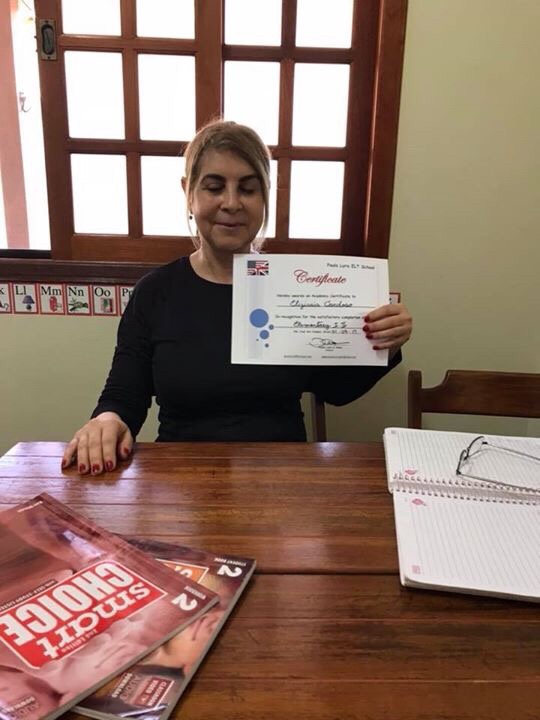
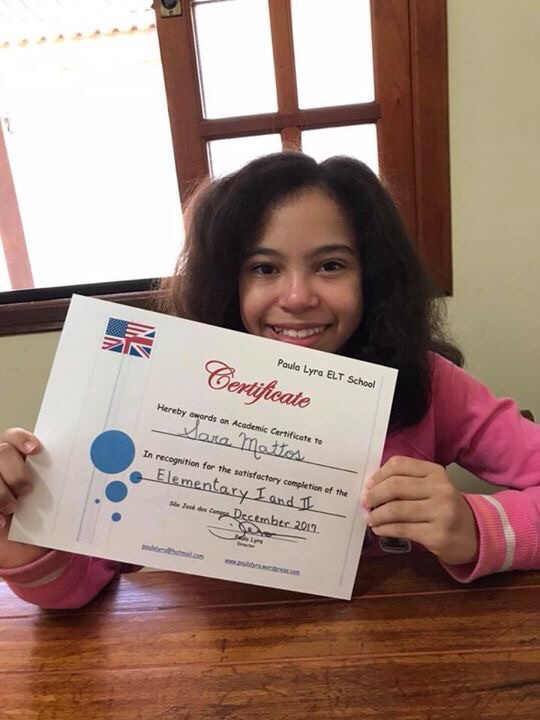
Alunos que se formaram em 2017

Alguns de meus queridos alunos que com esforço e dedicação terminaram mais um ano letivo. Parabéns a todos!

Tradições de Ano Novo pelo mundo

Algumas dessas tradições, nós tbm fazemos no Brasil, outras já estudamos durante as aulas. Vale conferir e praticar sua leitura.

Many New Year traditions that we take for granted actually date back to ancient times. This year, ring out the old and ring in the new with a new New Year tradition—or two!

MAKE SOME NOISE

Making a lot of noise—from fireworks to gun shots to church bells—seems to be a favorite pastime around the world.

• In ancient Thailand, guns were fired to frighten off demons.

• In China, firecrackers routed the forces of darkness.

• In the early American colonies, the sound of pistol shots rang through the air.

• Today, Italians let their church bells peal, the Swiss beat drums, and the North Americans sound sirens and party horns to bid the old year farewell.

EAT LUCKY FOOD

Many New Year traditions surround food. Here are a few:

• The tradition of eating 12 grapes at midnight comes from Spain. Revelers stuff their mouths with 12 grapes in the final moments of the year—one grape for every chime of the clock!

• In the southern US, black-eyed peas and pork foretell good fortune. See our recipe for Good Luck Hoppin’ John!

• In Scotland—where Hogmanay is celebrated—people parade down the streets swinging balls of fire.

• Eating any ring-shaped treat (such as a doughnut) symbolizes “coming full circle” and leads to good fortune. In Dutch homes, fritters called olie bollen are served.

• The Irish enjoy pastries called bannocks.

• In India and Pakistan, rice promises prosperity.

• Apples dipped in honey are a Rosh Hashanah (Jewish New Year) tradition.

• In Swiss homes, dollops of whipped cream, symbolizing the richness of the year to come, are dropped on the floors—and allowed to remain there!

HAVE A DRINK

Although the pop of a champagne cork signals the arrival of the New Year around the world, some countries have their own beverage-based traditions.

Wassail, a punch-like drink named after the Gaelic term for “good health,” is served in some parts of England.

• Spiced “hot pint” is the Scottish version of Wassail. Traditionally, the Scots drank to each others’ prosperity and also offered this warm drink to neighbors along with a small gift.

• In Holland, toasts are made with hot, spiced wine.

GIVE A GIFT

New Year’s Day was once the time to swap presents.

• Gifts of gilded nuts or coins marked the start of the new year in Rome.

• Eggs, the symbol of fertility, were exchanged by the Persians.

• Early Egyptians traded earthenware flasks.

• In Scotland, coal, shortbread and silverware were traditionally exchanged for good luck.

PUT YOUR BEST FOOT FORWARD

In Scotland, the custom of first-footing is an important part of the celebration of Hogmanay, or New Year’s Eve Day.

After midnight, family and friends visit each other’s home. The “first foot” to cross a threshold after midnight will predict the next year’s fortune. Although the tradition varies, those deemed especially fortunate as “first footers” are new brides, new mothers, those who are tall and dark (and

handsome?) or anyone born on January 1.

TURN OVER A NEW LEAF

The dawn of a new year is an opportune time to take stock of your life.

• Jews who observe Rosh Hashanah make time for personal introspection and prayer, as well as visiting graves.

• Christian churches hold “watch-night” services, a custom that began in 1770 at Old St. Georges Methodist Church in Philadelphia.

• The practice of making New Year’s resolutions, said to have begun with the Babylonians as early as 2600 B.C., is another way to reflect on the past and plan ahead.

NEW YEAR’S FOLKLORE

Some customs and beliefs are simply passed down through the ages. Here are some of our favorite age-old sayings and proverbs.

• On New Year’s Eve, kiss the person you hope to keep kissing.

• If New Year’s Eve night wind blow south, It betokeneth warmth and growth.

• For abundance in the new year, fill your pockets and cupboards today.

• If the old year goes out like a lion, the new year will come in like a lamb.

• Begin the new year square with every man. [i.e., pay your debts!] –Robert B. Thomas, founder of The Old Farmer’s Almanac

So, whether we resolve to return borrowed farm equipment (as did the Babylonians) or drop a few pounds, we’re tapping into an ancient and powerful longing for a fresh start!

HAPPY NEW YEAR!!!!

Thanksgiving

🌽 🎃 🦃 Thanksgiving Day é um feriado nacional comemorado no Canadá, Estados Unidos, algumas das ilhas do Caribe e Liberia.

Começou como um dia de dar graças pela benção da colheita e do ano anterior.

O Dia de Ação de Graças é comemorado na segunda segunda-feira de outubro no Canadá e na quarta quinta-feira de novembro nos Estados Unidos, e em torno da mesma parte do ano em outros lugares.

Embora o Dia de Ação de Graças tenha raízes históricas nas tradições religiosas e culturais, tem sido celebrado durante muito tempo como um feriado secular.

Abaixo, segue o cardápio tradicional do jantar.

Pérolas de Sabedoria

A Little of Something …

“Having somewhere to go is home. Having someone to love is family. Having both is a blessing.”

Unknown

“It didn’t matter how big our house was; it mattered that there was love in it.”

Peter Buffett

“You don’t choose your family. They are God’s gift to you, as you are to them.”

Desmond Tutu

“We must take care of our families wherever we find them.”

Elizabeth Gilbert

“Family means no one gets left behind or forgotten.”

David Ogden Stiers

editor@activityvillage.co.uk