How to get your English to B1 level

1. Understand the main points of clear standard input on familiar matters regularly encountered in work, school, leisure, etc.

For B1 level, you should read and listen to English as much as you can. You can take English lessons, listen to English language songs, watch films and shows in English, read documents in English for your job or search for articles and videos … all of these will help you to improve your reading and listening skills.

Choose texts about things you already know. For example, read English-language websites or tourist information about your country, or watch a show or film again that you’ve already watched but this time with English audio or subtitles. Don’t worry if you don’t yet understand all of it. Focus on understanding the main points, and note down new words to increase your vocabulary.

Also, choose texts at the right level for you. On this website, for example, do readings and listenings that are marked A2 or B1. Don’t choose texts that you find too difficult, as you might feel frustrated.

2. Be able to deal with most situations likely to arise whilst travelling in an area where the language is spoken.

If you have any opportunities to travel, take advantage! Use your English to do things like buying tickets, ordering food, shopping and taking public transport.

Even if you can’t travel, there are still things you can do to improve your skills. Travel topics are usually included in English coursebooks and learning materials, so use them to prepare for these situations. A good way to practise is to first learn useful words and phrases for a situation, and then do a role play.

3. Produce simple connected text on topics which are familiar or of personal interest.

How often do you speak and write English? Try to do both regularly.

For speaking practice, try to find some English speakers in your workplace, school, local area or online, and talk to them about your interests, family, work and so on. You can also try recording yourself speaking or posting a voice message in our Learning hub. For writing practice, you might like to write a diary or blog, or write comments on the LearnEnglish Facebook page or social media.

For B1 level, you should speak and write more at length. Use words such as thereforebecausefirst of all and on one hand … on the other hand … to connect one idea or sentence to another.

4. Describe experiences and events, dreams, hopes and ambitions and briefly give reasons and explanations for opinions and plans.

This skill is about expressing your thoughts. Practise putting your thoughts into English.

You can try talking about your past experiences. What memorable experiences have you had, either recently or a long time ago? You might need to check some vocabulary to talk about them, so use a dictionary or translator. Then think about what you can say and practise saying it until you can describe your experience smoothly and in detail. This is also good for your vocabulary: it’s usually easier to learn vocabulary when it is personally meaningful.

Try talking about the future too. What do you plan to do this week, this year or in five years’ time? Do you have any hopes or dreams? Put these into words. If you don’t know what your future plans are, it’s fine – you can still talk about different options that you are thinking about. You can also say why you plan to do things.

As suggested above, keeping a diary or blog and having regular English conversations are good ways to practise these skills.

Good luck on your way to B1!

Anxiety when speaking in English

How to reduce anxiety when speaking English

A student looking worried

If you ever feel anxious about speaking English, here are some tips to help.

Do you ever feel scared or worried about speaking English? Perhaps you get sweaty hands or your heart starts beating fast. Those are signs that you might be feeling anxious. People often feel anxious about speaking in front of classmates, speaking to native speakers, making mistakes and various other things.

Anxiety is very common, but if the worries stop you from speaking, then you might miss opportunities to practise your English. You also can’t get much feedback on your speaking from the teacher or other people. Other people miss out on the chance to hear your ideas as well.

It takes time to overcome anxiety about speaking English, but it can be done! Here are some tips.

1. Set yourself a goal

Start small. Set a goal that is a bit challenging but achievable and not too scary. For example:

  • Say ‘How are you?’ to a classmate or an English-speaking friend.
  • Ask the teacher one question in your next class.

And here are some more challenging goals.

  • Chat with somebody for a few minutes.
  • Speak in front of an audience.
  • Speak on the phone.

Remember, the goal is not to do these things perfectly, it’s just to do them! Search for opportunities, and if you achieve your goal, that’s great! Increase the difficulty of your goals over time.

2. Think positively

Tell yourself positive things: I can do it. I’ve got this. It will be OK! Whether you are a beginner or an advanced-level speaker, thinking negatively will limit what you do. Thinking positively will help you to do your best and improve.

3. Face your fears (gently)

If you feel anxious, you may want to avoid speaking. It might be easier to do something totally different, such as reading or grammar exercises. However, avoiding the issue can just make it grow bigger and scarier. Don’t wait – start speaking little by little. It will be OK!

4. Look for a good partner

Try to find someone who you feel comfortable speaking with, perhaps somebody who is patient and kind and keen to speak English too. If you can practise speaking regularly, it should help to reduce anxious feelings.

5. Plan what to do in case of problems

We often worry about having problems like these and not knowing how to deal with them.

  • What if I forget a word?
  • What if my mind goes blank?
  • What if I don’t understand what the other person is saying?

By planning what you will do and say if these situations occur, you may feel less anxious. If you forget a word, for example, prepare some phrases such as I can’t remember the word. What I mean is … and then try to describe the word. You could perhaps use synonyms (It’s similar to …) or antonyms (It’s the opposite of …). Or if somebody says something you don’t understand, you can say Sorry, I didn’t get that or Sorry, could you say that again? Write these phrases in your notebook and practise them.

Communication is never 100 per cent smooth, not even for native speakers. Overcoming such problems is a very normal part of speaking.

6. Accept problems and mistakes

Learning a language is not easy, and you will definitely have problems and make mistakes along the way. Everybody does! But making a mistake can teach you a lot and help you to improve your skills. Remember that good speakers are not people who speak perfectly all the time. Instead, good speakers can solve communication problems when they occur. 

7. Note your progress

Over days and weeks, experiment with different ways to reduce and cope with anxiety, and keep notes of what works for you and what doesn’t. Note down your speaking goals too and tick them as you achieve them, so that you can see your progress and build up positive experiences of speaking.

8. Reward yourself

If you try hard and make progress but your reward is just to do more practice, it might not be very motivating. So, reward yourself with something nice like eating a chocolate, buying a new notebook, taking time off to relax or whatever makes you feel good. Reward yourself when you achieve a goal, overcome a problem, learn something important or do something challenging.

Source: https://learnenglish.britishcouncil.org/english-levels/improve-your-english-level/how-reduce-anxiety-when-speaking-english?utm_campaign=english-all-learnenglish-global-newsletters&utm_medium=email&_hsmi=70305096&_hsenc=p2ANqtz-_PGnZHq1Kh40PYLkh37EATnVQCYdzNIrJx6jv7I2XQRLT95u-K6EITEYtPmxIHJm5QVLiQYH4Veh3qAbtR95wLSgWzYw&utm_content=70305096&utm_source=hs_email

William Shakespeare

Do you want to know about him?

Learn about William Shakespeare, the world’s most famous playwright, and enjoy our colouring pages and printable activities, puzzles and worksheets.

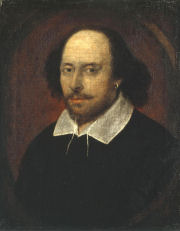
Portrait of William Shakespeare

Shakespeare Week is a national celebration of all things Shakespeare and a great excuse to read or watch plays (or poetry), discover some of the words that Shakespeare introduced to the English language, and learn about the man! Get involved from 20th to 26th March 2023. Or why not celebrate Shakespeare Day on his birthday, 23rd April?

Who Was William Shakespeare?

William Shakespeare (1564–1616) was an English playwright, actor and poet, and is widely regarded as the greatest English writer of all time. His plays have been translated into more than 100 languages and continue to be performed around the world to this day. He also introduced nearly 3,000 words to the English language. Find out more about this talented man who continues to influence our lives over 400 years after his death.

The original Globe Theatre


The original Globe Theatre

Fun Facts

  • Although William’s exact birth date is uncertain, it is traditionally celebrated on 23rd April – the same date that he died, aged 52.
  • William lived during the reign of both Queen Elizabeth I and King James I. Both these monarchs went to see his plays, and were said to be fans!

Favourite Quotes

There are so many famous quotes from Shakespeare. Here are just a few of them:

“All that glitters is not gold.”

“If music be the food of love, play on.”

“To be, or not to be: that is the question.”

“To thine own self be true.”

“A fool thinks himself to be wise, but a wise man knows himself to be a fool.”

A Short Biography of William Shakespeare

William Shakespeare was born 1564 in Stratford-upon-Avon, England. His father John was a leather merchant while his mother Mary was the daughter of wealthy farmer. William had two older sisters and three younger brothers.

William went to the local grammar school where he studied history, Greek and Latin. At 18, he married Anne Hathaway (aged 26) and the couple went on to have three children together – Susanna and twins Hamnet and Judith. Sadly their son Hamnet died, aged 11.

After the twins were born, William went to London to work as an actor, leaving the family behind. He joined an acting group called Lord Chamberlain’s Men. William also wrote plays for the group, which became very popular. Some of these early plays include The Taming of the Shrew, Richard III, Romeo and Juliet, and A Midsummer Night’s Dream. William wrote different types of plays – comedies (funny), tragedies (sad) and histories (about real people’s lives). Women weren’t allowed to act at the time, so men or young boys played the female roles!

Lord Chamberlain’s Men performed at a theatre built on land owned by Giles Allen. Although the group owned the theatre, when the land’s lease expired in 1597, Giles refused to let them perform and wanted to tear the theatre down. When negotiations failed, some of the actors devised a plan to dismantle the theatre and move it across the River Thames. They built a new theatre called the Globe, which could accommodate up to 3,000 people and became very popular. At the time, many people couldn’t read or write, so the Globe Theatre hung a flag outside to show what type of play was being performed – a comedy (white flag), a tragedy (black or dark flag), or a history (red flag).

In 1603, when James I became king, the Lord Chamberlain’s Men changed their name to the King’s Men and King James became the group’s patron. Many people think that some of William’s best plays were written during these years, many of them tragedies such as Hamlet, Othello, King Lear and Macbeth. William wrote nearly 40 plays as well as poetry, and poems called sonnets. His work combined with his property and land investments made him very wealthy. He bought a large house in Stratford-upon-Avon for his family, where he retired, aged 49.

In 1613, the Globe Theatre burned down when the thatched roof caught fire during a performance of Henry VIII. It was rebuilt the following year with a tiled roof, but was later demolished during the Puritan era (when all theatres were closed) to make room for housing. Some 350 years later, a modern version was built, opening in 1997 on the banks of the River Thames.

William died in 1616, but his legacy lives on. In fact, many of his words and phrases have become part of our everyday lives. Have you ever talked about ‘being in a pickle’ (being in trouble), going on a ‘wild goose chase’ (a search for something that isn’t there), having a ‘heart of gold’ (being kind) or trying to ‘break the ice’ (to strike up conversation with a stranger)? Then you are using the words and phrases of this great playwright!

Source: https://www.activityvillage.co.uk/william-shakespeare?awt_a=8YG5&awt_l=5S26Y&awt_m=IpVSHZyq2VDtG5

About the weather

Idioms related to the weather

Woman with a lot of work

If I tell you that I’m ‘snowed under’, what do you think I mean?

  1. I’m having problems with the winter weather.
  2. I’m very confused.
  3. I’ve got too much work to do.

What do you think? If you said c, that’s exactly right!

‘To be snowed under’ is an idiom – a group of words with a special meaning that is different from the meaning of each word on its own. 

There are lots of idioms in English related to weather. In this step you’ll find six useful ones that you hear and read quite often. 

Can you guess what the idioms in bold mean in each example? Then check the definitions below to see if you’re right.

He was on cloud nine when they offered him the job.
She gets up at 6 a.m., come rain or shine, and goes for her morning walk.
threw caution to the wind and followed them into the water.
The return trip was a breeze after the hard climb up the mountain.
They’re so positive and enthusiastic – it’s like a breath of fresh air working with them.
I’m totally snowed under at work this week.

Definitions

to be on cloud nine

to be extremely happy about something

He was on cloud nine when they offered him the job.

come rain or shine

whatever happens; no matter what the situation is

She gets up at 6 a.m., come rain or shine, and goes for her morning walk.

to throw caution to the wind

to do something without worrying about the risks or problems it may cause

I threw caution to the wind and followed them into the water.

to be a breeze

to be easy, especially unexpectedly easy

The return trip was a breeze after the hard climb up the mountain.

a breath of fresh air

someone or something that is new and different and makes everything seem more exciting

They’re so positive and enthusiastic – it’s like a breath of fresh air working with them.

to be snowed under

to have too much to do

I’m totally snowed under at work this week.

You can use these idioms in informal communication to make your speaking and writing more interesting

Source: https://learnenglish.britishcouncil.org/learning-hub/idioms-related-weather

Passover – Páscoa dos Judeus

The feast of Passover, one of the most important Jewish festivals, will next be celebrated by Jews all around the world from 5th to 13th April 2023. Known as Pesach in Hebrew, Passover has been celebrated since about 1300 BC, and families coming together, from great distances if necessary, to celebrate together. The celebration last for seven or eight days depending on where you live.

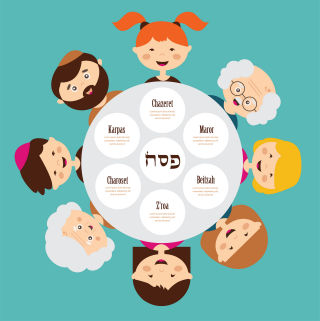
Passover Seder plate

The Story of Passover

The Book of Exodus in the Old Testament of the Bible tells the story of Passover. The people of Israel had been slaves in Egypt for over years. Although God promised he would release them from slavery, it seemed that the Pharaoh (the king of Egypt) had other ideas! When Moses was a very old man, he and his brother Aaron visited Pharaoh and demanded, in the name of God, that he let their people go. Pharaoh refused, claiming that he did not recognise God. Moses warned him that God would send ten plagues to Egypt to show his power.

  • First came the Plague of Blood. The River Nile was essential for Egyptian life, so when God turned the water of the River Nile, and all the water of Egypt, into blood, the fish and crops died and the Egyptian people suffered terribly.
  • Second came the Plague of Frogs: Can you imagine if everything was covered in frogs? It sounds funny but I expect it wasn’t very nice! We have a Plague of Frogs colouring page, below.
  • After the frogs, came the the third plague, the Plague of Lice. Everything and everyone was covered in creepy crawly itchy lice.
  • Fourth came the Plague of Flies. Flies swarmed into Egypt in huge numbers and got everywhere!
  • After the flies came the fifth plague, the Plague on Livestock. All of Egypt’s animals – horses, donkeys, camels, cows, sheep and goats – died. Egyptians began to be very hungry.
  • Next God sent a Plague of Boils. Boils are very painful infected spots, and the people of Egypt and all their livestock were covered with them.
  • Can you imagine things getting worse? After the boils came the seventh plague, the Plague of Hail, with a huge hailstorm which flattened down any surviving crops. The hail stones were so big that they killed people and animals!
  • Eighth came the Plague of Locusts. Locusts swarmed into Egypt and munched up any crops which were still standing, leaving nothing behind them.
  • After that, for the ninth plague, the people of Egypt were terrified by the Plague of Darkness. The sun disappeared and for three full days Egypt went dark.

All these plagues affected only the Egyptians. God protected Moses’ people and the Israelites were unaffected. Pharaoh, however, still refused to budge, so God sent his final, terrible plague:

  • The Tenth Plague – the Plague on the First-born. God told Moses that one of his angels would go from house to house and kill every Egyptian first-born son! To save Israelite children from the same fate, Moses should tell his people to follow some very specific instructions: to kill a lamb and use its blood to make a mark on their doors, then to roast and eat the lamb with bitter herbs and unleavened (flat) bread, while dressed for a journey.

Sure enough, at midnight the angel went through Egypt and every first born son was struck down, including Pharaoh’s son. The Israelite households were passed over (which is where the name of this holiday comes from). The people of Egypt were terrified and called on Pharaoh to banish the people of Israel right away, which he did. In fact, the Israelites left in such a hurry that there wasn’t time for their bread dough to rise, which is why no risen (leavened) bread is eaten during Passover now. Moses led the people out of Egypt.

Source: https://www.activityvillage.co.uk/passover

Learning tip: Read and relax!

If you have some free time over the holidays, reading stories is an excellent way to practice and improve your English. Stories aren’t just fun to read. They also contain a wide range of language, including words, structures, styles and meanings that you may not find in other reading texts.

Bellow you can find links with some stories that were written especially for learners at different levels. Here’s some advice:

  • Don’t choose a story that is too difficult. If it’s difficult, you’ll feel confused.
  • Don’t check the dictionary a lot. It slows down your reading and makes it hard to enjoy.
  • Choose a story with some words that are new for you but whose words you mostly understand. That will allow you to enjoy the story more and also improve your reading speed.

Enjoy your reading time!

https://learnenglish.britishcouncil.org/general-english/story-zone/a2-b1-

https://learnenglish.britishcouncil.org/general-english/story-zone/b2-c1-stories

Source: https://learnenglish.britishcouncil.org/general-english/story-zone?utm_campaign=english-all-learnenglish-global-newsletters&utm_medium=email&_hsmi=66874876&_hsenc=p2ANqtz-8ej0mVCw1DFzWnvq2a0ANLaTk6fQ8kjssH8b1ykyQyCn_WtiB5ReX5kAZD0HqvK5cnesSaXjKkckCtwKEpikT7nno5hQ&utm_content=66874876&utm_source=hs_email

The origins of English

The story of the English language began in the fifth century when Germanic tribes invaded Celtic-speaking Britain and brought their languages with them. Later, Scandinavian Vikings invaded and settled with their languages too. In 1066 William I, from modern-day France, became king, and Norman-French became the language of the courts and official activity. People couldn’t understand each other at first, because the lower classes continued to use English while the upper classes spoke French, but gradually French began to influence English. An estimated 45 per cent of all English words have a French origin. By Shakespeare’s time, Modern English had developed, printing had been invented and people had to start to agree on ‘correct’ spelling and vocabulary.

Source: http://www.un.org/en/events/englishlanguageday/

Task 1: https://learnenglish.britishcouncil.org/general-english/magazine-zone/english-language-day?utm_source=newsletter&utm_medium=email&utm_campaign=english-adults-leweb-global-global-2022-04-le-newsletter#

Task 2 : https://learnenglish.britishcouncil.org/general-english/magazine-zone/english-language-day?utm_source=newsletter&utm_medium=email&utm_campaign=english-adults-leweb-global-global-2022-04-le-newsletter#

Using Idioms Like a Native

Idioms are commonly used in spoken and written English. They add colour and interest to what we are saying. But how often do we actually find idioms in their original and full form? In today’s blog, we are going to be showing you how to use idioms like a Native English speaker!

1. Shorten the Idiom

Native English speakers are usually confident that their readers or listeners will recognise the idiom, so well-known phrases rarely need to be given in full. You may hear someone being warned not to count their chickens (don’t count your chickens before they are hatched) when they assume a future plan will be successful, or a friend may hint that her colleagues took advantage of the boss’s absence with when the cat’s away! (when the cat’s away, the mice will play).

Some idioms can be shortened in other ways such as long story short (to cut a long story short).

“Anyway, long story short, it turns out Drake isn’t really his father.”

Sometimes only a fragment of the original idiom remains. It is common to see restaurants offering early bird menus or prices (the early bird catches the worm). Someone may describe a terrible idea as a lead balloon (go down like a lead balloon). I recently heard someone talking about a baby and bathwater situation (don’t throw the baby out with the bathwater) when the whole of a plan was rejected because of a problem with only part of it.

2. Reverse the idiom

Another common way of changing an idiom is to reverse its meaning. For example, if you don’t want to deal with a problem straight away, you may put it on the back burner, but if something needs immediate attention, you can put it on the front burner. In your home village, you might be a big fish in a small pond but if you move to a large city you could end up a small fish in a very big pond.

Many idioms are very versatile and can be changed in a variety of ways. A carrot and stickapproach involves offering rewards and making threats to persuade someone to do something. However, you may come across examples like the following:

“Why use a stick when a carrot will work better?”

“Their approach is all stick and no carrot.”

“They are using every carrot and stick at their disposal.”

3. Adapt the idiom

One of the most attractive aspects of idioms is their adaptability. It is often possible to substitute one or more of the words in them to adapt to a particular situation. When two people have opposite tastes, you can say one man’s meat is another man’s poison. But how about one man’s junk is another man’s treasure or one man’s madness is another man’s genius? The possibilities are endless.

Substitutions can also be used to alter the meaning of an idiom. For example, a plain-talking person will call a spade a spade, but someone who is more frank than necessary may call a spade a shovel. On the other hand, someone who is reluctant to speak plainly may call a spade a gardening implement.

So, why not have a go at adapting some idioms yourself? After all, when in Rome…

Source : https://learningenglishwithoxford.com/2022/01/07/using-idioms-like-a-native/?dm_i=1MVU,7P23N,9YU4NM,VD5PV,1