www.instagram.com/reel/DS7R1B3CN2j/
New Year’s resolution!
What are your plans for 2926?
Tell me about them!

www.instagram.com/reel/DS7R1B3CN2j/
New Year’s resolution!
What are your plans for 2926?
Tell me about them!
For B1 level, you should read and listen to English as much as you can. You can take English lessons, listen to English language songs, watch films and shows in English, read documents in English for your job or search for articles and videos … all of these will help you to improve your reading and listening skills.
Choose texts about things you already know. For example, read English-language websites or tourist information about your country, or watch a show or film again that you’ve already watched but this time with English audio or subtitles. Don’t worry if you don’t yet understand all of it. Focus on understanding the main points, and note down new words to increase your vocabulary.
Also, choose texts at the right level for you. On this website, for example, do readings and listenings that are marked A2 or B1. Don’t choose texts that you find too difficult, as you might feel frustrated.
If you have any opportunities to travel, take advantage! Use your English to do things like buying tickets, ordering food, shopping and taking public transport.
Even if you can’t travel, there are still things you can do to improve your skills. Travel topics are usually included in English coursebooks and learning materials, so use them to prepare for these situations. A good way to practise is to first learn useful words and phrases for a situation, and then do a role play.
How often do you speak and write English? Try to do both regularly.
For speaking practice, try to find some English speakers in your workplace, school, local area or online, and talk to them about your interests, family, work and so on. You can also try recording yourself speaking or posting a voice message in our Learning hub. For writing practice, you might like to write a diary or blog, or write comments on the LearnEnglish Facebook page or social media.
For B1 level, you should speak and write more at length. Use words such as therefore, because, first of all and on one hand … on the other hand … to connect one idea or sentence to another.
This skill is about expressing your thoughts. Practise putting your thoughts into English.
You can try talking about your past experiences. What memorable experiences have you had, either recently or a long time ago? You might need to check some vocabulary to talk about them, so use a dictionary or translator. Then think about what you can say and practise saying it until you can describe your experience smoothly and in detail. This is also good for your vocabulary: it’s usually easier to learn vocabulary when it is personally meaningful.
Try talking about the future too. What do you plan to do this week, this year or in five years’ time? Do you have any hopes or dreams? Put these into words. If you don’t know what your future plans are, it’s fine – you can still talk about different options that you are thinking about. You can also say why you plan to do things.
As suggested above, keeping a diary or blog and having regular English conversations are good ways to practise these skills.
Good luck on your way to B1!

Do you have a job interview in English coming up soon? These tips will help you to get ready and impress your potential employer.
If you’ve been invited to a job interview, it’s a good sign. It means the company thinks you have potential and they want to know more about you.
Interviewers can sometimes ask unpredictable questions, but you can increase your chance of success by preparing well! Here’s how.
The job description says what skills, experience and personal characteristics the company needs.
Think of examples of your past work that demonstrate your strengths in these areas. You may have other skills too, but focus on those mentioned in the job description.
Here are some common questions to prepare for.
Your answers will be more persuasive if you include real examples of your work. For instance:
Q: What can you bring to this role?
A: Good time management. It’s one of my strengths. In my last role I organised our office relocation, which was a huge project involving over a hundred staff in only three months. I delegated work within my team to save time. I set deadlines for completion of the project stages and I monitored progress regularly. Because of this, the relocation was completed on time and on budget. I feel confident I can bring these skills into this role.
Some questions may ask you to talk about weaknesses, failures or challenges. Nevertheless, be optimistic. For example, if you have to talk about a failure you experienced, you can also say what you learned from it or how you avoid repeating it.
Look at your CV and guess what interviewers will want to know. For instance, if you have any gaps between jobs, they may ask what you did during that time.
Find out as much as you can. Check the company’s website, LinkedIn and social media, and ask your friends and colleagues.
You can use this information in the interview. If you know about the company’s current activities, for example, you can say which ones you are keen to be involved in. It will show your interest in the job.
Here are some suggestions for vocabulary practice:
Also check the pronunciation of any technical terms, the company’s name and the interviewers’ names.
Practise speaking English aloud until you feel comfortable and confident. It’s a good idea to do a practice interview – ask a friend to ask you some questions and practise responding in English.
You may have a chance to ask your interviewers some questions. This is a good way to show your interest as well as to find out more about the job. Here are some suggestions.
Decide what clothes you will wear and get them looking smart. Pack in your bag anything that you need to bring, such as your ID card or certificates. Take a bottle of water too. Arriving late makes a bad impression, so plan to arrive at the venue early.
For online interviews, find a quiet place where you won’t be disturbed. Turn on your device’s camera and check that the picture is clear and the room lighting is not too bright or dark. Check that the microphone picks up your voice clearly too. Have a look around the interview platform (e.g. Zoom or Skype) and get familiar with the controls (how to mute, share screen, etc.). Also prepare any notes that you want to refer to.
Good luck in your interview!
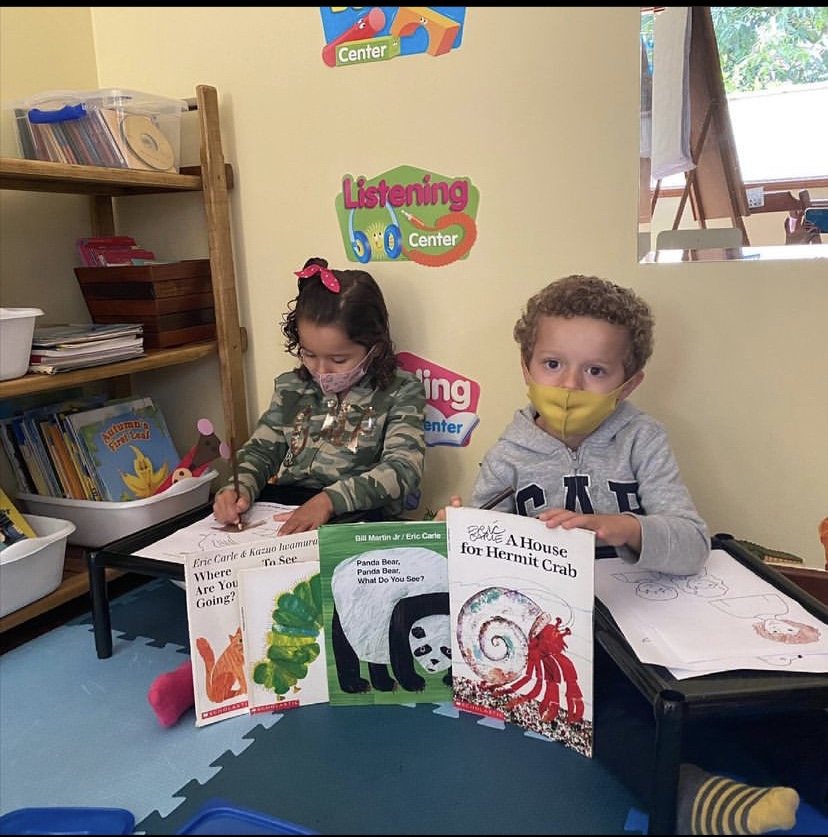
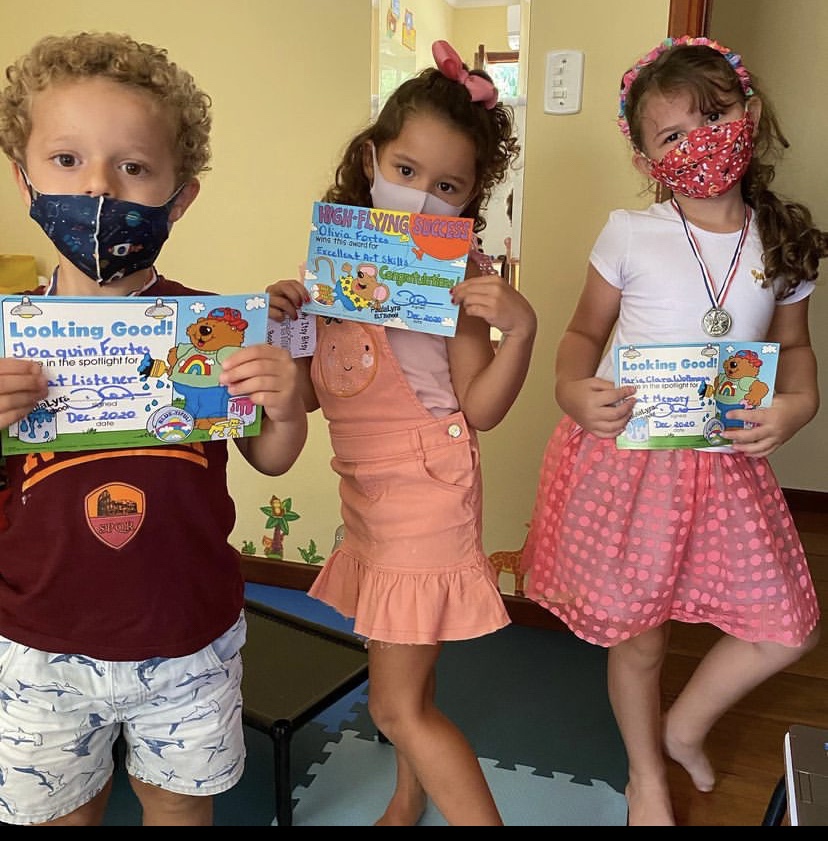
If you want your child to learn another language, you need to provide a fun and happy environment to make the learning a good experience.

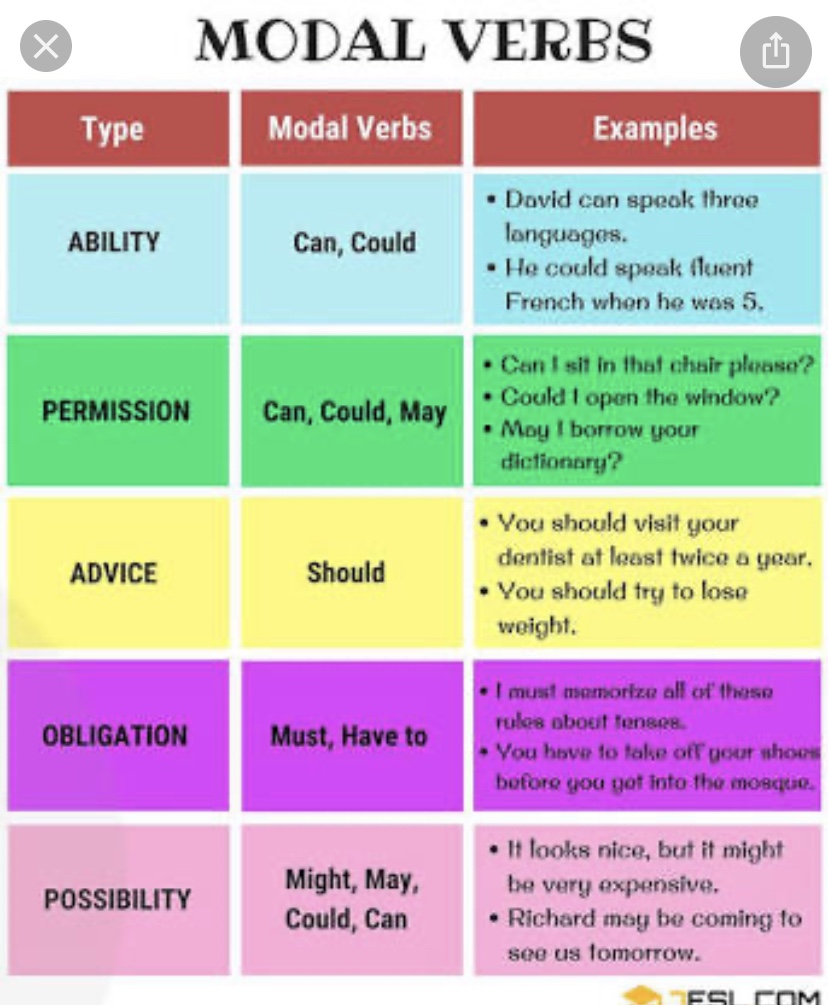
Modal verbs can change the meaning of a sentence.
They can help you to give the necessary emphasis to what you want to say.
Check how to use them according to Ability, Permission, Advice, Obligation and Possibility.
Go. Play. Do
The first time you read a text intensively:
It is easy to read this by focusing on the content words in bold.
At the age of 16 / most students take exams / in about ten different subjects
At the age of 16 / most students take exams / in about ten different subjects
Source: https://www.futurelearn.com/courses/pte-success/1/steps/930514
Video with explanation on how to use Future in English.
The following outlines the three stages and steps for summarising.
Young children learn in an integrated way and not in neat, tidy compartments. A child making shapes out of plasticine is learning maths (shape) and art (texture, shape, design, colour), building fine motor skills (physical development), and hearing or using language to describe shapes, colour, texture, materials and techniques (English). The activity drives the need to communicate.
Young children will learn a language better when they see a genuine need for communication, which is often the language they are hearing or using while they are doing an activity that they enjoy.
While adults can plan a range a activities to enhance the learning experience, not all of them will be motivating for every child. Children more likely to be motivated if the activity or experience is meaningful to them. Taking time to get to know the children and finding out what they are interested in is essential if you want to motivate them and help them learn.
The interactions you have with a child while they are engaged in an activity help develop language and communication in context, making the language learning more memorable and authentic.
Rhymes, songs and chants help children memorise words and sentence structure, and they also help with pronunciation, expression and the rhythm of sentences. Children learn their home language by playing with language in this way, and it’s a fun way for them to learn another language too!
A good story takes children to an imaginary world filled with characters and events that will make them want to find out what happens in the end, and that they will want to hear again, join in retelling, and even retell in their own words. Illustrations and actions help children understand descriptions of characters and events, because they can connect what they are seeing and doing with the language in the story.
Giving clear, simple instructions in English with accompanying actions, gestures or demonstrations is more likely to result in children understanding. Children love copying – the teacher, their parents, older siblings or friends – and will often join in after observing how something is done. Including routines is also a useful way of helping young children understand what is expected of them (e.g. every time we sit on the mat we will hear a story or sing a song). Children may not understand straight away, but giving instructions in English is an excellent way of reinforcing key language, so in the long run it’s worth the effort.
 Paula Lyra ELT School