Aprenda Inglês no 2o Semestre

Não desista de seu sonho de falar Inglês

PARA

  • Viajar sozinho ao exterior;
  • Conseguir um emprego melhor;
  • Navegar na Internet com facilidade;
  • Falar com fluência com estrangeiros;
  • Passar num exame de proficiência;
  • Possibilitar aos seus filhos um aprendizado bilíngue;
  • Enfim, curtir um novo aprendizado.

Ainda há tempo. Você merece!

Fale comigo e aprenda no seu ritmo, com uma profissional exclusiva para as suas necessidades.

dscn04171.jpg

Let´s study!

Glossary

img_0102-4

Do you know what is a/an…..?.

Pronoun

A word which is used instead of a noun perhaps because you have already talked about the person or thing, eg I, they, which.

Verb

A word which describes an action or a state of being, eg eat, like, know.

Adverb

A word which describes or gives more information about a verb or an adjective, eg he walked quickly, she danced well.

Adjective

A word which describes something or someone, eg beautiful, happy, long.

Preposition

A word which is used with a noun or pronoun to show time, place or direction, eg at, on, in.

Conjunction

A word which connects words and phrases in a sentence, eg but, and, although.

Determiner

A word which is used before a noun to show which particular example of the noun you are referring to, eg this pencil, your shoes.

Interjection

An interjection is a word that is used to express emotion, eg Oh no! Gosh! Ow!

Part of speech

Learners need to know what type of word (noun, verb, adjective) they are learning so that they know how to put it into a sentence.

Meaning

What idea the word shows and what contexts the word applies to.

Pronunciation

Learners need to know how to say the word, how many syllables there are and which is stressed, eg ed-u-CA-tion.

Spelling

Learners need to know how to write the word.

Connotation

Learners need to know if the word has a positive or a negative sense to it. For example, the words ‘slim’ and ‘skinny’ both mean thin but one has a positive connotation (slim) and the other (skinny) doesn’t.

Collocation

Learners need to know which words go with the word they are learning. For example, we make beds but do housework.

Word families

Learners need to know other words that are formed from the same word, for example, kind, unkind, kindness, kindly.

Register

Learners need to know if the word should be used in formal or informal situations. For example, assist and help have the same meaning but assist is more formal then help.

Syllable

A part of a word that usually contains a vowel sound, eg pen = one syllable; teacher = two syllables – teach/er; umbrella = three syllables – um/brell/a.

Connected speech

Spoken language in which the words join to form a connected stream of sounds. In connected speech some sounds in words may be left out or some sounds may be pronounced in a weak way or some words might join together, eg Is he busy? /ɪzibɪzi/.

Phoneme

The smallest sound unit which can make a difference to meaning eg /p/ in pan, /b/ in ban. Phonemes have their own symbols (phonemic symbols), each of which represents one sound.

Phonemic symbols

The characters we use which represent the different sounds or phonemes, eg /ɜː/, /tʃ/, /θ/. Words can be written in phonemic script (usually the International Phonetic Alphabet or IPA), eg /dɒktə/ = doctor.

Consonant

  1. A sound in which the air is partly blocked by the lips, tongue, teeth etc., eg /θ/ in ‘thing’, /b/ in ‘boy’.
  2. Any letter of the English alphabet which represents consonant sounds, eg d = /d/, c = /k/.

Diphthong

Diphthongs are vowel sounds. They are a combination of two single vowel sounds said one after the other to produce a new sound; eg /aɪ/ as in ‘my’ is pronounced by saying /æ/ and /ɪ/ together. There are eight diphthongs in English: /iə/(eg ear), /eɪ/(eg play), /ʊə/(eg tourist), /ɔɪ/(eg boy), /əʊ/ (eg go), /eə/(eg air), /aɪ/(eg life), /aʊ/ (eg now).

Vowels

  1. A sound in which the air is not blocked by the tongue, lips, teeth etc., eg /i:/ (eat), /ə/ (about), /e/ (egg), /ʌ/ (fun). Movement or vibration is felt in the throat because the voice is used.
  2. In the alphabet, the letters a, e, i, o, u are vowels.

Intonation

The way the level of a speaker’s voice changes to show meaning such as how they feel about something; eg the level of your voice when you are angry is different from the level of your voice when you are pleased. Intonation can be rising or falling or both.

Stress

Pronouncing part of a word (syllable) or part of a sentence louder and longer than other parts, eg VEGetable, I LOVE baNAnas. Some parts of words and sentences are stressed (those in capital letters in these examples) and some are unstressed.

Sentence stress

Sentence stress is about the way some words in a sentence are stressed and some are unstressed. The stressed words are usually the information-carrying words or content words such as nouns, verbs, adjectives and adverbs. For example, It was a LOVely EVEning, and the TEMperature was PERfect (the parts of the words in capitals are stressed).

Word stress

Word stress is about which syllable of a word is pronounced louder and longer – eg umBRELLa /ʌmˈbrelə/.

Phonemic chart

A poster or diagram of the phonemic symbols arranged in a particular order. Below is an example of the International Phonetic Alphabet or IPA.Alt text

Terminology for Reading and Listening

img_0102-4

Reading for gist/Skimming

Reading quickly to get a general understanding of a written text, eg reading a description of a city to find out if it sounds like somewhere you’d like to visit.

Reading for specific information/Scanning

Searching for a particular piece of information in a written text, eg reading a description of a city only to find out which country it’s in.

Reading/listening for detail

Reading or listening more carefully so that you get a full understanding of the text, eg reading a description of a city to find out everything about it.

Listening for gist

Getting a general understanding of something you hear, eg listening to the weather forecast and deciding you might need to take an umbrella when you go out.

Listening for specific information

Listening for a particular piece of information, eg listening to the weather forecast to find out what the temperature will be tomorrow.

Inferring meaning

Making guesses about what is not stated explicitly in a text, eg listening or reading a conversation and deciding that the people are brother and sister without them saying so.

Coherence

Organising ideas in a logical way when speaking or writing so that the listener or reader can follow our ideas.

Cohesion

Joining sentences together using words like and, but and because so our language flows more easily.

Interactive strategies

Strategies we use when we are speaking, eg showing you are listening to other people by saying things like, mmmm or uh-uh or oh!

Turn taking

An interactive strategy which is about knowing when you can join in a conversation and signalling when you think someone else should speak.

Fluency

For speaking; this is speaking without a lot of hesitation and too many long pauses. For writing; this means you can write without stopping for a long time to think about what to write.

Erros comuns que se deve evitar ao aprender Inglês

img_0102-4Você acha que só ir à aula vai te ensinar a falar Inglês?

O professor apenas apresenta o material, cabe ao aluno internalizar depois o que foi aprendido. O tempo de aula não é suficiente para fazer a memorização e fixação do conteúdo aprendido e nem para começar uma prática suficiente. Os alunos devem estudar e praticar fora da sala de aula, para se tornar bem sucedidos.


Não seguir os seus interesses

O professor e o livro didático são apenas o ponto de partida, não o fim para tudo. Não se limite a isso, procure coisas que te interessem em Inglês como: músicas, filmes, programas de TV, livros, jornais, vídeos virais, anúncios engraçados, blogs, fóruns, desenhos animados, histórias em quadrinhos, jogos, receitas e sites de perguntas e respostas. Consulte traduções no início, mas depois fuja delas!


Recusando a língua por ser diferente

Haverá muitas de coisas que funcionam de forma diferente em Inglês do que em Português. Algumas delas podem parecer (ou ser) ilógicas. Ao invés de ficar com raiva, frustrado, ansioso; sinta-se feliz por poder explorar essa nova maneira de se expressar.


A aprendizagem de línguas não tem que ser extenuante

Você pode conseguir bons resultados com aulas de 2 vezes por semana e se comprometendo a estudar em casa e fazer suas tarefas.  Desenvolvendo um ritmo de estudo frequente, você estará treinando e mantendo sua prática constantemente.


Odeio aprender Gramática!

Na verdade, aprender gramática raramente é alegre, mas isso não deve ser algo aterrorizador! Um estado de espírito positivo vai ajudar muito e tornar os estudos memoráveis. Não hesite em trocar de livros textos ou utilizar múltiplas fontes ao mesmo tempo. Use materiais autênticos sempre que puder.


Encontrar desculpas para não usar a língua, ao invés de motivos para usá-la.

Há diversas razões para não usar o idioma que você está aprendendo. Talvez o seu nível linguístico ainda esteja muito baixo. Talvez você não conheça nenhum falante nativo nas proximidades. Talvez você nem pretenda viajar ao exterior. Estas são todas boas razões.


Resumindo

Portanto, não desista de seu sonho de aprender Inglês. A prática leva a perfeição e você ainda chegará lá. Bons estudos e confiança em você!

What does classroom management include?

Classroom management is about how you manage what happens in the class and is really important for any teacher, especially for teaching children and teenagers in large classes. Here are some of the key things that you’ll need to start thinking about to help your lessons go as smoothly as possible.

Organising the classroom

Deciding what you want to do with the chairs and desks in the class. Do you want your learners to sit in rows? In a horseshoe? Café-style sitting around tables?

Organising the learners

Deciding how you want your learners to complete an activity. Do you want them to work alone? In pairs? In groups? As a whole class?

Eliciting

Asking learners questions to find out what they know and don’t know about an idea or about language.

Giving instructions

Telling learners what you want them to do in an activity.

Checking understanding

Asking learners questions to check that they understand the meaning of language or to check that learners know what to do in an activity.

Monitoring

When learners are doing an activity on their own or in pairs/groups, the teacher walks around the room to look at or listen to what learners are doing to check that they are doing the right thing and to help when needed.

Giving feedback

Telling learners how they are doing. This could be checking the answers to an activity in class or providing some correction. It could also be talking to learners about their progress.

Boardwork

Organising your board and using the board to help learners learn.

5 Dicas para passar no exame IELTS

1- Look up practise. Reflect.
Some candidates think that the more practice papers they do, the more they’ll keep improving their IELTS score.
Practice is indeed important but practice without reflecting can mean you repeat the same mistakes. Stop to review your answers and look at where you were right and where you were wrong.
If it’s a reading or listening paper, look at the answers and try to find them in the text. Ask yourself, ‘What did I miss the first time? How can I do this differently next time?’.
For the speaking part, record yourself and listen to the recording. Ask yourself, ’Did I answer the question? Can I correct my mistakes? How can I do it better?’.
For the writing part, look at model answers but don’t memorize them. Look at why they are good answers and compare them to your own answers. How can you improve your answer? Did you answer the question? Can you organize your points in a clearer way?
2. Learn chunks of language – useful phrases that you can use.
Contrastive phrases, such as, ’On one hand / on the other’; ‘the benefits outweigh the disadvantages (or the other way around)’; ‘it is also possible to say that…’.
A good place to find more of these is in the sample essays. Note down and learn phrases like these so that you can use them flexibly. This will support your writing and speaking and help you link your thoughts. When you have more chunks of language available you can focus more on the content of what you want to say, and worry less about the vocabulary holding it together.
3. Expand on what you write or say.
Don’t just give a statement, fact, or opinion. Say why. Give further details to support what you are saying by giving reasons, examples and scenarios.
4. Don’t worry about understanding everything when reading or listening.
Some students get so worried when they hear/see one word or one sentence, that they stop listening or reading and focus on trying to understand that one word. This can mean that they end up missing ten sentences instead of one. If you miss something, don’t keep thinking about it. Move on.
5 Read the questions beforehand whenever possible.
When listening or reading, knowing the questions helps you to know what is expected of you. Listen to/Read the questions and don’t just jump in with an answer before you’ve fully thought about and understood the question.
Focus on these 5 simple tips and you will instantly increase your chances of improving your IELTS score. Then you can focus on improving your English to get your result even higher.

 Nomenclatura  de cursos de língua inglesa

Glossary
During this course, you’ll find there’s a lot of terminology about English Language Teaching. Each week we’ll have a step near the end of the week with a list of key terms from the week’s activities.
Here’s the terminology from this week which is all about the world of ELT. If there are any terms which you’re not sure about, post your question below – you may find one of your fellow learners has an explanation which will help you to understand it better.
CELTA (Certificate in Teaching English to Speakers of Other Languages)

An initial teaching qualification from Cambridge English Language Assessment. It’s frequently taken as a four-week intensive course, with input on methodology and assessed teaching practice.
EAP (English for Academic Purposes)

Teaching English to people who are preparing to take, or are taking, a university course in English. The course will cover things like essay writing, note-taking, reading skills and academic vocabulary.
EFL (English as a foreign language)

This is the subject of English when it is taught for work, study or pleasure. Learners may be studying in their own country or studying for a while in an English-speaking country before returning home. They do not intend to live permanently in an English-speaking country. EFL is the term used in European contexts.
ESL (English as a second Language)

This is the term used in the US and Canada to talk about the subject of English when it is not the learner’s first language. Learners may be in the US or Canada or they may be in their own countries.
ESP (English for Specific Purposes)

English for people who need a very specialised type of English often for their jobs. Big sectors within this are Business English, English for Tourism and English for Medicine.
General English

Classes which aim to improve learners’ overall ability to communicate in English by studying the grammar, vocabulary and pronunciation of English and developing the skills of speaking, listening, writing and reading.
TEFL (Teaching English as a foreign language)

Teaching English to learners, both overseas and in the UK, who want to learn English for work, for study or pleasure but who do not normally live or work permanently in an English-speaking country. TEFL is the term used in European contexts.
TESL (Teaching English as a second language)

The term used in the US and Canada for teaching English. It is used for both learners studying in their own country and those studying in the US or Canada and it refers to both learners who live permanently in the US or Canada and those who don’t.
TESOL (Teaching English to speakers of other languages)

The term which is used to cover all forms of English teaching to non-English speakers. The term is widely used in North America, Australia and New Zealand.
You might also find it useful to look at the TKT (Teaching Knowledge Test) Glossary (attached below). The words and phrases in the TKT Glossary includes words and phrases for teaching knowledge connected to language, language use and the background to and practice of language teaching and learning as assessed in TKT. TKT is a teaching qualification which shows teachers how they are developing as a teacher. It is ideal for people who want to prove their teaching knowledge with a globally recognised certificate.


© UCLES 2016

Os cinco erros mais comuns no aprendizado de inglês.  

 Por que todo mundo acha que é tão difícil de aprender uma língua? E que requer muito tempo para praticar? Poderia ser porque todos nós temos alguns maus hábitos que não estamos cientes?

Vamos dar uma olhada nos erros mais comuns e descobrir como podemos evitá-los.

1. Vá devagar
Quando a aventura de uma nova lingua começa, o seu entusiasmo não conhece limites. Isso é algo muito positivo. Por outro lado, é importante não depender de entusiasmo sozinho. Quando a novidade e excitação inicial terminarem, você pode não saber onde encontrar a motivação para aprender. É melhor ir devagar.  Controle  o seu entusiasmo e certifique-se que a aprendizagem de uma língua se torne uma atividade diária e regular.

Dez minutos por dia é melhor do que ralar durante uma semana e nada depois disso.

2. Os benefícios da memória 
Memorizar frases inteiras podem ser úteis em determinadas situações, como pegar sua bagagem no aeroporto, Mas não vai ser útil quando temas surgem em conversa que não estavam no livro que você memorizou. 

Use sua memória para torná-la sua aliada. Saiba frases e palavras com as quais você pode fazer associações. E quando uma palavra não parece querer sair, procure uma alternativa do que você quer dizer. 

3. Ninguém é perfeito
Ninguém é perfeito e você não deve tentar ser! Um dos obstáculos no caminho para o domínio fluente de uma língua é a necessidade que você coloca em si mesmo para falar com pronúncia perfeita e livre de erros de gramática. Claro, você pode e vai chegar lá com muita prática, mas não deve ser a mais alta prioridade quando você está começando a conhecer uma linguagem completamente nova. 
 Dê-se uma pausa e não tenha medo de errar. 

4. So trabalho e nenhuma diversão 
Quando você defini um grande objetivo, como aprender uma nova língua é importante desenvolver alguma práticas regulares. Voce deve estudar com rotina, procurar assistir a filmes sem legenda, aprender a cantar uma música, praticar com um nativo. 

5. O objetivo é sempre importante
Manter um objetivo em vista aumenta a motivação. Antes de começar, defina uma meta! Por que você quer aprender inglês? Para um crescimento profissional, para viajar, para estudar fora ou para interagir com estrangeiros?

Boa sorte nos estudos e siga praticando 

In English. 

Let’s take a look at the most common mistakes and figure out how we can avoid them.
1. Take it slow
When the adventure of a new language starts, your enthusiasm knows no bounds. On the one hand, that’s something very positive. On the other hand, it’s important not to rely on enthusiasm alone. When the newness and initial excitement has worn off, you might not know where to find the motivation to learn. That’s why it’s necessary to steer your initial exuberance in the right direction, and not let it disappear like a flash in the pan. It’s better to take it slow – tame your enthusiasm and make sure that learning a language becomes a regular daily activity.
Otherwise something like this might happen: You’ll study every day for the first week. Already in the second week you’ll skip a day because you’re too tired. The following week it happens again, and then again the week after that. Soon, you’ll be staring, frustrated, at that pile of language books on your desk.
Our Tip: Steer your initial exuberance in the right direction and make sure that learning a language becomes a regular daily activity. Ten minutes a day is better than full-on for a week and then nothing after that.
2. The benefits of a bad memory
No, we’re not crazy. We’re talking to all those people who think that memorization is the key to everything, to everyone who boasts about their photographic memory, and to everyone who gets stuck on vocabulary lists. Don’t get us wrong: a good memory is definitely helpful, but one should not forget (no pun intended) to use and train it the right way.
Memorizing entire phrases can be helpful in certain, clearly-defined situations (like picking up your luggage at the airport, for example). But it won’t be of any benefit when topics come up in conversation that weren’t in that book you so diligently memorized.
Use your memory and make it your ally. Learn phrases and words with which you can make associations or create mnemonic devices. And when a word doesn’t seem to want to come out, find an alternative or paraphrase what you mean. In this way, you don’t only get your synapses firing, but you can also remember things better and for longer periods of time. Try it for yourself!
Our Tip: Your memory is an important ally if you use it intelligently.
3. Nobody’s perfect
No one is perfect… and you shouldn’t try to be! One of the first obstacles you encounter on the path to “fluent mastery” of a language is the absurd and premature demand you place on yourself to speak with perfect and error-free pronunciation and grammar. Of course, you can and will get there with a lot of practice, but it shouldn’t be the highest priority when you’re getting to know a completely new language.
If you get lost in especially complicated grammar when you’re trying to say something simple, or if you’re only sure of yourself when you don’t make even the smallest pronunciation mistakes, then it’s highly likely that within a few weeks, you’ll give up out of total frustration.
“Until I can speak perfectly, I won’t speak. But if I don’t speak, I’ll never improve and can give up hope of ever being able to speak perfectly”. It’s a Catch 22!
Our Tip: Give yourself a break and don’t be afraid to make mistakes! You’ll soon see the progress that’ll bring you closer to your goal.
4. All work and no play…
It’s exactly you – so tirelessly and steadfastly learning – who we’re speaking to here: Are you finally going to get up out of that chair, or do you want to put down roots right where you’re sitting? You’re diligent and persistent. You’ve used your memory and your desire to learn in the best way possible. You’ve trusted yourself to speak to people because you understand that we all learn from making mistakes. And now? Now it’s time to give yourself a reward!
When you set such a big goal as learning a new language, it’s important now and then to pat yourself on the back and enjoy the success you’ve achieved. You’ve managed to have your first real-life conversation? You’ve got all that difficult pronunciation down? You’ve gotten through the jungle of pronouns? Then you should celebrate it and do something fun! Watch a film, sing a song at the top of your lungs, or listen to the radio… but, of course, in the language you’re learning! When you couple language learning with activities that bring you joy, you’ll learn more effectively and remember what you’ve learned more easily.
Our Tip: You don’t have to learn like a crazy person. There should also be time to combine the enjoyable with the practical, and have fun while learning!
5. The goal is always within sight
Learn the art of always keeping your goal within sight. Of course, anyone could say that learning for learning’s sake is the ideal picture of education… that goes without saying. But if you want to reach the end of the road, it’s important that you’re aware of why you stepped onto the path in the first place.
Why are you learning a new language? For love? To get a raise? Because you want to try your luck in a new country? Because you can’t stand films that are dubbed? Very good. Keep your goal in sight and imagine that with every tiny step forward, the path to your goal gets shorter and the top of the mountain gets closer.
Our Tip: Keeping a goal in sight increases motivation. Before you start, set a goal!
Ready to learn a new language? Use the tips above for a fresh start.

https://go.babbel.com/engmag-a67-5reasonsnotlearning-tt/1_eng_fab_mix

Welcome Back to Class!!

Queridos Alunos,

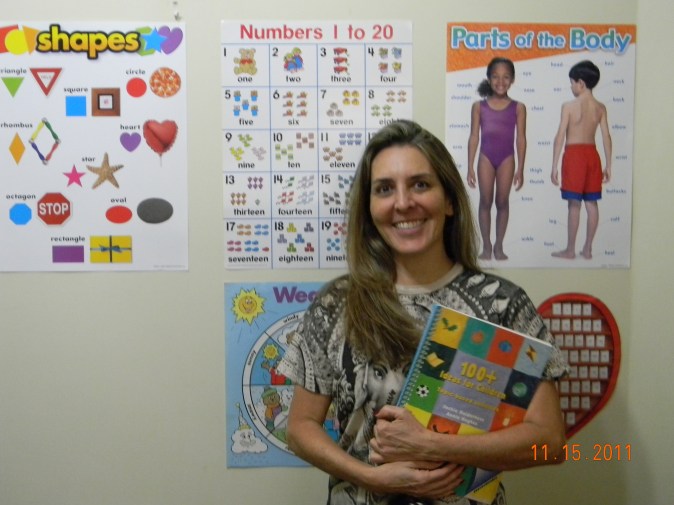
Depois dessas semanas de férias no USA, vamos reiniciar nossos trabalhos com muita alegria e energia!

Trouxe materiais bastante interessantes para animar nossas aulas e facilitar a compreensão dos conteúdos aprendidos.

Para quem não reservou seu horário, ainda há vagas disponíveis pela manhã, porém a tarde já estão esgotadas.

Agradeço o carinho de sempre e aguardo por todos com um sorriso.

XOXOXOXO – Traduzindo – Beijos e abraçosdscn04171.jpg