De Lagarta a Borboleta – “The Butterfly Cycle”

Seguindo com a nossa série sobre Natureza, Outono e Sementes, nessa semana aprendemos sobre o Ciclo da Borboleta.

The very hungry caterpillar Lemos o livro de Eric Carle -”  The Very Hungry Caterpillar” e interagimos com a história que fala sobre frutas que estamos estudando em classes.

CasuloPara completar, ainda  achamos um casulo com uma borboleta esperando para acordar.

As crianças gostaram muito de ter esse casulo na sala de aula e de esperar por 2 semanas pela metamorfose até que a borboleta rompa a casca e saia transformada.

E assim, aos poucos, vamos aprendendo Inglês interagindo com Ciências, Estudos Sociais e Artesanato.

Segue o link para a história: 

In English

Continuing with our series on Nature, Autumn and seeds, this week we learned about the Cycle of the Butterfly.

We read the book by Eric Carle – “The Very Hungry Caterpillar” and interacted with the story that talks about fruits that are studying in class.

To complete, we still have found a cocoon with a butterfly waiting to wake up.

The kids love having this cocoon in the classroom and wait two weeks for the metamorphosis, when the butterfly will break the shell and come out transformed.

And so, gradually, we learn English interacting with Science, Social Studies and Crafts.

Follow the link to the story: http://youtu.be/_4HI7q38VmQ [/ embed]

Teatro- Little Red Riding Hood

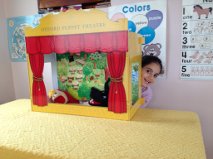
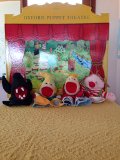
Durante essa semana encenamos em nosso Puppet Theater a peça  “Chapeuzinho Vermelho”.

Foi uma grande animação! As crianças curtiram muito e interagiram com os fantoches com perguntas e respostas.

Todos nos divertimos bastante e aprendemos mais algumas palavras e frases na Língua Inglesa.

Logo, logo virão mais peças, aguardem.

Obrigada.

teatro 1 In English

During this week we performed at our Puppet Theater the play “Little Red Riding Hood”.

It was a great fun!

Children enjoyed a lot and interacted with the puppets with questions and answers.

We all had fun and learned quite a few words and phrases in the English language.

More plays will come soon enough, stand by.

Thank you.

Dúvidas sobre aprendizado bilíngue

Seguindo com esse tema, seguem alguma perguntas e resposta sobre o trabalho em biliguismo em Paula Lyra ELT School.

·        1 – O que é ensino bilíngüe?

O programa tem como meta oferecer uma formação cultural internacional, através de aulas dinâmicas que incentivem a participação e  interação com a língua Inglesa. Este programa promove o multiculturalismo, a cidadania, fluência e proficiência na língua através de atividades acadêmicas ou lúdicas.

·        2 – Qual a idade preferencial para a aquisição de uma língua estrangeira?

Estudos demonstram que, o quanto antes um aluno for exposto a uma segunda língua, mais rápida se dará à aquisição e a fluência, pois, dentre alguns motivos, o cérebro ainda não diferenciará os fonemas da língua mãe criando assim a ausência do sotaque, tão comum em alunos que aprenderam uma segunda língua quando adolescentes ou mesmo já adultos.

·        3 – Como um aluno pode se beneficiar com este programa?

Há diversas maneiras de um aluno se beneficiar com o aprendizado de uma segunda língua. Ao contrário do que se pensa, o aprendizado de uma língua adicional potencializa o aprendizado da primeira língua e o desenvolvimento de áreas sociais e físicas estando diretamente relacionado à habilidade duradoura de comunicação com muitas pessoas.

·        4 – Em quanto tempo um aluno se torna bilíngüe?

A aquisição de uma língua estrangeira está diretamente ligada ao tempo de exposição à nova língua, dedicação e habilidade. Em geral em um ambiente centrado na língua Inglesa e, obviamente, respeitando-se as diferenças individuais de cada criança, este aprendizado se dará em um prazo de 2 a 4 anos para uma boa fluência. Como a linguagem, porém, é algo muito dinâmico,  necessita estar sempre sendo utilizada para não ser esquecida ou ficar obsoleta.

·        5 – Como acontece o aprendizado?

Uma das formas de desenvolver as áreas de conhecimento é através de projetos. É comum aluno da mesma faixa etária se interessar por assuntos parecidos. Acredita-se que o aprendizado acontece de uma forma mais significativa quando há motivação e participação. Esta maneira de trabalhar propicia inúmeras oportunidades de pesquisa, interação e troca de experiências com os alunos e também com os pais, que sempre participam mandando materiais, pesquisando em casa ou mesmo vindo à escola para compartilhar seus conhecimentos.

·        6 – Há confusão com a língua materna?

Durante o processo inicial de aquisição da língua, o aluno fará alguma mistura com palavras de ambas as línguas, porém logo em seguida, os mecanismos do cérebro identificarão o uso de cada língua individualmente e esta mistura não acontecerá mais.

 .        7 – Existem avaliações ou provas regulares?

O processo de avaliação é sistemático e contínuo, não há datas de avaliações previamente agendadas, estas acontecem gradativamente.

.     8 –  Como se desenvolvem as atividades no dia a dia?

Na sala de aula desenvolvem-se uma série de atividades, entre elas: Calendário, Histórias e Roda de Conversa (um momento diário onde as crianças e professor trocam experiências, aprendem sobre assuntos novos, cantam e trabalham com o corpo) Dramatização, Colagem e Desenho, Culinária, Horta. Os alunos participam também de atividades de livre escolha, que são trabalhadas a partir de uma série de materiais disponíveis na classe. Os vídeos e softwares são usados como material de apoio para nossos projetos.

·        9 – Existe tarefa de casa?

Há alguns exercícios para reforço e fixação do que foi aprendido em sala.

·        10 – Qual é o material didático utilizado?

O material utilizado existente em sala de aula é para o uso coletivo dos alunos:  livros, CDS, vídeos, fantoches, softwares, jogos, cards, etc. Todo o material é importado por editoras internacionais e livrarias.


In English

· 1 – What is bilingual education ?

The program aims to provide an international cultural training through dynamic lessons that encourage participation and interaction with the English language . This program promotes multiculturalism , citizenship , fluency and proficiency in the language through academic or recreational activities . 

· 2 – What is the best age for the acquisition of a foreign language ?

Studies show that the sooner a student is exposed to a second language , the faster will be the acquisition and fluency because , among several reasons ,  the brain doesn’t differentiate phonemes from mother tongue thus creating a lack of accent, so common for students who have learned a second language as teenagers or even after adults . 

· 3 – How can a student can from this program ?

There are several ways for a student to benefit from learning a second language . Contrary to popular belief , learning an additional language enhances the learning of the first language and the development of social and physical areas is directly related to the enduring ability to communicate with many people . 

· 4 – How long a student becomes bilingual ?

The acquisition of a foreign language is directly linked to the exposure time to the new language , dedication and skill. Generally in a project focused on English language and obviously respecting the individual differences of each child , this learning may occur in  2 to 4 years for a good fluency. As language , however, is something very dynamic , needs to be constantly used  not to be forgotten or become obsolete . 

· 5 – How is the learning ?

One of the ways to develop the knowledge areas is through projects . Students of the same age show interest in similar issues . It is believed that learning becomes more significant when there is participation and motivation . This way of working provides numerous opportunities for research , interaction and exchange of experiences with students and with parents who participate by sending materials , researching at home or even coming to school to share their knowledge . 

· 6 – Is there any confusion with the first language?

During the initial process of language acquisition , the student will do some mixing with words of both languages ​​, but soon after , the brain mechanisms identify the use of each language individually and this mixture will not happen again . 

 . 7 – Are There any regular assessments or tests ?

The evaluation process is systematic and continuous ,  there are no dates previously scheduled , these happen gradually . 

. 8 – How are activities in class ?

There are a series of activities , including : Calendar , Stories, Circle Time (daily time where children and teacher exchange experiences , learn about new subjects , sing and work with the body ) Dramatization , and Collage drawing , Cooking , Gardening . Students also participate in free choice activities , which are crafted from a range of materials available in class . The videos and software are used as support material for our projects . 

· 9 – Is there any homework ?

There are some exercises for strengthening and fixing what was learned in the classroom. 

· 10 – What is the teaching materials used ?

The existing material used in the classroom is for the collective use of students : books , CDs , videos , puppets , software , games , cards , etc.  All material is imported by international publishers or bookstores.


Benefícios da aprendizagem bilíngue

dscn04171.jpgMuitos pais me perguntam sobre a real importância de uma criança aprender Inglês ou outra língua. Portanto estou postando o resultado de um estudo que divulga 5 razões para que esse aprendizado aconteça.

1 – Muitos especialistas em educação concordam que quanto mais cedo uma criança for introduzida a segunda língua, maior é a chance desta criança se tornar verdadeiramente proficiente.

2 –  O aprendizado de uma língua adicional está diretamente relacionado à habilidade duradoura de comunicação com muitas pessoas.

3 – Crianças podem derivar outros benefícios com este aprendizado incluindo a melhora no desempenho escolar geral e na habilidade de resolução de situações problemáticas.

4 – Saber uma segunda língua possibilita uma vantagem competitiva na força de trabalho através da abertura de oportunidade adicional de emprego.

5 – Estudos demonstram que alunos de língua estrangeira, estatisticamente pontuam mais alto em testes de uma forma geral.

Quanto antes seu filho aprender uma segunda língua, mais chances ela terá de se desenvolver melhor em diversas áreas durante sua vida social, acadêmica ou profissional.

 In English

Many parents ask me about the real importance of a child learning English or another language . So I’m posting the results of a study which discloses 5 reasons why this learning happen .

1 – Education experts agree that the earlier a child is introduced to a second language , the greater the chance of this child become truly proficient .

2 – Learning an additional language is directly related to the lasting ability to communicate with many people .

3 – Children can derive other benefits with this learning including improved overall school performance and the ability to resolve problematic situations .

4 – Learn a second language provides a competitive advantage in the workforce by opening up additional job opportunities .

5 – Studies show that foreign language learners , statistically score higher on tests in general .

The sooner your children start to learn a second language ,  more chances they will have to better develop in several areas during their social , academic or professional life.

Como funciona a aprendizagem em Língua Inglesa

Tanto adultos como crianças não mantêm a atenção por muito tempo em algo que seja chato ou desinteressante.

Para que uma aula seja envolvente e  seu conteúdo aprendido e fixado, não necessariamente esta atividade precisa ser monótona com exercícios de lousa ou de caderno.

Quando alguma atividade acontece em sala de aula, mesmo que esta não envolva leitura, mas que as orientações sejam dadas em Inglês, já se trata de uma aprendizagem.

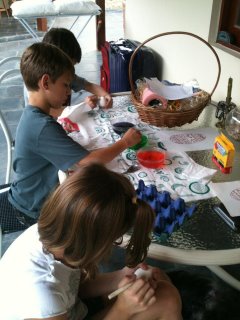
Ao desenvolvemos um jogo, um artesanato, ou assistimos à um vídeo; se essas atividades estiverem acontecendo em Inglês o aprendizado também está acontecendo em paralelo, mas de uma maneira envolvente. Easter Egg Coloring

O ser humano tem diferentes formas de aprender: visual, auditiva, linguística, sinestésica, musical, espacial, lógica e matemática. Todas estas formas devem ser estimuladas durante a aprendizagem para que essa seja facilitada. Através de diferentes tipos de exercícios ao longo das aulas, este objetivo é alcançado de uma maneira gostosa e eficaz.

Não se enganem, pois aulas chatas de cópias da lousa, repetições ou exercícios de gramática não levam ao aprendizado da língua ou fixam mais o conteúdo. Estas apenas cansam e desmotivam o aluno a aprender uma segunda língua.

Quer mais informações, leia outros artigos sobre Ensino Bilíngue em meu blog.

Are you sad or lonely? Find 8 solutions!

Hera are some ideas I have just found on Twitter from Sue Ellson by” The Tiny Buda”. I think they are very true and helpful. I hope you´ll like them.

People are lonely because they build walls instead of bridges.” ~Joseph F. Newton

1. Connect through sports, hobbies or interests.

.Meet likeminded people who share something that you also love. They will make time for you; other people already have full calendars.

2. Borrow or adopt a dog and go walking.

People talk to people with dogs.

3. Talk to senior citizens.

They have plenty of wisdom, time, and advice that they can share. By listening, you are also validating them as well as yourself.

4. Expect it to be challenging.

It may be difficult for you, but don’t give up. Keep going but start with the easiest options first.

5. Find out why you feel lonely. 

Perhaps there is some bitterness, resentment, or guilt that you are carrying around. It is time to forgive and forget.

6. Celebrate

Develop new routines and rituals to celebrate special occasions and reward your new healthy behaviors.

7. Be brave.

It takes courage and persistence to overcome your bad habits—but it all starts with you, not someone else. Ask for help, seek some guidance, but take full responsibility for your happiness.

8. Dream big.

Visualize what you want in the future and watch it materialize. Keep your vision sharp and clear.

Can you see how none of these suggest finding a partner or fixing the one you have? Isn’t that liberating? By connecting through various people, activities, or regular commitments, you are no longer dependent on a partner to complete you or help you overcome your feelings of loneliness.

And you may just find that when you are no longer lonely, you will be happy—with or without a partner.


About Sue Ellson

Sue Ellson BBus AIMM MAHRI is the Founder and Director of Newcomers Network, a socially responsible business providing information, events and advocacy for newcomers and networkers in Melbourne, Sydney, Adelaide, Brisbane and Perth. Sue started this enterprise in 1999 as a result of her own difficult transition from Adelaide to Melbourne. Connect directly to Sue via LinkedIn.

Seeds, Seeds, Seeds

Prezados Alunos, Pais e Amigos,

O projeto que estaremos desenvolvendo nas aulas dessa vez será sobre sementesThe tiny seed

Vamos coletar os mais variados tipos de sementes que existem: de frutas e cereais que comemos no dia a dia, de flores, de plantas, de árvores. seeds

Faremos muitas atividades relacionadas ao tema como:  leitura de história, assistir à vídeos, confeccionar livretes, coleta e plantio de sementes e acompanhar o crescimento e desenvolvimento das sementes que plantarmos em sala. little seed

Todos  podem colaborar enviando para a aula fotos, CDs, livros, sementes ou demais objetos sobre o tema.

Com certeza este projeto será muito educativo!


The project that we are developing in class this time will be about seeds.

We will collect several kinds of seeds that exist like: fruit, flowers, plants, and trees.
We will do many activities related to the theme as story reading, watching videos, making booklets, collecting and planting seeds and monitor the growth and development of seeds we sow in the classroom.
You can contribute by sending to class photos, CDs, books, seeds or other objects on the topic.

Surely this project will be very educational!

Happy Easter Everyone!

Dear Students, Parents and Friends,

Bunny 1

The activities for Easter Week are done! I am tired, but very happy with the outcome.

The children had a lot of fun doing the activities for Easter.

Easter Baskets

Decorando ovoThey enjoyed assembling their baskets.

Rafale no jardimThey loved decorating their eggs.

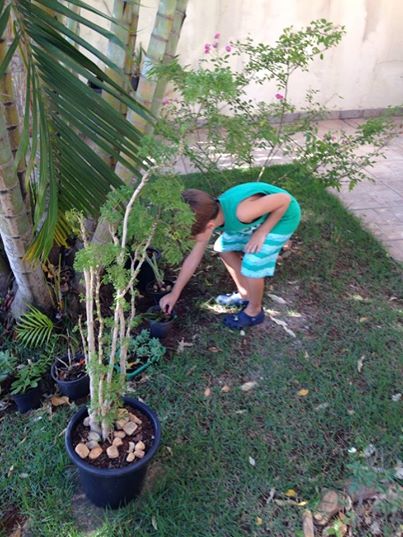
They looked for hidden chocolate eggs during the egg hunt with happiness and joy.

It was a great time and we all learned and had a lot of fun.

We at Paula Lyra ELT School wish you a Peaceful and Happy Easter!Bunny 3