
Category Archives: Aulas de Inglês
When to use This or That
False Cognates
Eles podem nos confundir e nos levar ao erro. Por isso, cuidado!
Resumo da semana sobre Linguística Aplicada
Definimos lingüística aplicada como um assunto acadêmico que se concentra na análise de problemas de linguagem do mundo real. Mostramos como ela se liga à linguística, mas vai além disso para abranger uma ampla gama de campos relacionados. A Linguística Aplicada é um campo de estudo relativamente novo e ainda está evoluindo e se expandindo, o que significa que os limites entre lingüística e lingüística aplicada não são claros.
Os linguistas aplicados não apenas tentam resolver problemas de linguagem do mundo real, mas também levantam questões sobre o uso da linguagem e seu impacto social. Nesse sentido, os pesquisadores linguísticos aplicados visam ser críticos, objetivos e factuais.
Vimos algumas maneiras pelas quais a pesquisa aplicada em lingüística teve um impacto real na sociedade em geral, já que essa é uma das características distintivas da disciplina; sua aplicação a problemas da vida real onde a linguagem é central. Vimos também que uma das principais aplicações é melhorar a eficiência e a eficácia do ensino, aprendizagem e avaliação de línguas, uma área que iremos aprofundar nas próximas semanas.
In English
We’ve defined applied linguistics as an academic subject that focuses on the analysis of real world language problems. We have shown how it links to linguistics but goes beyond this to cover a broad range of related fields. Applied Linguistics is a relatively new field of study and is still evolving and expanding, which means that the boundaries between linguistics and applied linguistics are not clear cut.
Applied linguists not only try to solve real world language problems but also raise questions about language use and its social impact. In this sense, applied linguistic researchers aim to be critical as well as objective and factual.
We have looked at just a few ways that applied linguistics research has had a real impact on broader society, as this is one of the distinctive features of the discipline; its application to real life problems where language is central. We have also seen that one of the key applications is to improve the efficiency and effectiveness of language teaching, learning and assessment, which is an area that we will explore further in the following weeks.
Who has the authority nowadays to set the rules for what is correct and what is incorrect English?
The unprecedented spread of one language as an international lingua franca has socio-economic, political and ideological consequences.
Two key issues debated include:
- whether the spread of English as an international means of communication serves to sustain the privilege and power of its native speakers (what Phillipson refers to as ‘linguistic imperialism’ (1992)) or whether reasons for learning English now are more pragmatic than ideological in nature (Bisong 1995)
- who, if anyone, ‘owns’ English, now that is used on such an intensive scale globally – for example, does the term native speaker still have relevance when large numbers of people have a very high, nativelike level of competence; when many children in countries outside the traditional ‘native speaker heartlands’, i.e. the US, UK, Ireland, Canada and Australia etc., are learning English as a first language; and when most interactions in English take place without a so-called native speaker even being present ?
Linguística Aplicada.
Estou fazendo um novo curso da Leicester University sobre esse tema e irei passar algumas informações para vcs.
Some misconceptions around applied linguistics
The fields of linguistics and applied linguistics are not well understood and there are numerous misconceptions surrounding the terms. A common response to someone who says they are a linguist or an ‘applied linguist’ is ‘how many languages do you speak?’ or ‘I’ve never been very good at grammar’. Here we will try to remove some of the misconceptions about what linguistics is.
What linguistics is not:
It is not about speaking many different languages
Linguistics is not about learning as many languages as possible, although many linguists do speak other languages because of a fascination with language or to get a better understanding of how languages work in general.
The name for a person who can speak many languages is a ‘polyglot’, not a ‘linguist’. Asking a linguist how many languages they speak is like asking a doctor how many diseases they have had. Linguists study languages (and language). They look at languages as data and learn to recognize and analyse patterns and differences within and between languages, just as doctors learn to recognize and analyse signs and symptoms of diseases.
It is not about knowing everything about language
Like many professionals, such as scientists, doctors or engineers, linguists can specialise in one of many areas, such as grammar, phonology or semantics. However, the study of language is a massive field and although a linguist may have a general knowledge of many areas of language, they cannot be expected to know everything.
It is not about telling people how to speak or write language correctly
It is often assumed that linguists will settle discussions about what is ‘correct’ or ‘incorrect’ in language (eg should the ‘t’ be pronounced in ‘often’; do you say ‘between you and me’ or ‘between you and I’). However, linguists describe rather than prescribe – they analyse what people do with language not what they should do. A linguist may describe what is appropriate in standard language in a formal context but their interest is in understanding how language is used in different situations and by different people, and how languages change and evolve, rather than prescribing what should be done. So a linguist might ask, for instance, ‘Which speakers (what ages, which genders, which regions, etc.) prefer ‘between you and I’, and which prefer ‘between you and me’? And in what social situations and in what types of sentences is one of these patterns preferred over the other?
It is not only for academics
Linguistics is an academic discipline and many linguists teach and research at universities, but they can also work in a wide range of other fields.
Linguists can work in industry, for example working on speech recognition software or natural language processing or as translators or interpreters for multinational companies. Many work in education, for example as a curriculum planner or as a teacher of English as a second language. Some linguists work in government, for example advising on language policy and planning, or in publishing, writing or editing textbooks. And some even end up working in the entertainment industry, as a voice coach for actors and presenters.
A knowledge of linguistics can also be useful for many other careers, such as journalism, publicity and advertising or any other area where language is important.
It is not just about grammar
Although grammar is a key part of language, it is only one part among many. The main components of linguistic enquiry are explained in the next section.
Task/reflection
Here are a couple of examples of well-known phrases which some would consider are ‘not grammatically correct’.
‘I can’t get no satisfaction’ (Rolling Stones song title)
‘To boldly go where no man has gone before’ (Star Trek, 1960s US TV series)
Do you think they are ungrammatical’ and if so, why? Do you think they are ‘acceptable’? Share your ideas in the comments area.
© University of Leicester
Pronúncia não é tão importante assim !
Por quê ensinar Fonética é importante?
© Rawpixelimages (Remixed by QUT)
Why is phonics important?
Phonics is important in learning to read and write. Research supports the view that phonics is a key predictor of later reading success.
English is a phonetic language, which means we have a sound that is matched by a written letter or combination of written letters.
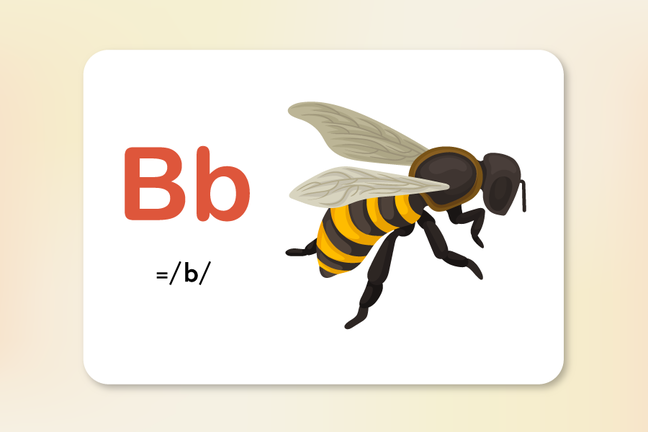 Matching sounds to letters © QUT English is the most complex alphabetic language to learn because it is irregular – there can be many options for combining letters to create a specific sound, or combining sounds to make up a word. However, there are parts of the English language that do follow rules and it’s important that children understand these rules to be successful decoders.
Learning to read is complex and phonics is just one part of code-related literacy development and becoming literate.
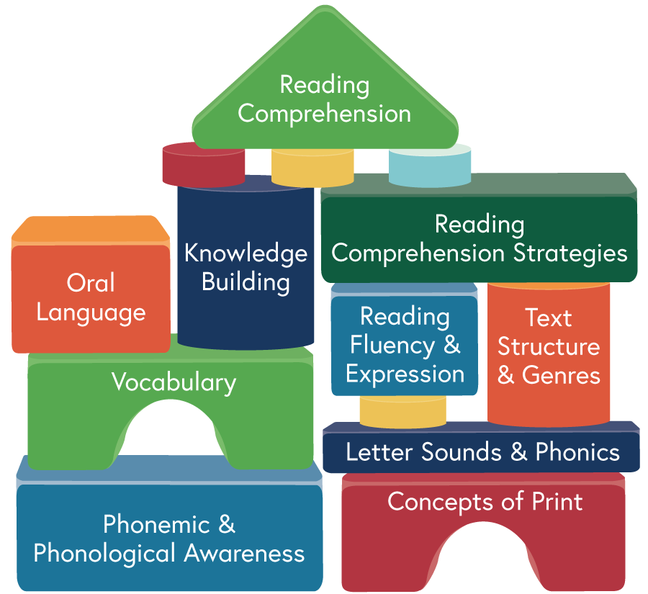 Building blocks of literacy. Adapted from The Melissa Institute. © QUT Learning to read also involves developing strategies in all of the blocks in the image above, as well as discovering the pleasure of reading and reading for a purpose.
Oral language and phonological awareness play a key role in early childhood literacy development. Phonics knowledge is finite and can be learnt quickly, whereas comprehension and vocabulary knowledge continues to develop over a lifetime. This makes phonics learning easier to measure than comprehension and vocabulary development.
Over the past 50 years, academics, policymakers and education leaders have argued over whether we should, or should not, teach phonics. Rather than arguing whether phonics is necessary, research has shifted from ‘should we or shouldn’t we’ teach phonics, to what form of phonics should be taught, when, and how much.
There are a range of different ways you can teach phonics in your early years setting. The ‘best’ way to teach phonics is through teachers using their informed professional judgment about what’s needed for the children they’re teaching.
What is phonics?
Phonics is understanding the structure of oral language and its representation in written language. It’s a method for teaching children to read by helping them to connect sounds with letters or groups of letters. Phonics is just one part of learning to read.
Explaining phonemes
Phonemes are the smallest units of sound in oral language. The relationship between phonemes and letters is known as phoneme-grapheme correspondence – more commonly known as phonics.
Explaining phonological awareness
Phonological awareness is the ability to detect and manipulate the larger units of sound; for example, rhyme and syllables. Phonological awareness is important for children in the prior-to-school years. Research suggests it is easier to attend to larger units of sound, such as rhymes and counting syllables, than it is to attend to the smaller units of sound as in phonemic awareness.
Modais
Os verbos modais têm diferentes possibilidades. Não são fáceis de serem usados, pois necessitamos ter um entendimento desta possibilidade.
Eles podem variar de acordo com o tempo verbal ou a ênfase que se quer dar.
Por exemplo: habilidade, obrigação, permissão, sugestão, conselho, previsão, promessa, pedido, possibilidade ou decisão.
Veja alguns exemplos na imagem e entenda melhor sobre eles.

Talking about job offers
Read the text and make sure you understand all the blue words and expressions. If you’re not sure of the meaning, click on the link to read the definition.
If you are successful in a job interview, the company may make a job offer.
If the company does offer you the position and you accept the offer then you will need to talk about the terms of employment. You will need to discuss the working hours and of course the salary.
Before you start your new job, you will need to decide on the start date. This will depend on the notice period in your current job. This could mean you have to work for a number of weeks after you hand in your notice.
When you have agreed all of this, your new employer will send you a confirmation letter and you can sign a contract with them.
Business Acronyms
1 B2B – Business to Business
2 B2C – Business to Consumer
3 BD – Business Development
4 CEO – Chief Executive Officer
5 CFO – Chief Financial Officer
6 COB – Close Of Business
7 COO – Chief Operating Officer
8 CRM – Customer Relationship Management
9 CSR – Corporate Social Responsibility
10 DM – Direct Mail (can also mean Direct Message)
11 EOD – End Of Day (EO plus another letter is commonly used for End Of Week, End Of Play or End Of Thread for example)
1 HR – Human Resources
2 IAM – In A Meeting
3 FYI – For Your Information
4 KPI – Key Performance Indicator – a way of measuring something that is crucial to the success of the business
5 MOM – Month Over Month refers to that month’s figures compared with the previous month’s (also QOQ or Quarter Over Quarter and YOY or Year Over Year)
6 PA – Performance Appraisal, or it can also stand for Personal Assistant
7 PDP – Personal Development Programme
8 P/E – Price to Earnings (refers to the market price per share divided by the actual earnings per share)
9 P&L – Profit and Loss (summarises the revenue, costs and expenses earned and incurred by a business)
10 ROI – Return On Investment (also used for ROA or Return On Assets and ROE or Return On Equity)
11 SMART – Specific, Measurable, Attainable, Realistic, Time-bound is a guide used for setting an objective that can be measured
12 SMB – Small to Medium Business (also sometimes called SME or Small to Medium Enterprises)
13 TOS – Terms Of Service
14 YTD – Year To Date
 Paula Lyra ELT School