
Author Archives: paulalyra
Our Easter Activity 🐣
We prepared a basket, folding the paper very carefully, then we put a handle and next we glued the eyes, the nose, the ears, and the whiskers of our bunny.
How did you like it?


How to be better at Speaking.
1. Change your smart speaker settings
Do you have one or more smart speakers at home? Did you know that some of them will allow you to talk to them in two languages? If yours lets you do this, change its settings so that you can give instructions in English as well as your mother tongue.
Once you’ve changed the settings, you can have a lot of fun talking to your smart speaker in English. For example, if you have an Amazon Alexa speaker, this page has lots of funny things you can ask it, such as:
- Alexa, give me a kiss!
- Alexa, do you know the muffin man?
- Alexa, can you sing in autotune?
Similarly, if you have a Google Home speaker, there are also lots of entertaining things you can ask, including:
- What language do you speak?
- Do you have an imagination?
- What is the meaning of life?
Of course, you can still use English to get useful information from your smart speaker, such as the daily news, weather and delivery status of your online orders. Be creative!
2. Talk to yourself!
You don’t need an audience to practise speaking English. You can talk to yourself at any time!
The big advantage of talking to yourself is that you can choose whatever topic or theme you like. For example, one day you could decide to speak using the present tense. The next day you could switch to the future or past tenses, and so on.
One top tip is to speak to yourself while standing in front of a mirror. That way you can see how clearly you are pronouncing words and phrases. An even better alternative is to video yourself as you speak in English. This lets you play back the footage and get a more objective view of your pronunciation and fluency.
3. Narrate your everyday life
If it’s difficult for you to dedicate time to speaking English, why not narrate your everyday life? As you walk to the shops, take the bus or train, go for a run or do any other activity, try describing in English what you see around you. How many people are walking ahead of you? What different products are on sale in the shops? How many stops has your bus made on the way to its destination? What would advertising posters say if they were written in English?
Of course, you may not be comfortable speaking out loud when there are other people around. But if even if you narrate your day silently, you’ll be thinking in English – and that’s the main skill you need in order to speak fluently.
4. Try shadowing
This tip is great for polishing your accent, as well as improving your familiarity with spoken English. All you need to do is watch an English-speaking film or listen to anglophone radio or podcasts. When someone speaks, try saying exactly the same thing immediately afterwards. By doing this, you are acting as an ‘echo’ or a ‘shadow’.
For shadowing to work best, don’t stop the audio before you repeat the words. Try to keep up. Why? Because this is the technique developed by linguist Alexander Argüelles, who can ‘read about three dozen languages and speak most of them fluently‘!

5. Read aloud
You probably read a lot of English to help improve your language skills. Whether you’re interested in online articles, novels and short stories, magazines or anything else, make a habit of reading them aloud whenever possible. That way, you’ll not only become familiar with the written words, but you’ll get valuable practice of speaking them.
6. Practice speaking with friends
It can be incredibly motivating to learn with friends. So, if you have friends who either speak English or are learning it, be sure to create opportunities to talk to each other. Whether you arrange regular English conversation sessions, decide to speak English when you meet up for a drink, or have regular video chats via WhatsApp, Skype or Zoom, you’ll be helping each other to practise and learn.
7. Play online games
We’ve already blogged about how online gaming can help you improve your English. Games with online text and audio chat are great because they allow you to communicate with native English speakers as you play. You’ll also learn some really fun gaming slang along the way.
8. Take online classes led by an expert English speaker
The very best way to improve your spoken English is to spend time learning with an expert English speaker. That way you can get instant feedback on your spoken English, learn lots of idioms and useful phrases, and ask for help when you need it. These days you can access online courses led by English experts, wherever you are in the world. For example, live online classes with English Online give you the opportunity to take part in small-grouptutorials led by an English speaker. Alternatively, you can sign up for one-to-one tuition with a personal English tutor.
Practicing your spoken English needn’t be difficult, and it can often be fun. Be creative, make use of what resources you have available to you and – if possible – try and spend at least some time talking with native speakers. One thing we do know: if you make speaking English part of your daily routine, you’ll learn to speak more fluently, much faster.
Our Halloween Party 🎃

How cute is he? 🥰
An excellent student who loves English!
How to get your English to B1 level
1. Understand the main points of clear standard input on familiar matters regularly encountered in work, school, leisure, etc.
For B1 level, you should read and listen to English as much as you can. You can take English lessons, listen to English language songs, watch films and shows in English, read documents in English for your job or search for articles and videos … all of these will help you to improve your reading and listening skills.
Choose texts about things you already know. For example, read English-language websites or tourist information about your country, or watch a show or film again that you’ve already watched but this time with English audio or subtitles. Don’t worry if you don’t yet understand all of it. Focus on understanding the main points, and note down new words to increase your vocabulary.
Also, choose texts at the right level for you. On this website, for example, do readings and listenings that are marked A2 or B1. Don’t choose texts that you find too difficult, as you might feel frustrated.
2. Be able to deal with most situations likely to arise whilst travelling in an area where the language is spoken.
If you have any opportunities to travel, take advantage! Use your English to do things like buying tickets, ordering food, shopping and taking public transport.
Even if you can’t travel, there are still things you can do to improve your skills. Travel topics are usually included in English coursebooks and learning materials, so use them to prepare for these situations. A good way to practise is to first learn useful words and phrases for a situation, and then do a role play.
3. Produce simple connected text on topics which are familiar or of personal interest.
How often do you speak and write English? Try to do both regularly.
For speaking practice, try to find some English speakers in your workplace, school, local area or online, and talk to them about your interests, family, work and so on. You can also try recording yourself speaking or posting a voice message in our Learning hub. For writing practice, you might like to write a diary or blog, or write comments on the LearnEnglish Facebook page or social media.
For B1 level, you should speak and write more at length. Use words such as therefore, because, first of all and on one hand … on the other hand … to connect one idea or sentence to another.
4. Describe experiences and events, dreams, hopes and ambitions and briefly give reasons and explanations for opinions and plans.
This skill is about expressing your thoughts. Practise putting your thoughts into English.
You can try talking about your past experiences. What memorable experiences have you had, either recently or a long time ago? You might need to check some vocabulary to talk about them, so use a dictionary or translator. Then think about what you can say and practise saying it until you can describe your experience smoothly and in detail. This is also good for your vocabulary: it’s usually easier to learn vocabulary when it is personally meaningful.
Try talking about the future too. What do you plan to do this week, this year or in five years’ time? Do you have any hopes or dreams? Put these into words. If you don’t know what your future plans are, it’s fine – you can still talk about different options that you are thinking about. You can also say why you plan to do things.
As suggested above, keeping a diary or blog and having regular English conversations are good ways to practise these skills.
Good luck on your way to B1!
Mother’s Day’s present
We all had a lot of fun preparing Mom’s present.
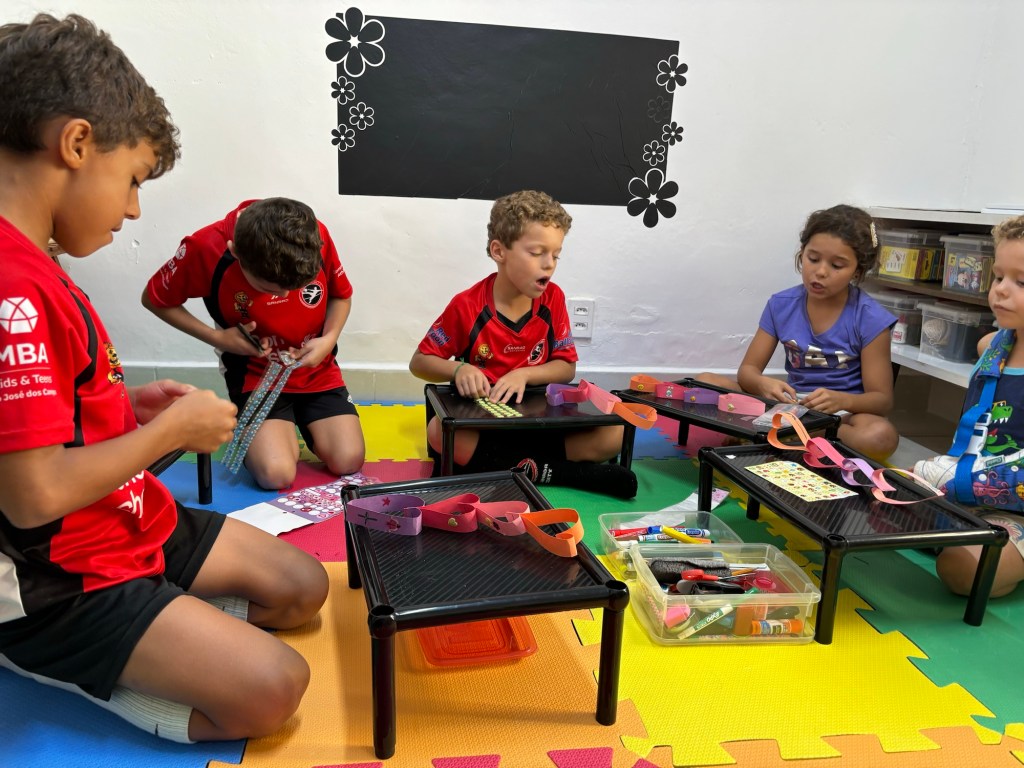

Easter Activity 🐣🐰
Everybody enjoyed the fun activity where they have to prepare their own baskets, to color the eggs and to have fun!




How to Prepare for a Job Interview

Do you have a job interview in English coming up soon? These tips will help you to get ready and impress your potential employer.
If you’ve been invited to a job interview, it’s a good sign. It means the company thinks you have potential and they want to know more about you.
Interviewers can sometimes ask unpredictable questions, but you can increase your chance of success by preparing well! Here’s how.
Study the job description
The job description says what skills, experience and personal characteristics the company needs.
Think of examples of your past work that demonstrate your strengths in these areas. You may have other skills too, but focus on those mentioned in the job description.
Anticipate questions and prepare answers
Here are some common questions to prepare for.
- Why do you want this job?
- What can you bring to this role?
- Why did you leave your last job?
- Where do you see yourself in five years’ time?
- What are your strengths and weaknesses?
- What challenges could you face in this job?
Your answers will be more persuasive if you include real examples of your work. For instance:
Q: What can you bring to this role?
A: Good time management. It’s one of my strengths. In my last role I organised our office relocation, which was a huge project involving over a hundred staff in only three months. I delegated work within my team to save time. I set deadlines for completion of the project stages and I monitored progress regularly. Because of this, the relocation was completed on time and on budget. I feel confident I can bring these skills into this role.
Some questions may ask you to talk about weaknesses, failures or challenges. Nevertheless, be optimistic. For example, if you have to talk about a failure you experienced, you can also say what you learned from it or how you avoid repeating it.
Look at your CV and guess what interviewers will want to know. For instance, if you have any gaps between jobs, they may ask what you did during that time.
Research the company
Find out as much as you can. Check the company’s website, LinkedIn and social media, and ask your friends and colleagues.
You can use this information in the interview. If you know about the company’s current activities, for example, you can say which ones you are keen to be involved in. It will show your interest in the job.
Practise English
Here are some suggestions for vocabulary practice:
- positive adjectives to describe you (e.g. determined, resilient) and your work (e.g. innovative, successful)
- verbs to describe your achievements and actions (e.g. coordinate, direct, develop, create)
- words to describe projects and goals (e.g. objective, success criteria, implementation)
- words to describe professional development (e.g. training, qualifications)
- technical terms in your field
- phrases for social interaction (e.g. Nice to meet you; It’s my pleasure).
Also check the pronunciation of any technical terms, the company’s name and the interviewers’ names.
Practise speaking English aloud until you feel comfortable and confident. It’s a good idea to do a practice interview – ask a friend to ask you some questions and practise responding in English.
Prepare your own questions
You may have a chance to ask your interviewers some questions. This is a good way to show your interest as well as to find out more about the job. Here are some suggestions.
- What do you think the challenges will be for this role?
- What’s the next step in the recruitment process after this interview?
- When will you notify candidates about the outcome of the interview?
- Will there be any support for training and development in this role?
Prepare the practicalities
Decide what clothes you will wear and get them looking smart. Pack in your bag anything that you need to bring, such as your ID card or certificates. Take a bottle of water too. Arriving late makes a bad impression, so plan to arrive at the venue early.
For online interviews, find a quiet place where you won’t be disturbed. Turn on your device’s camera and check that the picture is clear and the room lighting is not too bright or dark. Check that the microphone picks up your voice clearly too. Have a look around the interview platform (e.g. Zoom or Skype) and get familiar with the controls (how to mute, share screen, etc.). Also prepare any notes that you want to refer to.
Good luck in your interview!
 Paula Lyra ELT School