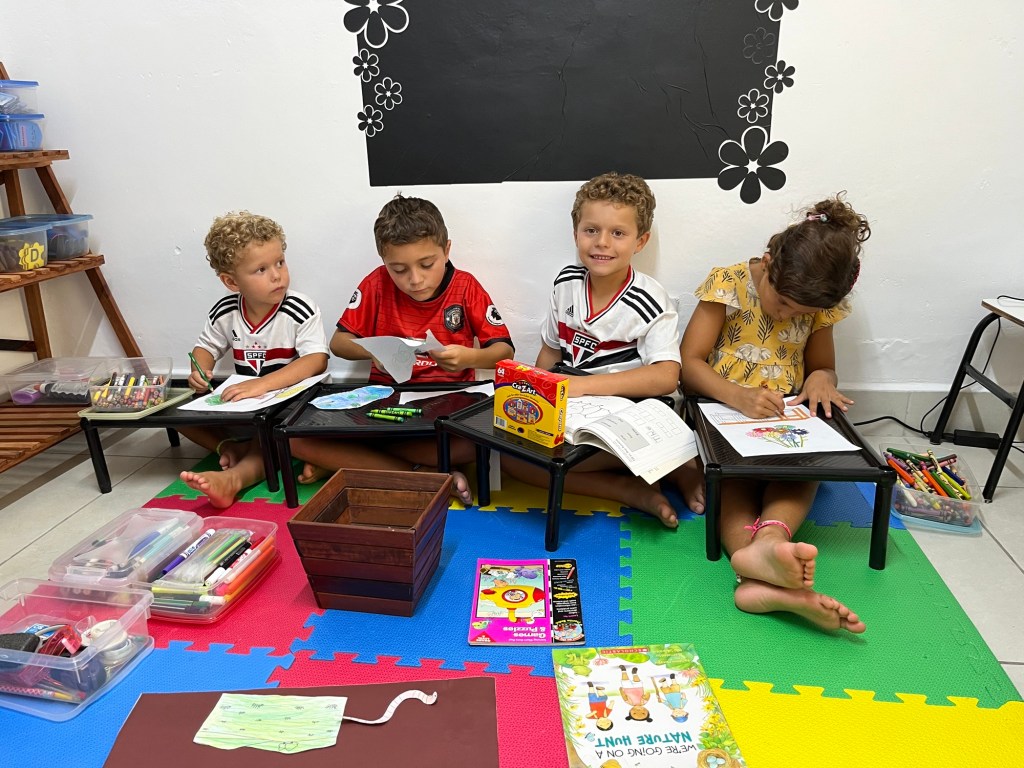
Get Ready!

Get Ready!

By Nikita Gupta / July 12, 2021


Photo credit: www.growingupgupta.com
“Having your child learn two languages at the same time will confuse them, won’t it?” “You know that teaching your child multiple languages is just going to cause a speech delay?”
Have you heard these assertions too? These are common questions that many of us raising bilingual kids hear. The answer is “No” to all of the above. Learning two languages at the same time does not negatively affect speech development. On the contrary, it might help the child overcome the problem faster. To give you some assurance, here are ten benefits of being bilingual.Photo credit: www.growingupgupta.com
When a bilingual child tries to speak, both languages compete to be spoken. The child has to quickly pick and suppress the other and switch between them in a second. This ability helps kids to focus better in a noisy class and mute all other irrelevant sounds.
Bilingual kids have better mental alertness, which helps them to solve problems much easier. A study by psychologists Ellen Bialystok and Michelle Martin, shows that bilinguals have an easier time dividing objects by shapes and colors than their monolingual peers.
Since their brains are used to decoding and interpreting two or more languages, bilingual kids have an easier time coming up with and explaining scientific ideas.
Bilingual kids do better in word reading and spelling because of their understanding of sounds and tenses. This gives them an advantage over others when they start learning languages in class.
In a bilingual child’s brain, both sides are always on alert and active even when they are speaking one language. The brains work a little bit more than a monolingual brain, which enhances their cognitive abilities.
Multilingual kids have mastered the art of interpersonal understanding and listening, which makes them better communicators. This is more of a benefit of growing up in a multilingual environment where you have to listen to other’s perspectives and understand them.
Learning two languages means you have to retain a lot of information and be ready to produce it at will. This helps kids with memory in school work as well as other important stuff like directions.
Have you ever noticed that children take a while before responding to a command or an incident? Learning multiple languages forces the brain to quickly switch from one language to another, depending on who is speaking to you. As a result, the brain gets used to quick response and shorter reaction time.
Speaking a second or third language opens up a whole new world out there to enhance your social skills. Being able to communicate with people from different cultures is a confidence boost and an ice breaker. It also helps to relate better with family members from that culture.
Multilingual kids are more open-minded and adaptable because you have already exposed them to a different level of tolerance. They are also more accepting and understanding of others, which translates to compassion and empathy.
At a young age, bilingual acquisition is as natural as learning how to walk or crawl. Kids who learn decoding skills in one language will easily translate to English or any other language. Multicultural parenting may not be the easiest, but it comes with many benefits for the children. As we have seen, there are multiple benefits of being bilingual.
Whatever type of music you’re into, learning English with songs will help you improve your listening and speaking skills, vocabulary and pronunciation.
It can be any song at all. A song that you like, that you’ve listened to several times before. Have you found it? Great! Now …
Do you understand all of the lyrics?
Probably not! But don’t worry – people hardly ever understand every word of a song the first time they hear it. The words have to fit the rhythm of the music, so they are often difficult to understand.
Find the lyrics online. Many music streaming services have a setting where you can listen and read the lyrics at the same time.
Listen to the song again while you read. Now it starts to make a bit more sense!
Make a note of new or interesting words and phrases. You don’t have to look up every single word in the dictionary. Try to learn five to ten new words per song.
You may notice some strange-looking words! Some words in songs are written as they are pronounced.
‘Wanna’, for example, is an informal spelling of ‘want to’.
What about ‘gonna’ and ‘gimme’? What are these informal spellings of?
As you listen, notice how phrases are pronounced. This really helps you understand people when they’re talking fast.
As you listen, start to join in with the easier parts. Sing as quietly or as loudly as you want!
The chorus – the part of the song that is repeated several times – will probably be what you can sing along to first.
Listen to the song a few more times, and each time join in with a little bit more.
By now the song is really in your head! You’re really feeling the rhythm of the music and the lyrics.
Tomorrow, next week or whenever you feel like learning a new song, do the same thing again. But don’t forget to come back to the old songs, especially your favourites.
As parents, we are busy – especially in the morning! It can be difficult to establish a consistent calendar routine this time of day.

1. Keep it simple. Don’t try to achieve too many things with your calendar routine or you won’t be consistent. Start with the basics. If you need to, do your calendar routine the night before when things are calmer in the house.
2. Add your calendar routine to you child’s morning job chart. Check off the tasks on this chart each morning so you don’t forget any of them. This signals that the calendar routine is important and, if it is on the morning job chart, you will do it consistently. For more on morning routines, check out this post:
3. Start with a ‘days of the week’ song. See the videos below if you need more ideas. I’d like to give a shout out to Blanca Stingl, an amazing kindergarten teacher with a great calendar routine. I got many of these ideas from her. Give your child a pointer and allow him/her to point at the days of the week as you sing. When you introduce letter sounds, have your child look for the day of the week that starts with the ‘mmm’ sound (Monday).
4. Help your child select the number for the date. By doing this repetitively, your child will soon recognize numbers to 30.
5. Sing a ‘months of the year’ song. You may only want to do this a couple of times each month. If your child is getting bored or fidgety, keep your calendar routine shorter. Create a dance or let your child use the pointer for the months of the year to keep him/her moving.
6. Sing “What’s the weather like today?”. Then, look out the window and decide. Put up the appropriate weather label.
7. Finally, mention the season. You may want to read a book about ‘winter’ when the season changes. Discuss winter clothing, activities, and changes in the environment. You can do this each time a season changes. This can be a starting point for some great seasonal learning activities.
Consider this list your interview question and answer the best way possible.
- Tell Me About Yourself.
- How Did You Hear About This Position?
- Why Do You Want to Work at This Company?
- Why Do You Want This Job?
- Why Should We Hire You?
- What Can You Bring to the Company?
- What Are Your Greatest Strengths?
- What Do You Consider to Be Your Weaknesses?
- What Is Your Greatest Professional Achievement?
- Tell Me About a Challenge or Conflict You’ve Faced at Work, and How You Dealt With It.
- Tell Me About a Time You Demonstrated Leadership Skills.
- What’s a Time You Disagreed With a Decision That Was Made at Work?
- Tell Me About a Time You Made a Mistake.
- Tell Me About a Time You Failed.
- Why Are You Leaving Your Current Job?
- Why Were You Fired?
- Why Was There a Gap in Your Employment?
- Can You Explain Why You Changed Career Paths?
- What’s Your Current Salary?
- What Do You Like Least About Your Job?
- What Are You Looking for in a New Position?
- What Type of Work Environment Do You Prefer?
- What’s Your Work Style?
- What’s Your Management Style?
- How Would Your Boss and Coworkers Describe You?
- How Do You Deal With Pressure or Stressful Situations?
- What Do You Like to Do Outside of Work?
- Are You Planning on Having Children?
- How Do You Prioritize Your Work?
- What Are You Passionate About?
- What Motivates You?
- What Are Your Pet Peeves?
- How Do You Like to Be Managed?
- Do You Consider Yourself Successful?
- Where Do You See Yourself in Five Years?
- How Do You Plan to Achieve Your Career Goals?
- What’s Your Dream Job?
- What Other Companies Are You Interviewing With?
- What Makes You Unique?
- What Should I Know That’s Not on Your Resume?
- What Would Your First 30, 60, or 90 Days Look Like in This Role?
- What Are Your Salary Expectations?
- What Do You Think We Could Do Better or Differently?
- When Can You Start?
- Are You Willing to Relocate?
- How Many Tennis Balls Can You Fit Into a Limousine?
- If You Were an Animal, Which One Would You Want to Be?
- Sell Me This Pen.
- Is There Anything Else You’d Like Us to Know?
- Do You Have Any Questions for Us?
Good luck on your interview! 🍀
World English Day on 23 April.

World English Day on 23 April is William Shakespeare’s birthday. See our list of resources below to help you introduce Shakespeare into your primary English language classroom.
See the lesson plans below for you to use in the classroom with primary learners. Click or tap on the title of each lesson plan to go to the materials.
In this lesson plan, learners will be introduced to the life of William Shakespeare and some of his achievements through a short animated video.
In this lesson plan, learners will be introduced to the Shakespeare play Twelfth Night through a short animated video. They will watch the video and complete comprehension activities, and then will be guided to think about and discuss the idea of ‘disguise’ from the play. Finally learners will develop their creative writing skills by imagining and writing about disguising themselves as someone for the day.
In this lesson plan, learners will be introduced to the Shakespeare play Romeo and Juliet through a short animated video. They will watch the video and complete comprehension activities, and then will be guided to think about and discuss the idea of ‘family feuds’ from the play. Finally learners will develop their speaking skills by role playing a situation where two friends have done something mean to each other.
In this lesson plan, learners will be introduced to the Shakespeare play Much Ado About Nothing through a short animated video. They will watch the video and complete comprehension activities, and then will be guided to think about and discuss the idea of ‘deception’ from the play. Finally learners will develop their speaking and writing skills by surveying their classmates about the most important qualities in a friend.
In this lesson plan, learners will be introduced to the Shakespeare play Macbeth through a short animated video. They will watch the video and complete comprehension activities, and then will be guided to think about and discuss the idea of ‘ambition’ from the play. Finally learners will develop their writing skills by thinking and writing about what job they would like to have when they grow up.
In this lesson plan, learners will be introduced to the Shakespeare play Hamlet through a short animated video. They will watch the video and complete comprehension activities, and then will be guided to think about and discuss the ideas of ‘revenge’ and ‘confusion’ from the play. Finally learners will develop their creative writing skills by planning and writing a ghost story.
In this lesson plan, learners will be introduced to the Shakespeare play A Midsummer Night’s Dream through a short animated video. They will complete comprehension activities and then think about and discuss the ideas of ‘dreams’ and ‘magic’ from the play, with the teacher’s guidance. Finally learners will develop their creative writing skills by imagining and writing about either a magical dream or a magic potion or spell.
Source: https://www.teachingenglish.org.uk/news-and-events/top-stories/english-language-day-23-april
Earth Day, which was established in 1970 in the US, is celebrated on 22nd April each year. It is a day to think about our planet and what we can do to keep it special; to think about saving water and energy, reducing pollution, recycling, protecting our animals, trees and plants, and generally getting kids interested in protecting their environment.
“Treat the Earth well. It was not given to you by your parents, it was loaned to you by your children.
Kenyan proverb

Here are some quick ideas for celebrating Earth Day with your children:
Source: https://www.activityvillage.co.uk/earth-day?awt_a=8YG5&awt_l=5S26Y&awt_m=IpVSHZyq2VDtG5

If you ever feel anxious about speaking English, here are some tips to help.
Do you ever feel scared or worried about speaking English? Perhaps you get sweaty hands or your heart starts beating fast. Those are signs that you might be feeling anxious. People often feel anxious about speaking in front of classmates, speaking to native speakers, making mistakes and various other things.
Anxiety is very common, but if the worries stop you from speaking, then you might miss opportunities to practise your English. You also can’t get much feedback on your speaking from the teacher or other people. Other people miss out on the chance to hear your ideas as well.
It takes time to overcome anxiety about speaking English, but it can be done! Here are some tips.
Start small. Set a goal that is a bit challenging but achievable and not too scary. For example:
And here are some more challenging goals.
Remember, the goal is not to do these things perfectly, it’s just to do them! Search for opportunities, and if you achieve your goal, that’s great! Increase the difficulty of your goals over time.
Tell yourself positive things: I can do it. I’ve got this. It will be OK! Whether you are a beginner or an advanced-level speaker, thinking negatively will limit what you do. Thinking positively will help you to do your best and improve.
If you feel anxious, you may want to avoid speaking. It might be easier to do something totally different, such as reading or grammar exercises. However, avoiding the issue can just make it grow bigger and scarier. Don’t wait – start speaking little by little. It will be OK!
Try to find someone who you feel comfortable speaking with, perhaps somebody who is patient and kind and keen to speak English too. If you can practise speaking regularly, it should help to reduce anxious feelings.
We often worry about having problems like these and not knowing how to deal with them.
By planning what you will do and say if these situations occur, you may feel less anxious. If you forget a word, for example, prepare some phrases such as I can’t remember the word. What I mean is … and then try to describe the word. You could perhaps use synonyms (It’s similar to …) or antonyms (It’s the opposite of …). Or if somebody says something you don’t understand, you can say Sorry, I didn’t get that or Sorry, could you say that again? Write these phrases in your notebook and practise them.
Communication is never 100 per cent smooth, not even for native speakers. Overcoming such problems is a very normal part of speaking.
Learning a language is not easy, and you will definitely have problems and make mistakes along the way. Everybody does! But making a mistake can teach you a lot and help you to improve your skills. Remember that good speakers are not people who speak perfectly all the time. Instead, good speakers can solve communication problems when they occur.
Over days and weeks, experiment with different ways to reduce and cope with anxiety, and keep notes of what works for you and what doesn’t. Note down your speaking goals too and tick them as you achieve them, so that you can see your progress and build up positive experiences of speaking.
If you try hard and make progress but your reward is just to do more practice, it might not be very motivating. So, reward yourself with something nice like eating a chocolate, buying a new notebook, taking time off to relax or whatever makes you feel good. Reward yourself when you achieve a goal, overcome a problem, learn something important or do something challenging.
Learn about William Shakespeare, the world’s most famous playwright, and enjoy our colouring pages and printable activities, puzzles and worksheets.

Shakespeare Week is a national celebration of all things Shakespeare and a great excuse to read or watch plays (or poetry), discover some of the words that Shakespeare introduced to the English language, and learn about the man! Get involved from 20th to 26th March 2023. Or why not celebrate Shakespeare Day on his birthday, 23rd April?
William Shakespeare (1564–1616) was an English playwright, actor and poet, and is widely regarded as the greatest English writer of all time. His plays have been translated into more than 100 languages and continue to be performed around the world to this day. He also introduced nearly 3,000 words to the English language. Find out more about this talented man who continues to influence our lives over 400 years after his death.

The original Globe Theatre
There are so many famous quotes from Shakespeare. Here are just a few of them:
“All that glitters is not gold.”
“If music be the food of love, play on.”
“To be, or not to be: that is the question.”
“To thine own self be true.”
“A fool thinks himself to be wise, but a wise man knows himself to be a fool.”
William Shakespeare was born 1564 in Stratford-upon-Avon, England. His father John was a leather merchant while his mother Mary was the daughter of wealthy farmer. William had two older sisters and three younger brothers.
William went to the local grammar school where he studied history, Greek and Latin. At 18, he married Anne Hathaway (aged 26) and the couple went on to have three children together – Susanna and twins Hamnet and Judith. Sadly their son Hamnet died, aged 11.
After the twins were born, William went to London to work as an actor, leaving the family behind. He joined an acting group called Lord Chamberlain’s Men. William also wrote plays for the group, which became very popular. Some of these early plays include The Taming of the Shrew, Richard III, Romeo and Juliet, and A Midsummer Night’s Dream. William wrote different types of plays – comedies (funny), tragedies (sad) and histories (about real people’s lives). Women weren’t allowed to act at the time, so men or young boys played the female roles!
Lord Chamberlain’s Men performed at a theatre built on land owned by Giles Allen. Although the group owned the theatre, when the land’s lease expired in 1597, Giles refused to let them perform and wanted to tear the theatre down. When negotiations failed, some of the actors devised a plan to dismantle the theatre and move it across the River Thames. They built a new theatre called the Globe, which could accommodate up to 3,000 people and became very popular. At the time, many people couldn’t read or write, so the Globe Theatre hung a flag outside to show what type of play was being performed – a comedy (white flag), a tragedy (black or dark flag), or a history (red flag).
In 1603, when James I became king, the Lord Chamberlain’s Men changed their name to the King’s Men and King James became the group’s patron. Many people think that some of William’s best plays were written during these years, many of them tragedies such as Hamlet, Othello, King Lear and Macbeth. William wrote nearly 40 plays as well as poetry, and poems called sonnets. His work combined with his property and land investments made him very wealthy. He bought a large house in Stratford-upon-Avon for his family, where he retired, aged 49.
In 1613, the Globe Theatre burned down when the thatched roof caught fire during a performance of Henry VIII. It was rebuilt the following year with a tiled roof, but was later demolished during the Puritan era (when all theatres were closed) to make room for housing. Some 350 years later, a modern version was built, opening in 1997 on the banks of the River Thames.
William died in 1616, but his legacy lives on. In fact, many of his words and phrases have become part of our everyday lives. Have you ever talked about ‘being in a pickle’ (being in trouble), going on a ‘wild goose chase’ (a search for something that isn’t there), having a ‘heart of gold’ (being kind) or trying to ‘break the ice’ (to strike up conversation with a stranger)? Then you are using the words and phrases of this great playwright!
Source: https://www.activityvillage.co.uk/william-shakespeare?awt_a=8YG5&awt_l=5S26Y&awt_m=IpVSHZyq2VDtG5

If I tell you that I’m ‘snowed under’, what do you think I mean?
What do you think? If you said c, that’s exactly right!
‘To be snowed under’ is an idiom – a group of words with a special meaning that is different from the meaning of each word on its own.
There are lots of idioms in English related to weather. In this step you’ll find six useful ones that you hear and read quite often.
Can you guess what the idioms in bold mean in each example? Then check the definitions below to see if you’re right.
He was on cloud nine when they offered him the job.
She gets up at 6 a.m., come rain or shine, and goes for her morning walk.
I threw caution to the wind and followed them into the water.
The return trip was a breeze after the hard climb up the mountain.
They’re so positive and enthusiastic – it’s like a breath of fresh air working with them.
I’m totally snowed under at work this week.
to be on cloud nine
to be extremely happy about something
He was on cloud nine when they offered him the job.
come rain or shine
whatever happens; no matter what the situation is
She gets up at 6 a.m., come rain or shine, and goes for her morning walk.
to throw caution to the wind
to do something without worrying about the risks or problems it may cause
I threw caution to the wind and followed them into the water.
to be a breeze
to be easy, especially unexpectedly easy
The return trip was a breeze after the hard climb up the mountain.
a breath of fresh air
someone or something that is new and different and makes everything seem more exciting
They’re so positive and enthusiastic – it’s like a breath of fresh air working with them.
to be snowed under
to have too much to do
I’m totally snowed under at work this week.
You can use these idioms in informal communication to make your speaking and writing more interesting
Source: https://learnenglish.britishcouncil.org/learning-hub/idioms-related-weather