Under The Sea

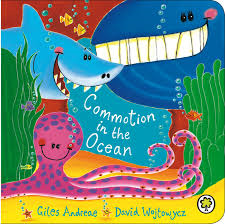
Commotion in the ocean

Projeto da Semana

Nessa semana teremos diferentes atividades sobre o fundo do mar e seus habitantes.

Teremos livros com histórias, teatro de fantoches e muitas atividade divertidas e educacionais como peixes, mamíferos,  moluscos, conchas, o que boia e o que afunda, etc.

Quem quiser pode trazer algum brinquedo ou vídeo sobre o tema também como a Pequena Sereia- The Little Mermaid.

Acho que a criançada vai curtir.

Depois postarei as fotos.

Como melhorar sua conversação em Inglês


Why is conversation difficult for some English learners?

The lack of vocabulary leads to some students ‘blocking’. They slow down or stop speaking completely because of a lack of self-confidence or of appropriate vocabulary.

How to Improve Conversation Skills

Now that we understand the problem, the next step is to improve the situation. Here are some tips to improve small talk skills. Of course, making effective small talk means lots of practice, but keeping these tips in mind should improve overall conversational skills.

Do some research

Spend time on the Internet, reading magazines, or watching TV specials about the type of people you are going to meet. For example: If you are taking a class with students from other countries, take time after the first few days of class to do some research. They will appreciate your interest and your conversations will be much more interesting.

Stay away from religion or political beliefs

While you may believe in something very strongly, beginning conversations and making small talk about your own personal convictions may abruptly end the conversation. Keep it light, don’t try to convince the other person that you have the ‘correct’ information about a higher being, political system or other belief system.

Use the Internet to gain specific vocabulary

This is related to doing research about other people. If you have a business meeting, or are meeting  people who share a common interest (a basketball team, a tour group interested in art, etc.), take advantage of the Internet to learn specific vocabulary. Almost all businesses and interest groups have glossaries on the Internet explaining the most important jargon related to their business or activity.

Ask yourself about your culture

Take time to make a list of common interests that are discussed when making small talk in your own culture. You can do this in your own language, but check to make sure that you have the English vocabulary to make small talk about those subjects.

Find common interests

Once you have a subject that interests both of you, keep to it! You can do this in a number of ways: talking about travel, talking about the school or friend you have in common, talking about the differences between your culture and the new culture (just be careful to make comparisons and not judgments, i.e.,  The food in our country is better than the food here in Brazil”).

Listen

This is very important. Don’t get so worried about being able to communicate that you don’t listen. Listening carefully will help you understand and encourage those speaking to you. You might be nervous, but letting others state their opinions will improve the quality of the discussion – and give you time to think of an answer!

More info: http://esl.about.com/od/speakingenglish/a/smalltalk.htm?nl=1

Como fazer um “Business Report”

Business Meeting Business reports provide important information for management that is timely and factual. English learners writing business reports  need to make sure that the language is precise and concise. The writing style used for business reports should present information without strong opinions, but rather as direct and accurately as possible. Linking language should be used to connect ideas and sections of the business report. This example business report presents the four essentials that every business report should include:

  • Terms of Reference
  • Procedure
  • Findings
  • Recommendations

Reports: Example Report

Terms of Reference

Margaret Anderson, Director of Personnel has requested this report on employee benefits satisfaction. The report was to be submitted to her by 28 June.

Procedure

A representative selection of 15% of all employees were interviewed in the period between April 1st and April 15th concerning:

  1. Overall satisfaction with our current benefits package
  2. Problems encountered when dealing with the personnel department
  3. Suggestions for the improvement of communication policies
  4. Problems encountered when dealing with our HMO

Findings

  1. Employees were generally satisfied with the current benefits package.
  2. Some problems were encountered when requesting vacation due to what is perceived as long approval waiting periods.
  3. Older employees repeatedly had problems with HMO prescription drugs procedures.
  4. Employees between the ages of 22 and 30 report few problems with HMO.
  5. Most employees complain about the lack of dental insurance in our benefits package.
  6. The most common suggestion for improvement was for the ability to process benefits requests online.

Conclusions

  1. Older employees, those over 50, are having serious problems with our HMO’s ability to provide prescription drugs.
  2. Our benefits request system needs to be revised as most complaints concerning in-house processing.
  3. Improvements need to take place in personnel department response time.
  4. Information technology improvements should be considered as employees become more technologically savvy.

Recommendations

  1. Meet with HMO representatives to discuss the serious nature of complaints concerning prescription drug benefits for older employees.
  2. Give priority to vacation request response time as employees need faster approval in order to be able to plan their vacations.
  3. Take no special actions for the benefits package of younger employees.
  4. Discuss the possibility of adding an online benefits requests system to our company Intranet.

Important Points to Remember

  • A report is divided into four areas:
    • Terms of Reference– This section gives background information on the reason for the report. It usually includes the person requesting the report.
    • Procedure– The procedure provides the exact steps taken and methods used for the report.
    • Findings– The findings point out discoveries made during the course of the report investigation.
    • Conclusions– The conclusions provide logical conclusions based on the findings.
    • Recommendations– The recommendations state actions that the writer of the report feels need to be taken based on the findings and conclusions.
    • Reports should be concise and factual. Opinions are given in the “conclusions” section. However, these opinions should be based on facts presented in the “findings”.
      • Use simple tenses (usually the present simple) to express facts.
      • Use the imperative form (Discuss the possibility …, Give priority …, etc.) in the “recommendations” section as these apply to the company as a whole.

More info check the link: http://esl.about.com/od/businessenglishwriting/a/bizdocs.htm?nl=1

Como ajudar seus filhos a não brigarem por causa de brinquedos

Brigas por disputar brinquedos é comum entre crianças, como ensiná-los e se comunicar e evitar brigas é muito importante.
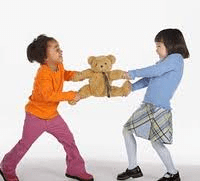
Toy Fight

“Use your words.”

by: http://notjustcute.com/2014/01/13/nine-words-to-end-fights-over-toys/

It’s a popular phrase adults say when kids are acting out.  And kids do need to learn how to effectively communicate verbally in order to move away from communicating behaviorally.  But in order to use their words, they have to have the words.

We have to be intentional in teaching our children the social scripts they need to navigate the social tides of life.  By teaching kids a few simple phrases, they quickly recognize them as you coach them through regular opportunities for problem solving, and soon they feel comfortable enough with them to use them independently.

If I had to pick one phrase that I have seen make the most difference for kids in social situations, it would be these nine words:

“Can I have a turn when you’re done please?”

Sharing and turn taking are things we value as adults, but they are extremely vague concept for kids.  Most of the time, kids really only understand how they work when it comes to making sure they get their turns!  Through their developmental lens, many preschoolers adhere to the philosophy that “What’s your is mine and what’s mine is mine.”  This is why “He’s not sharing!” or “She took my toy!”  is such a frequent complaint at preschools and play dates.

Often, our response is to force sharing.  (Or at least the appearance of sharing!)  We set timers or pry something from their clenched little fists, in an effort to restore order.  But, this approach robs kids of critical problem solving practice and opportunities to develop their own social skills.  We may value peace and order as adults, but kids need a manageable amount of conflict and chaos to give them meaningful social skill practice.

Given their own tools and scripts as well as adequate opportunities to practice, kids will not only gain the skills they need to be socially competent, but they’ll also increase their confidence in their own ability to solve their own problems.  We communicate several key points that ease the process for both kids involved.

1.  I want a turn.  This empowers the child who is asking.  It helps the child to know it’s OK to communicate your needs and wants to others, and that you can and should do that clearly and politely.

2.  You get to finish.  The magic ingredient in this phrase is “when you’re done”.  It communicates to the child in possession of the object that no one is trying to take it away or force them to “share”.  It lets them feel a sense of control, which almost always has the result of softening the child’s white knuckled grip.

Without these three extra words, children only hear that they are losing something– that someone is taking something away from them.  With those three words, consideration is given to the child with the object.  Instead of losing an object, they are gaining an element of control.

I have watched time and again as two children have fought passionately over an object, then had an intervening adult introduce this nine word phrase.  More times than not the child who is in possession of the object is done within a matter of minutes (or even seconds!) — but only when they get to do it on their terms.

The fight wasn’t about who had the object as much as it was about who had the power.

What about when the child doesn’t hand it over so quickly?

Sometimes you can coach children through this phrase and simply follow up with, “So Ben, when you’re done, find Sky and make sure she gets the next turn, OK?” and that is that.  The two seamlessly make the switch-a-roo on their own moments later.

Sometimes you coach them through the dialogue and the child in possession says, “I’ll never be done!”

There are a few things you could do here, depending on the situation and the temperaments of the kids involved.  You can keep things light and simply say, “Well, there are so many fun things to do here, I doubt you’ll want to play with that  F O R E V E R!  So when you decide you’re done, just make sure you give it to Sky so that she can be next.”  For other kids you might need to say, “Well, I know some kids like to use timers to decide when their turns are over.  Do you two want to try that?  Ben, how much more time do you think you need?”  If the two agree on a reasonable number, great!  Help the children set a timer, and give it to one of them, so that they can be in charge.   If they don’t come up with a reasonable number (“14 hours!”), you may have to give a few suggestions and let them choose from those.

Videos bacanas sobre Letras do Alfabeto

Assistam à esses vídeos sobre as letras do alfabeto com seus filhos. São simples e têm boas informações.

Ao fundo do cenário, durante o decorrer do alfabeto, as diferentes estações do ano vão acontecendo e a personagem vai se adaptando a elas.

Depois continuarei postando outras letras e vídeos. ” Enjoy!”

Ms Paula

Ms Paula


Letra A –  http://www.youtube.com/watch?v=nWtDhk2BD3o

Letra B –  http://www.youtube.com/watch?v=qnDqXsvr1JI

Letra C – http://www.youtube.com/watch?v=r3thhq44eXE

Letra D – http://www.youtube.com/watch?v=2YbVRVyrZhU


Activities with Letters V and W

Anuncio Paula Lyra ELT School

Letter U


U can say “uh”

Or U can say “yew.”

Whatever you do,

Be careful with U!

There’s up and there’s under

And unicorn, too.

So whatever you do

Be careful with U!


Letter V

V is quite happy   One sound does it know   There’s van and vanilla,   And yes, video!

Can’t think of V’s sound?   Don’t worry or stop…   Picture a volcano   That just blew its top!


UMBRELLA ART   Cut paper baking cups in half. Give one to each child. Help children glue their half cups onto a sheet of drawing paper. These are “umbrella” tops. Next let students glue a piece of pipe cleaner just under their “umbrellas” for handles. Encourage children to draw rainy day pictures around their umbrellas.

DRAWING UNDERNEATH   Tape a piece of drawing paper on the underside of a table top. Invite children to draw a picture with crayons while sitting or lying on the floor under the table. When pictures are complete, display them with this rhyme: We had such fun drawing     Under the tabletop.     It made us laugh to think     That we were drawing up!

U TOSS IT!   Cut out several large letter U shapes from poster board. Insert a wooden dowel into a coffee can of dirt. Invite children to try to toss the U shapes and get them around the dowel.

VERY COOL VISORS   Purchase foam visors like these from a craft store or online. Invite children to use puffy fabric paint or other fabric paint to decorate and personalize their visors. Then you might invite them to sing this little jingle (sung to tune of “Farmer in the Dell”): A visor shields my eyes,     A visor shields my eyes.     I wear a visor ’cause     I am very wise!

VEGGIE CUT UP   Cut a variety of vegetables into simple shapes. Children can dip the shapes into different colors of paint and create collages of prints. Then serve cut raw vegetables with dip for children to taste.

VOTING FOR VANILLA   Have a vanilla party and set out small portions of vanilla pudding, vanilla milkshake, vanilla wafers, vanilla frosting, and so on. Let children taste the samples and vote for their favorite. Create a “Vanilla Chart” and record children’s votes on it. Finally, ask more-than or less-than questions that the children can answer by using the chart.


Check out the following Web sites for additional background and activities.

Letter U Activity Sheet   Use this for extra writing practice. http://www.teach-nology.com/worksheets/early_childhood/alphabet/u/

Unicorn Coloring Page   Color a unicorn. http://www.first-school.ws/t/alpha3_unicorn_b.htm

Letter V Songs   Feel like singing? You’ll find some fun songs here. http://www.everythingpreschool.com/alphabet/V/songs.htm

Alphabet Coloring  V   Fun coloring for all! http://akidsheart.com/threer/lvl1/vprint.htm

V Activities   Try any one of these. http://www.everythingpreschool.com/alphabet/V/science.htm

Activities using Letters U and V


Letter U


U can say “uh”

Or U can say “yew.”

Whatever you do,

Be careful with U!

There’s up and there’s under

And unicorn, too.

So whatever you do

Be careful with U!


Letter V


V is quite happy

One sound does it know

There’s van and vanilla,

And yes, video!

Can’t think of V’s sound?

Don’t worry or stop…

Picture a volcano

That just blew its top!


UMBRELLA ART

Cut paper baking cups in half. Give one to each child. Help children glue their half cups onto a sheet of drawing paper. These are “umbrella” tops. Next let students glue a piece of pipe cleaner just under their “umbrellas” for handles. Encourage children to draw rainy day pictures around their umbrellas.

DRAWING UNDERNEATH

Tape a piece of drawing paper on the underside of a table top. Invite children to draw a picture with crayons while sitting or lying on the floor under the table. When pictures are complete, display them with this rhyme: We had such fun drawing     Under the tabletop.     It made us laugh to think     That we were drawing up!

U TOSS IT!

Cut out several large letter U shapes from poster board. Insert a wooden dowel into a coffee can of dirt. Invite children to try to toss the U shapes and get them around the dowel.

VERY COOL VISORS

Purchase foam visors like these from a craft store or online. Invite children to use puffy fabric paint or other fabric paint to decorate and personalize their visors. Then you might invite them to sing this little jingle (sung to tune of “Farmer in the Dell”): A visor shields my eyes,     A visor shields my eyes.     I wear a visor ’cause     I am very wise!

VEGGIE CUT UP

Cut a variety of vegetables into simple shapes. Children can dip the shapes into different colors of paint and create collages of prints. Then serve cut raw vegetables with dip for children to taste.

VOTING FOR VANILLA

Have a vanilla party and set out small portions of vanilla pudding, vanilla milkshake, vanilla wafers, vanilla frosting, and so on. Let children taste the samples and vote for their favorite. Create a “Vanilla Chart” and record children’s votes on it. Finally, ask more-than or less-than questions that the children can answer by using the chart.


Check out the following Web sites for additional background and activities.

Letter U Activity Sheet   Use this for extra writing practice. http://www.teach-nology.com/worksheets/early_childhood/alphabet/u/

Unicorn Coloring Page   Color a unicorn. http://www.first-school.ws/t/alpha3_unicorn_b.htm

Letter V Songs   Feel like singing? You’ll find some fun songs here. http://www.everythingpreschool.com/alphabet/V/songs.htm

Alphabet Coloring  V   Fun coloring for all! http://akidsheart.com/threer/lvl1/vprint.htm

V Activities   Try any one of these. http://www.everythingpreschool.com/alphabet/V/science.htm

Activities and Ideas with letter Tt

Toys

Exercise With T

As children become familiar with this rhyme, they can perform the actions as they repeat the words.

Toothpicks, tools, and toys

All begin with T. (place one hand up, the other across its top to form a T)

Let’s all make the sound

T-T-T-T-T!! (kids repeat sound together)

Lie straight on the floor.

Stretch out arms and hands, (kids perform action)

Now you are letter T

We think that is grand!

Stand up straight and tall

Arms and hands way out. (kids perform action)

Show how letter T

Can hop all about! (kids perform action)

Susan LaBella   Editor, Early Childhood Education Newsletter

Turtle

IT’S A TEA PARTY!

Read to children various poems from the book Tea Party Today by Eileen Spinelli. Talk about children’s favorite poems and ask them to explain their selections. Then make decaffeinated flavored teas (adequately cooled) and pour into plastic tea cups for children to try. Serve with animal crackers for a real tea party!

TURTLE TREATS

Slice circles of packaged sugar-cookie dough found in the refrigerated section of most grocery stores. Roll out the dough to flatten each circle. Place circles on a cookie sheet. Give children jelly beans to add to their circles to create feet, heads, and tails for their “turtles.” Sprinkle green sugar onto each turtle and bake following package directions. Serve with tapioca pudding for a tasty snack.

TULIP TIME

Let children hold their fingers together and place their palms into a shallow dish of red, pink, or yellow paint. Help children press their wet palms onto a piece of paper several times. Children can then paste pre-cut green paper stems and leaves below each tulip to create a pretty garden.

TIME OF DAY

Using a non-digital clock, turn the hands to various times of day. Announce the time. (For example: It is 6 o’clock at night.) Invite children to tell you what they usually do at that time of day/evening (eat dinner, read a book, and so on). If any children are able, give them turns at moving the clock hands and announcing the time.

HANGING Ts

Hang a small clothesline in your room at children’s height. (Be sure it is out of the way of their play area.) Gather some snap type clothespins and write the letter T on each one. Next, cut out pictures of objects with names that begin with T and objects with names that do not begin with T. Place pictures in a box or basket. Invite children to choose T-named pictures to hang with their T clothespins on the line.

YOUR WORD CORNER

Here are some words you will need.      

See them, say them … hey, you can read!!

ten   tiger   top

Write the words on a chart and review them. Then read aloud each sentence that appears below. Try each word in each sentence. Let children tell you which word fits.
1. I saw a _______________at the zoo.

2. I have ____________toes.

3. He climbed to the __________of the hill.

Check out the following Web sites for additional background and activities.

Traffic Light

Scroll down this page to find the traffic light craft and traffic light game. http://www.fastq.com/~jbpratt/education/theme/transportation/main.html

T Sound

Reinforce the sound with this cute printable. http://www.kizclub.com/Phonics/beginning/Tsound.pdf

T Is for Turtle

Get ten facts about real turtles, some literature suggestions, and a few extension activities. http://www.brighthub.com/education/early-childhood/articles/63926.aspx

Letter T Activities and Crafts

You’ll find lots of fun activity and book suggestions here. http://www.freekidcrafts.com/lettert.html

Letter T Is for Tent

Your kids will enjoy this online coloring activity. http://www.apples4theteacher.com/coloring-pages/interactive-alphabet/letter-t/tent.html

Have you visited Education World’s newest early childhood feature, the Early Childhood Activity Bank? There you will find hundreds of activities from past Early Childhood Newsletters arranged by month or subject. Below are a bunch of activities you might enjoy trying out in the weeks ahead.

Special Activities for Earth Day and Arbor Day

Back to Nature: Investigating Trash What Pollutes Our Air? Don’t Be a Litterbug Recycled Crayons Make a Promise Tree An Outdoor Scavenger Hunt Eating Volcanoes Friendship Fruit Salad Grocery Store Walk (Letter Identification) My Tree Book Tree Math Why Be a Tree? Paper Trees More Tree Math The Shape of Trees to Come Trees Are Terrific What Do I Feel? (Parts of a Tree)

AGE 2 DEVELOPMENTAL PROFILE

Hand-Eye Coordination

Hand-eye coordination, also known as fine motor skills, has to do with how a child uses the small muscles in her hands and fingers. You will notice that your 2-year-old child has the coordination now to manipulate small objects. She is probably able to use her wrist and hand to turn a doorknob and hold a cup with one hand. One of her major accomplishments this year is drawing. Though she may hold a crayon clumsily, your 2-year-old has enough control to make sweeping vertical and circular strokes. These activities will encourage hand-eye coordination in your 2-year-old child:

Drawing with crayons
Finger painting
Building towers of up to six blocks, then knocking them down
Assembling simple jigsaw puzzles (three to four pieces)
Turning the pages of books while you read
Putting round and square pegs into matching holes
Pounding, squeezing, rolling, and playing with play dough or clay

back to top

Language

Language skills–which include listening, comprehension, speech, reading, and writing–enable your child to communicate, while laying the foundation for all of your child’s future learning. Keep in mind that language skills vary tremendously among preschoolers, more so than any other developmental area. Some children are naturally more talkative than others, but it doesn’t mean they are necessarily more advanced. At age 2, a child understands most of what you say. During this year, his vocabulary may reach 500 words. He may be able to use two- to three-word sentences, and will start to use plural and past-tense words. Many 2-year-olds can follow a story’s plot and will understand and remember ideas they hear in books. These activities will encourage language skills in your 2-year-old child:

Listening and talking
Listening to books that encourage interaction by touching, pointing, naming objects, or repeating certain phrases
Playing copy-cat games in which the adult copies Baby’s sound and vice versa
Chanting nursery rhymes
Playing word and finger games like “This Little Piggy” and “Open, Shut Them”
Using adjectives to describe objects (e.g., a towel might be big, blue, and fluffy)

back to top

Physical

Children with well-developed physical coordination feel better about themselves and their bodies, making them better prepared to learn and take on new challenges. Running, jumping, hopping, skipping, and climbing are examples of activities that develop a child’s physical, or large-muscle, skills (also known as gross motor skills). At age 2, you may find that your child has endless energy–she runs, climbs, jumps, kicks, and much more. Over the course of the year, she will figure out how to throw and kick a ball, jump with two feet together, and stand on tiptoes. These activities encourage physical skills in your 2-year-old child:

Climbing and sliding on playground equipment
Running, jumping, and climbing outside
Acting out songs with simple movements
Digging in sandbox
Going for a walk
Playing chase games and hide-and-seek
Playing kicking and throwing games
Playing copycat games with tiptoeing, walking backwards, jumping, and hopping
Going through a simple obstacle course

back to top

Social & Emotional

Emotional skills have to do with awareness of and understanding one’s feelings. Social skills include the ability to communicate and have relationships with others. Children with strong emotional and social skills have a positive self-image, are confident, sociable, and independent. At age 2, your child is developing a stronger sense of himself and may be quite self-centered. He’s aware of his gender, can help get himself dressed and undressed, and may even begin using the toilet. He is becoming aware of his own feelings and those of others, and may talk about his feelings. He makes it clear what he wants, and uses the word “no” frequently. Two-year-olds are not able to share, but they do enjoy playing near other children. Your child may enjoy pretend-play games that involve imitating those around him. These activities will help develop social and emotional skills in your 2-year-old child:

Playing pretend-play games, including dress-up, super-hero, telephone, and dolls
Helping with simple chores such as picking up toys and putting clothes away
Choosing a favorite picture from a book or the computer and telling a story about it
Listening to simple picture books with repetition read aloud
Playing simple computer games, such as rolling over an object and predicting how it will change
Singing, clapping, playing, and dancing with other children

back to top

Mathematical

Math skills include more than identifying numbers and counting, they also include an understanding of mathematical language (e.g., more than, less than, circle, square) and concepts (e.g., shapes, patterns, comparisons). Thinking and reasoning are also important math skills. At age 2, your child is learning about quantity through her everyday activities and play. For example, she probably understands the concept of more and less. If she has one cookie and her brother has two, she recognizes that her brother has more cookies and that she has less. During this year, your child may learn to match shapes, colors, and identical pictures of objects, as well as line things up from smallest to biggest. These activities encourage the development of mathematical skills in your 2-year-old child:

Playing with stacking rings and other stacking toys
Fitting shapes into a shape sorter
Playing games using spatial concepts, such as finding objects under the table, on the chair, beside the bed, etc.
Sorting objects based on attributes such as color, shape, size, etc.
Listening to number songs and nursery rhymes (“Five Little Monkeys Jumping on the Bed”; "One, Two Tie My Shoe”; “Ten in the Bed”)
Counting buttons, snaps, and more
Counting objects in your everyday life, such as cookies, books, crayons, blocks, etc.
Listening to stories read aloud and then answering questions about the stories. For example, In The Three Billy Goats Gruff, which goat is biggest? Or, how many cats does the boy see in Eric Carle’s Have You Seen My Cat?
Discussing what happened during the day to start to recognize sequence
Assembling jigsaw puzzles with three to four pieces

back to top

Creative Arts

Creativity is the ability to use your imagination to create new and original things. Children express creativity through art, music, imaginary play, cooking, and more. One way to encourage creativity is through art activities, including drawing, painting, cutting with scissors, gluing, molding clay, and using other craft materials. At age 2, your toddler has entered the “scribbling stage.” He is amazed at his ability to make marks. Though his pictures may not look like anything recognizable, he is discovering the process of creating something, and practicing important motor skills. These activities encourage artistic development in your 2-year-old child:

Scribbling with crayons, chalk, or markers
Painting with a large paintbrush
Finger painting
Playing with play dough and clay
Talking about pictures in books and magazines

back to top

Pretend Play

Pretend play is a form of creativity that allows children to express ideas and feelings, as well as think and solve problems through fantastical situations. Pretend play includes make-believe games, daydreaming, imaginary friends, and fantasy books. At age 2, your child may engage in pretend play with dolls and stuffed animals. Imitation plays a big role in her make-believe play. For example, as she feeds her baby doll and puts her to bed, she may use the same words and tone of voice as you. Pretend play is important because it gives your child an opportunity to see the world from someone else’s point of view. Pretend play activities that 2-year-old children engage in include:

Using housekeeping toys or household materials to make a pretend meal or to do a pretend cleanup
Acting out different scenarios with stuffed animals or dolls
Having conversations on a toy telephone
Using props for pretend play, such as a fire hat, toy horse, tutu, box, etc.
Acting out different animals
Listening to stories read aloud about people, places, and things that inspire imagination, such as folktales and fairy tales

back to top

Music

Early exposure to music helps enhance reading, math, and creative skills later in a child’s life. When children learn to read, they listen to the rhythmic pattern of words, just as they listen to the rhythm of a drum. When they identify the patterns in songs and in the sounds that instruments make, they are learning a basic math skill. Music also encourages creative movement, which in turn expands your child’s imagination. By age 2, your child will likely learn the words to songs, like “Twinkle, Twinkle Little Star” and “Baa Baa Black Sheep.” Singing songs together encourages your child’s developing verbal skills. These activities also encourage musical development in your 2-year-old child:

Singing simple songs
Singing and acting out songs with simple movements, such as jumping, hopping, and standing on one foot
Playing simple instruments, including drums and shakers
Dancing and moving to music
Listening to a wide variety of music on a CD or on the radio
Listening to songs or nursery rhymes

back to top

Thinking/Problem Solving

The ability to think and problem solve is what helps children make sense of their world. When children think through and solve problems, they are developing intelligence. Thinking skills involve language, mental imagery, reasoning, and memory development. At age 2, your child is learning a lot about the world through her explorations, as well as through imitation and observation. She can probably group objects that are the same (all red things in one group and blue in another) and stack things in size order, such as stacking rings. She may respond to simple directions and tell you what she is doing using new words she is learning. She enjoys choosing books to look at by herself and naming pictures she sees. In her play, she may use objects to represent other objects (e.g., pretending a block is a horse and another block is a farmer). These activities encourage the development of thinking skills in your 2-year-old child:

Observing and imitating others
Sorting objects by size, shape, color, or use
Memorizing simple nursery rhymes by repeating them with an adult
Listening to storybooks read aloud, especially predictable ones (e.g., Have You Seen My Cat? by Eric Carle)
Creating pictures and talking about them
Counting objects with help from an adult
Playing with stacking toys
Constructing simple puzzles with knobs
Playing picture matching games
Playing simple counting games

back to top

Written by Jackie Glassman, M.S. Ed., NickJr.com Educational Consultant