
Category Archives: Videos
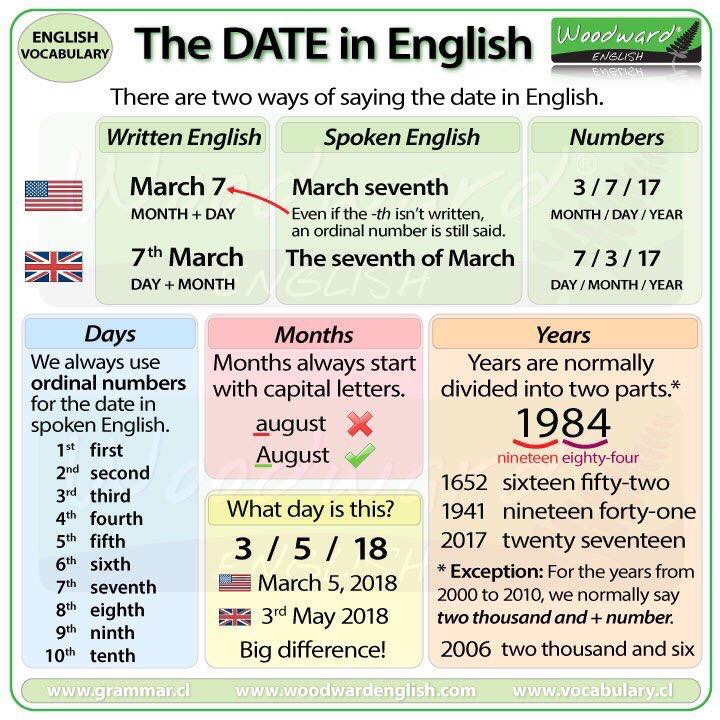
Como usar datas em Inglês
Public Speaking Skills
Você sente medo ao falar Inglês em público? Sente que congela, dá um branco?
Aqui tem um artigo com dicas úteis para alunos de Inglês que podem ajudar nesse momento de dificuldade.( Segue tradução ao final )
O que é falar em público?
Falar em público envolve falar na frente de um grupo de pessoas, geralmente com alguma preparação. Pode ser na frente de pessoas que você conhece (por exemplo, em uma celebração familiar) ou uma multidão de estranhos.
Discursos têm funções diferentes. Por exemplo: Persuasivo : convencer os ouvintes a votar em você. Informativo: falar sobre os perigos da mudança climática. Divertido: fazer um discurso em um casamento. Comemorativo: apresentar o vencedor de um evento ou ganhador de um prêmio. Alguns discursos podem ter mais de um desses objetivos.
Por que aprender a falar em público é útil?
A maioria das pessoas, em algum momento de sua vida, precisará se levantar e falar na frente de um grupo de pessoas. Aprender as habilidades necessárias para fazer isso, portanto,pode ajudá-lo a ter mais sucesso. Muitos ficam nervosos a primeira vez que têm que fazer um discurso na frente de seus colegas, mas com prática e com os nervos sob controle, se consegue apreciar o processo por inteiro.
Que técnicas podemos aprender?
A) Idéias / geração de conteúdo
Muitos acham que começar é muito difícil. É uma boa opção ter uma variedade de maneiras de fazer anotações de idéias. Estes poderiam incluir mapeamentos, fazer listas ou escrever idéias em “pos-it” e, em seguida, organizá-las.
B) Estrutura
Importância de ter um início, meio e fim. Por exemplo, “Boa noite. Meu nome é x e hoje vou falar sobre y. Falarei sobre três áreas principais, x, y e z ‘. Isso então lhes dá um foco para a estrutura do resto do discurso. Muitas pessoas aceleram para chegar ao final do discurso e acabam por apressar na conclusão ou, às vezes, esquecem completamente de fazer uma. Novamente, um formato sugerido pode ajudá-los a resumir o que disseram.
C) Linguagem corporal
Existem várias estatísticas de quanto da nossa comunicação é feita através da nossa linguagem corporal
Postura: Fazer uma atividade de levantar-se e então de repente “congelar”, isso funciona bem. Permanecer imóvel mas olhando ao redor onde outras pessoas estão. Em seguida, tente ficar ereto e bem centrado, atrás de um pódio, se você tiver um para usar. Você vai se surpreender de como as pessoas se balançam. Parece muito básico, mas pode fazer uma grande diferença o quão confiante e em controle alguém parece estar.
Gestos: Uma maneira de praticar isso é pensar frases com palavras-chave neles, como “Eu peguei um peixe e foi tão grande!” Ou “há três razões importantes pelas quais você deve votar em mim”. Pratiquem dizendo estas frases enquanto se levantam e determinam quais gestos podem ser os mais apropriados. Porém é importante manter os gestos controlados.
Contato Visual: É muito importante que os oradores façam contato visual com todas as áreas da sala, idealmente com todas as pessoas, mas com grandes audiências, isso não é possível. Muitos tendem a olhar para um ponto ou uma pessoa só. Uma maneira de praticar isso é fazer uma breve introdução de 30 segundos procurando olhar para todos da sala em geral.
D) Separações (pausas e tonicidade)
Esta é uma técnica que pode ajudar os oradores a soar muito mais confiante e aumentar a eficácia global da sua fala. A teoria é que quando fazemos este tipo de discurso nós forçamos as palavras chaves em uma frase que carregam um significado, por exemplo. “Eu NÃO quero que você apenas SENTE-se lá e NÃO FAZ NADA” . Devemos fazer uma pausa depois das palavras-chave e no final de uma frase. Isso marca a tônica e pausa e realmente faz uma diferença em seu discurso!
Problemas e soluções comuns
. Falta de confiança
Isso é muito comum e apenas a prática vai ajudar a superar. Você pode praticar seus discursos falando na frente de espelhos, familiares, amigos para se tornar mais confiante. Lembre-se de respirar corretamente enquanto fala e pensar positivamente sobre sua capacidade de se expressar bem!
. Falar muito rápido
Este é outro erro comum, geralmente causado por nervosismo. Pratique fazendo a introdução do discurso de forma exageradamente lenta. Depois de ter feito isso algumas vezes, vai ser mais fácil encontrar um meio termo.
. Discursos chatos
É realmente importante pensar com cuidado sobre o seu público ao planejar um discurso, a fim de ser interessante. Pense em idéias criativas para seus discursos, faça planejamento, escolha bem os tópicos e assim evite ter alguns bocejos da audiência.
Conclusão
Neste artigo, examinamos uma variedade de técnicas que podem ser usadas para ajudar os alunos a desenvolver as habilidades necessárias para a realização de discursos públicos. A prática nessas áreas pode ajudar a aumentar a confiança geral e a fluência de alunos e proporcionar uma diversão interessante e útil do trabalho de linguagem regular.
In English:
What is public speaking?
Public speaking involves talking in front of a group of people, usually with some preparation. It can be in front of people that you know (e.g. at a family celebration) or a crowd of strangers.
Speeches have different functions. These include being persuasive (e.g. trying to convince the audience to vote for you), informative (e.g. speaking about the dangers of climate change), entertaining (e.g. a best man’s speech at a wedding) or celebratory (e.g. to introduce the winner of an award). Some speeches may have more than one of these aims.
Why is public speaking useful for students?
Most people, at some point in their life, will need to stand up and speak in front of a group of people. Teaching students the necessary skills for doing this will therefore help them to do this more successfully. Many students get incredibly nervous the first time they have to do a speech in front of their classmates but with practice the nerves subside and they usually begin to enjoy the whole process.
What techniques can we teach our students?
a) Ideas / content generation
Lots of students find getting started quite difficult. It’s a good idea to give students a variety of ways of making notes of ideas. These could include mind-mapping, making lists or writing ideas on post-it notes and then arranging them on a piece of paper into groups.
b) Structure
Stress the importance of having a beginning, middle and end.
For example, “Good evening. My name is x and today I am going to talk about y. I will talk about three main areas, x, y and z’. This then gives them a focus for the structure of the rest of the speech. Many students are so relieved to have got to their end of their speech that they rush the conclusion or sometimes completely forget to do one. Again, a suggested format may help them to summarise what they have said.
c) Body language
There are various statistics for how much of our communication is done through our body language
- Posture: Doing an activity where you get everyone to stand up and then suddenly ‘freeze’ works well. You then ask everyone to stay still but look around at how everyone is standing. Then try getting everyone to stand straight and well-centred, behind the podium if you have one to use. You’ll be surprised how many people rock from side to side or slouch. Sounds pretty basic but it can make a big difference to how confident and in control someone appears to be.
- Gestures: One way to practise these is to give out some sentences with key words in them, such as “I caught a fish and it was this big!” or “there are three important reasons why you should vote for me”. Ask the students to practise saying these sentences while standing up and work out what gestures might be the most appropriate. Stress the importance of keeping gestures controlled.
- Eye contact: It’s very important that speakers make eye contact with all areas of the room, ideally with every person but with large audiences that isn’t possible. Many students tend to look at one spot or at the teacher. One way to practise this is to ask each student to do a short 30 second introduction and then at the end get any student who feels the speaker did not look in his/her direction to raise their hand.
d) Chunking (pauses and stress)
This is a technique which can help speakers to sound much more confident and increase the overall effectiveness of their speech. The theory is that when we do this type of speaking we stress the key words in a sentence which carry the meaning, e.g. “I DON’T want you to just SIT there and DO NOTHING” We also pause after many of these key words, and at the end of a sentence.. They can then mark the stress and pauses on their own speeches and practise incorporating the idea into their own work. It really makes a difference!
Common problems and solutions
. Lack of confidence
This is very common and one that only practice, practice and more practice will help to overcome. You could also try getting the students to first speak in front of mirrors, family, friends to become more confident.
Reminding students to breath properly while they’re speaking as well as thinking positively about their ability to speak well will also help, along with lots of encouragement!
. Speaking too fast
This is another common one, usually caused by nerves. Try getting them to do the introduction of the speech in an exaggeratedly slow manner. Once they have done this a few times they may find it easier to find a middle ground.
. Boring speeches!
It’s really important to get the students to think carefully about their audience when planning their speech, in order to be interesting.
Encourage the students to think of creative ideas for their speeches – do the planning stage in class so that you and the other students can monitor and give advice on topics that look like they might get a few yawns.
Conclusion
In this article we have looked at a variety of techniques that can be used to help students develop the necessary skills for delivering public speeches. Practice in these areas can help to increase your students’ overall confidence and fluency and provide an interesting and useful diversion from regular language work.
Source: https://www.teachingenglish.org.uk/article/public-speaking-skills
Fonte: https://www.teachingenglish.org.uk/article/public-speaking- skills
Qual será a língua falada no futuro?
Inglês, Chinês, Espanhol, Marciano, …. ?
Assista a esse vídeo absolutamente fantástico sobre o desenvolvimento da linguagem no mundo e o que se pode esperar para o futuro.
Eu amei o Dr. David Crystal e sua forma tão clara de explicar!
Não perca!
Você se considera Monolíngue ou Bilíngue?

Vice sabia que pessoas podem ter habilidade para falar não apenas em uma ou duas, mas em várias línguas?
Quantas línguas falamos no Brasil? Só uma, que pena!
E quanto a seus filhos, vc gostaria que eles fossem bilíngues desde pequenos? Saiba que isso é possível, muito fácil e rápido.
Abaixo seguem algumas informações sobre aprendizado de duas ou mais línguas e o impacto que isso pode gerar em diferentes áreas.
Boa Leitura!
Bilingual – having proficiency in two languages
Multilingual – having knowledge of more than one language
Plurilingual – “the ability to use languages for the purposes of communication and to take part in intercultural interaction, where a person, viewed as a social agent has proficiency, of varying degrees, in several languages and experience of several cultures.” (Common European Framework of Reference for languages, 2001)
Impact of other languages
Learners’ L1 or other languages can affect their learning of English, in ways that can be helpful but also in ways that are sometimes confusing, due to the similarities and differences between languages.
Here are some examples of the way that prior knowledge of languages and cultures can influence learning another language:
Pronunciation
Sounds, word and sentence stress and intonation can be similar, or completely different. Learners may find unfamiliar sounds or combinations of sounds difficult, or fun to try.
Register
Different languages and cultures have different mechanisms for addressing people of different social status, or showing politeness or deference.
Vocabulary
Languages may share similar words (cognates) or there may be false cognates – words which look similar but have different meanings in different languages. Some languages borrow words from other languages, including English. In other languages, very few words are recognisably similar to English.
Grammar
Grammatical concepts like time and tense can differ between languages. Some languages use time markers instead of different verb forms, to show different times. Verb tenses may be constructed in a similar way but have a different meaning.
Spelling
Languages can have different sounds/spelling relationships, and a different alphabet can present its own challenges.
Social interaction
Languages and cultures have specific ways of achieving certain social functions, such as starting and finishing conversations, interrupting without being seen as rude and changing the subject. These might be very different between a learner’s L1 and English.
Writing
The layout and writing style may differ between learners’ L1 or L2. The degree of formality of different languages in different social situations is also culturally-specific.
Where there are differences between languages, they may be variously be interpreted by learners as interesting, fun, challenging or difficult.
Over to you
What languages are commonly spoken in your country or city?
What languages do you speak?
Do you identify as monolingual, bilingual, multilingual or plurilingual? Why?
Source: © British Council
Aprender idiomas faz o cérebro crescer
 Você sabia disso!
Um recente estudo de uma universidade sueca descobriu que partes do cérebro de estudantes de idiomas desenvolveu e aumentou em tamanho enquanto que o dos alunos regulares, não!
Leia a matéria completa abaixo.
Language learning makes the brain grow
Have you ever thought that learning new languages would help develop your brain?
A recent study at Lund University in Sweden investigated the effect on the brains of students who were learning a new language intensively compared to other students who were studying intensively, but not languages. Remarkably, they discovered that parts of the language learners’ brains had increased in size, while this was not the case for the non-language learning group.
At the Swedish Armed Forces Interpreter Academy in the city of Uppsala, young people with a flair for languages go from having no knowledge of a language such as Arabic, Russian or Dari to speaking it fluently in the space of 13 months. From morning to evening, weekdays and weekends, the recruits study at a pace unlike on any other language course.
Young recruits learn a new language at a very fast pace. By measuring their brains before and after the language training, a group of researchers have had an almost unique opportunity to observe what happens to the brain when we learn a new language in a short period of time.
As a control group, the researchers used medicine and cognitive science students at Umea University – students who also study hard, but not languages. Both groups were given MRI scans before and after a three-month period of intensive study. While the brain structure of the control group remained unchanged, specific parts of the brain of the language students grew. The parts that developed in size were the hippocampus, a deep-lying brain structure that is involved in learning new material and spatial navigation, and three areas in the cerebral cortex.
“We were surprised that different parts of the brain developed to different degrees depending on how well the students performed and how much effort they had had to put in to keep up with the course”, says Johan Martensson, a researcher in psychology at Lund University, Sweden.
Students with greater growth in the hippocampus had better language skills than the other students. In students who had to put more effort into their learning, greater growth was seen in an area of the motor region of the cerebral cortex. The areas of the brain in which the changes take place are linked to how easy it is to learn a new language. The development varies according to individual performance.
Previous research from other groups has indicated that Alzheimer’s disease has a later onset in bilingual or multilingual groups.
“Even if we cannot compare three months of intensive language study with a lifetime of being bilingual, there is a lot to suggest that learning languages is a good way to keep the brain in shape”, says Johan Martensson.
Source: http://www.teachingenglish.org.uk/top-stories/language-learning-makes-your-brain-grow
Gerúndio ou Infinitivo?
Muitos alunos me perguntam como saber quando usar e ING ou TO na hora de escolher o tempo verbal mais apropriado . No entanto a regra é mais de memorizar do que de entender.
Abaixo segue uma pequena lista com alguns verbos que pedem o gerúndio e outros que pedem o infinitivo.

Seguem alguns exemplos:
When two verbs are used together, the second verb is often in the gerund form (-ing) or the infinitive. There are no specific rules concerning which verbs take which form. Like irregular verbs, you will need to learn which form a verb takes.
Common Verbs + ‘ing’
go
enjoy
quit
discuss
mind
can’t stand
suggest
Examples:
They go jogging on Saturdays.
I don’t mind helping you.
They can’t stand driving in traffic jams.
Common Verbs + Infinitive
promise
plan
refuse
want
need
decide
hope
Examples:
I promised to help him.
Alice needs to start that task.
He decided to quit his job.
Fazendo uma apresentação oral em Inglês.
 Você terá que falar em inglês para uma audiência específica em breve?
Está com dúvidas de como melhorar sua performance?
Relaxe! Acredite em seu potencial e tenha confiança de que está bem preparado.
Seguem algumas dicas:
1. Faça um exercício de respiração profunda e pelo abdômen antes de começar.
2. Procure manter-se calmo e focado sobre os temas que vai abordar.
3. Certifique-se que possui todo o material necessário para a apresentação.
4. Faça um teste anterior à apresentação, olhando-se no espelho enquanto fala.
5. Hidrate bem sua garganta.
7. Fale pausadamente, pense e elabore bem suas frases.
8. Tenha confiança em você e em sua capacidade. Você está no comando!
Qual a melhor escola para nossos filhos

Eu costumo dizer que a melhor escola é aquela onde nosso filho está feliz independente da metodologia ou linha pedagógica que a escola usa.
No entanto, mais do que saber a pedagogia que a escola adota, é interessante que os pais possam verificar, durante as aulas regulares, exemplos de atividades que são realizadas, para que se possa comparar o que é dito ao que é de fato ensinado.
Saiba mais sobre algumas das linhas pedagógicas mais adotadas nas escolas brasileiras:
Escola comportamentalista
Como funciona: A concepção comportamentalista enfoca a técnica, o processo e o material postos em jogo. O ensino deve ser bem planejado, com materiais instrucionais programados e controlados. O objetivo é que os resultados possam ser mensurados e que o estudante adquira os comportamentos desejados, moldados segundo necessidades sociais determinadas.
Por essa pedagogia, o professor tem como tarefa controlar o tempo e as respostas dos alunos, dando-lhes feedback constantes. O aluno é visto como alguém que pode aprender a partir de estímulos, que são recompensados, caso os objetivos sejam alcançados.
Avaliação: O processo de avaliação é feito por provas, semelhantes às da linha tradicional.
Escola construtivista
Como funciona:No construtivismo, o saber não é passado do docente ao aluno: o estudante é que constrói o conhecimento, por meio da formulação de hipóteses e da resolução de problemas. O objetivo do construtivismo é que o aluno adquira autonomia. A ênfase está no aspecto cognitivo.
As disciplinas são trabalhadas em uma relação mais próxima com os alunos e envolve diversos elementos, como música e dramatização. As séries são organizadas em ciclos.
Avaliação: A linha construtivista foi idealizada para que não houvesse provas, uma vez que o aluno deve construir o conhecimento ao longo das aulas. As escolas, no entanto, podem adaptar esse conceito em suas avaliações.
Apesar de estar muito em voga no Brasil e em muitos países ocidentais, há também muitas controvérsias quanto à aplicabilidade do construtivismo em nossa realidade. Segundo a professora Cecília, falta de condições estruturais (como condições de trabalho dos professores e o número de alunos por sala) e aspectos políticos e ideológicos são alguns dos pontos criticados por especialistas.
Escola freiriana
Como funciona: Pela pedagogia baseada nas ideias de Paulo Freire, que é mais voltada para a alfabetização, os aspectos culturais, sociais e humanos do aluno devem ser levados em conta. Esta postura implica em ouvir o aluno para ajudá-lo a construir confiança, para que ele possa entender o mundo por meio do conhecimento.
Segundo Freire, o conhecimento faz sentido para o estudante quando o transforma em sujeito que pode transformar o mundo. Bom senso, humildade, tolerância, respeito, curiosidade são alguns dos princípios defendidos por essa corrente. A educação se torna uma ferramenta para “libertar” o aluno.
Avaliação: Assim como a linha construtivista, pedagogia de Paulo Freire não prevê provas, mas as escola podem ter avaliações.
Escola montessoriana
Como funciona: A metodologia foi criada pela educadora italiana Maria Montessori e parte do princípio da experiência concreta e da observação. A ideia é que o aluno possa utilizar o conhecimento que já tem como base para a abstração e, assim, assimilar novos conceitos.
As salas de aula das escolas que adotam essa pedagogia têm, em média, 20 alunos e procuram ter diversos materiais para estimular a aprendizagem. Em vez de a professora passar as lições, as atividades ficam dispostas em sala e o aluno escolhe qual irá fazer no dia. Ele deve cumprir os módulos obrigatórios para avançar os estudos. As salas podem ser ordenadas por séries, como no ensino tradicional, ou por ciclos, com mais alunos de idades diferentes na mesma sala.
Segundo a pedagoga e psicopedagoga Edimara Lima, a vantagem do método é que o aluno pode aprender de acordo com seu ritmo: “Quem caminha mais rápido vai mais rápido, e quem precisa ir mais devagar recebe tarefas paralelas para aprender o que precisa”. “A criança aprende a fazer escolhas, tem exercício de independência e autonomia.”
Avaliação: Pode ter provas ou não, de acordo com a escola. Quando não há provas, a avaliação é feita a partir dos registros que o professor tem sobre a produção do aluno. No final do ensino fundamental e do médio pode haver monografia.
Escola tradicional
Como funciona: Na pedagogia tradicional o professor é a figura central. Ele ensina as matérias de maneira sistematizada e o aluno absorve esses conhecimentos como se fosse uma “tabula rasa”. Apesar de vigorar em muitas escolas, essa prática se instituiu por “inércia da burocracia e do cotidiano escolar e pela crença de que o conhecimento era imutável e transmissível”, segundo Cecília.
Nas aulas tradicionais, os conhecimentos são concebidos como verdades não sujeitas a variações nem à dependência de contextos, diferentemente de pedagogias mais modernas, em que o estudante deve “construir o conhecimento” e não simplesmente absorvê-lo.
Avaliação: A forma de promoção é a avaliação, que mede a quantidade de conhecimento que foi memorizada. Quem não alcança a pontuação mínima é reprovado e deve cursar a mesma série novamente.
De acordo com a professora, muitas características do ensino tradicional estão presentes no Brasil e no mundo “já que a própria formação de professores ainda é extremamente tradicional”.
Escola Waldorf
Como funciona: A pedagogia Waldorf prioriza as necessidades do desenvolvimento do estudante. A trajetória da criança é composta por ciclos de sete anos, nos quais ela tem um tutor. As aulas do ensino infantil nesse sistema tem ênfase em artes e em trabalhos manuais, como marcenaria, culinária etc.
Diferentemente do ensino tradicional, em que os alunos tem preocupações com horários e conteúdo a ser aprendido, na Waldorf o que é levado em conta são as etapas de desenvolvimento do estudante.
Tendência democrática
Como funciona: As escolas democráticas são baseadas na Escola Summerhill, nascida na Inglaterra. Segundo a professora Cecília, elas são uma uma crítica à educação tradicional, que seria baseada no “medo e no controle baseado em ameaças veladas, presenças obrigatórias e outras imposições”.
Seu grande diferencial é que seus alunos não são “obrigados” a assistir as aulas obedecendo um cronograma comum, único. Eles escolhem as atividades a fazer de acordo com seus interesses.
Avaliação: Para avaliar os alunos, procura-se abolir também lições de casa e provas; a avaliação é feita por sua participação e por trabalhos que podem ser escritos, artísticos etc.
14 Tips for Effective Study

Como saber a forma correta para estudar: ouvindo música, lendo da tela do computador?
The Dos and Don’ts of Effective Study
Effective study habits are essential for achieving and maintaining a high GPA. More importantly, good study habits help you to store information in long-term memory, allowing you to use the learned information in a novel setting. Applying the following rules for studying will aid you in earning excellent marks in school. Below are 8 Dos and 6 Don’ts from the no-longer active foreda.com that will get you well on your way to effective studying.
14 Tips for Effective Study
Things to Do:
1- Keep the area around your desk neat and tidy. If possible, the area should also be quiet. If you are having trouble finding a quiet place to study, try the local library or park. The library is a perfect place to have peace and quiet. The park may not be as quiet, but the fresh air can make studying less nerve-racking. If these options are unavailable, then try listening to some music while studying.
2- Have a scheduled study time for each school day. Remember that one classroom hour should be reinforced by two hours of studying at home.
3- Sit down for 45-minute intervals, followed by 15-minute breaks. Having an easily attainable goal, like sitting for a set duration of time, is effective for increasing motivation.
4- Reward yourself if and only if you have met your goal for that study session. For example, if you plan to study one chapter and succeed, then you may reward yourself by doing something pleasurable. Examples of positive reinforcement are: food, exercise, video games, etc.
5- Make correspondences between your class notes and your textbook. This will help you to fill in any background information not covered in class.
6- Prepare questions about the chapter that will be discussed in the following class. This will help you identify areas that you don’t understand.
7- Put any new words or concepts to use. The more you use the learned information, the more likely you will be to remember it. This is especially true for language classes.
8- Finally, review what you have studied just before you go to bed. You will find that you will remember the words very strongly the next morning.
Things to Not Do:
9- Procrastinate. Cramming is not beneficial for producing long-term memory.
10- Highlight. Highlighting is a form of procrastination, because you are saving note-taking for later. This means you must use the book twice instead of once. Instead, make careful notes to compliment your classroom notes, including page numbers so that you can refer back to the book if necessary.
11- Study on the computer. You are bound to be tempted to check your email or surf the net.
12- Leave your cell phone on during study time. No matter who is calling or texting you, usually it can wait 45 minutes. Having your cell phone on during study time can be a major distraction and is not conducive to learning.
13- Study just after you have eaten. Studies have shown that thinking is slower after having a meal.
14- Space out. When you feel your mind begin to wander, remind yourself to concentrate. If you are reading, using your finger is a good way to keep your mind on track. The movement of your finger on the page forces you to pay attention to what you are doing.
Source: Brainscape.com
 Paula Lyra ELT School