Por quê meu filho deve aprender outra língua?

Cinco Razões para uma criança aprender uma Segunda Língua


 1 – Muitos especialistas em educação concordam que quanto mais cedo uma criança for introduzida a segunda língua, maior é a chance desta criança se tornar verdadeiramente proficiente.

2 –  O aprendizado de uma língua adicional está diretamente relacionado à habilidade duradoura de comunicação com muitas pessoas.

 3 – Crianças podem derivar outros benefícios com este aprendizado incluindo a melhora no desempenho escolar geral e na habilidade de resolução de situações problemáticas.

 4 – Saber uma segunda língua possibilita uma vantagem competitiva na força de trabalho através da abertura de oportunidade adicional de emprego.

 5 – Estudos demonstram que alunos de língua estrangeira, estatisticamente pontuam mais alto em testes de uma forma geral.

Quanto antes seu filho aprender, mais chances ela terá de se desenvolver melhor em diversas áreas: social, acadêmica ou profissional.


Letter C – Ideas for activities, poems and books

This school year, each of our newsletters will bring you and your children rhymes, activities, and resources that feature a different letter of the alphabet. We know that many of you introduce the alphabet to your children one letter at a time by sharing activities that reinforce each letter over the course of several weeks. We hope our year-long format will support your teaching and give you some new ideas to enhance your alphabet instruction.

CHICKA CHICKA AND COCONUTS
Read to children the book Chicka, Chicka, Boom, Boom by Bill Martin, Jr. Let children repeat the phrases and rhyming words. Then place the book in your reading center.
— Let children use a cookie tray and magnetic letters to show the letters in the story.
— Help children use magnetic letters to spell out the word coconut. Ask them to see how many small words they can find in the word.
— Create an outline of a coconut tree. Give children pennies and let them place pennies (coconuts) on the tree for each number you suggest.

COOL CAMPING
Plan a “Camping Day.” Put a sheet over a corner in your room or set up a real tent where children can read or pretend they are camping. Let children wear their camping clothes. Build a campfire with paper towel rolls (logs) and red/orange tissue paper. Children can sing and tell stories around the campfire. Finally make s’mores in a toaster oven for a snack.

CARROTS AND CORN
–Give each child a carrot stick. Make a hole through the carrot and thread a string through the hole. Core out the top of the carrots and hang them by their strings in a sunny place. Let children add water to the cored out area. In a few days, watch for sprouting results!
–Put a small amount of un-popped popcorn and damp dirt into a ziplock bag. Tape these to a window that gets plenty of sunlight. In time you’ll see corn plants grow.

CRAZY CLOWNS
Place a canned pear half on a plate. Add clumps of grated cheese onto the top rounded part of the pear for hair. Use raisins for eyes and a mouth. Add a cherry or gumdrop for the clown’s nose. Make a ruffled collar with some lettuce. Let children enjoy!

CUTTING COMICS
Bring in comic strips from newspapers. Cut them apart into frames. Cut a large C from poster board. Invite children to arrange (a set of) frames in the correct sequence and glue them onto the letter C.

YOUR WORD CORNER
Here are some words you will need.
See them, say them … hey, you can read!!
city
come
car
cow
Write the words on a chart and review them. Read each sentence aloud. Try each word in each sentence. Let children tell you which word fits.
— We saw tall buildings in the _______________.
— A _________________says “Moo.”
— Will you _____________to my house?
— My mother drives a ____________to work.

Check out the following Web sites for additional background and activities

Jan Brett’s Calendars
Check out these calendars. What a great way to keep track of children’s birthdays.
http://www.janbrett.com/birthday_calendar/birthday_calendar_main.htm

Coloring Fun
Print out Mr. Crab for some coloring fun.
http://coloringbookfun.com/Color/imagepages/Orange.htm

The Letter C Songs, Poems, and Fingerplays
Try some singing with your children –all about words that start with C.
http://childfun.com/index.php/activity-themes/alphabet/201-the-letter-c-activity-theme.html

Letter C Poem
Print this out to share with children.
http://www.kidzone.ws/kindergarten/c-poem.htm

Cucumber Facts
Learn all about em! Get a book suggestion and recipe too.
http://www.kids-cooking-activities.com/cucumber-facts.html

Enrollments for 2012

Writing Center

Writing Center

Dear Parents and Students,

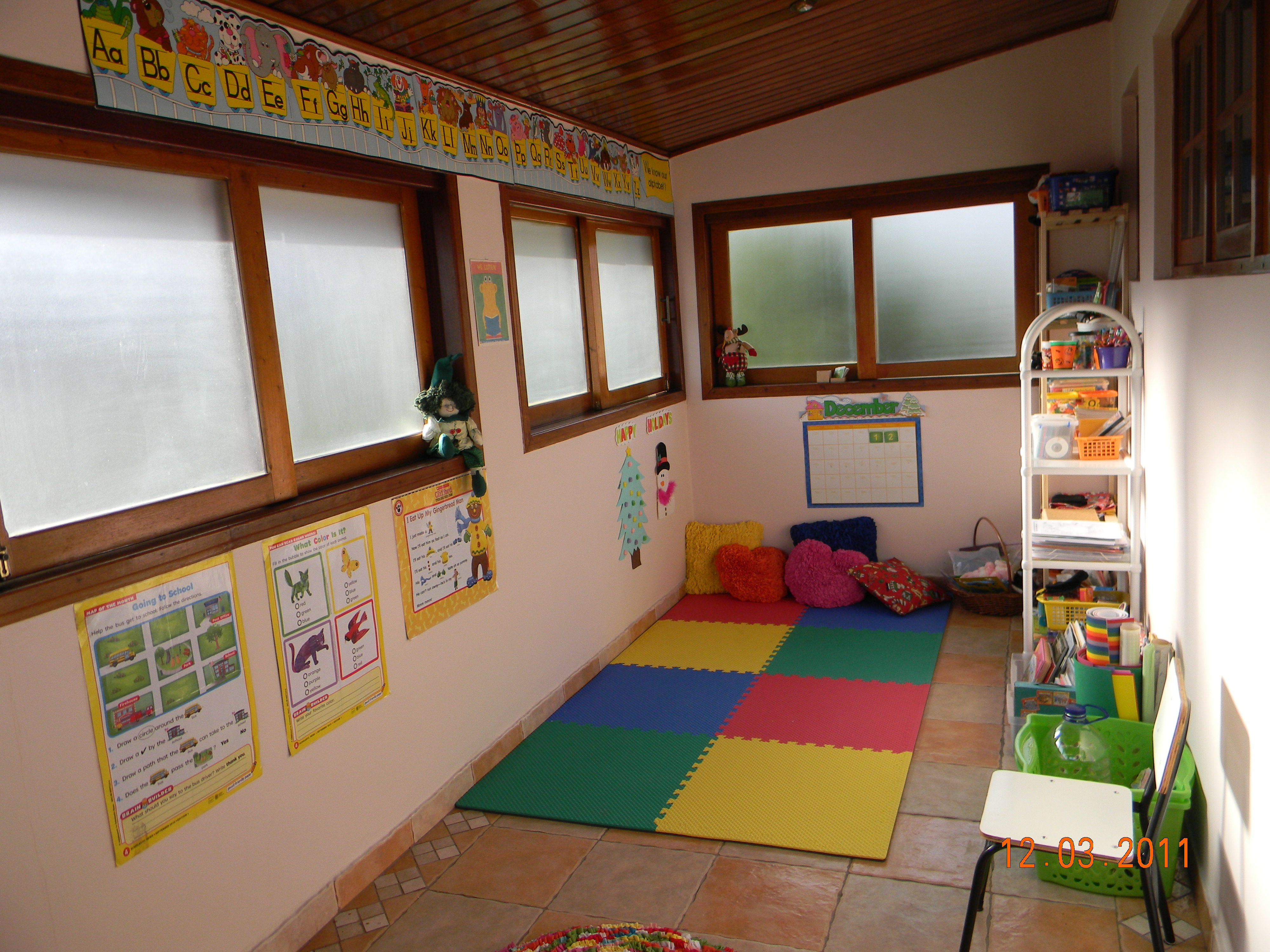
There is now a new classroom in Paula Lyra ELT School. It is special for the kids!

There is a cozy and motivating space for them to enhace their learning in English with several posters, games, softwares, books, and many more. The little ones are going to learn English through exciting and funny activities which promote development in the four skills: Reading, Writing, Listening and Speaking

We also have the adults classroom in another area and it is dedicated to specific classes on ESL like: Bussiness, Travel, Fluency, Grammar, Vocabulary, Structure and so on.

I would like to invite you to come and see the

Circle Time and Reading Corner

Circle Time and Reading Corner

space and share it with your friends.

Thank you.

Beach Time is Coming

Next year, each of my newsletters will bring you and your children rhymes, activities, and resources that feature a different letter of the alphabet.  Many of you introduce the alphabet to your children one letter at a time by sharing activities that reinforce each letter over the course of several weeks. I hope this will support your teaching and give you some new ideas to enhance your alphabet instruction.

BEACH TIME!
Give each child a plastic Zip-lock bag. Help children add a bit of sand to fill the bottoms of their bags. Then add some tiny seashells. Next, squirt a small amount of shaving cream into each bag, followed by a few drops of food coloring. Children can close their bags and gently massage the shaving cream and coloring to create “waves.” Finally let children carefully open their bags to drop a few small plastic fish or other sea animals into the “waves.” Follow up your activity by reading Elisha Cooper’s book, Beach.

BUBBLE-PACK PAINTING
Give each child an 8 by 11-inch sheet of plastic bubble wrap (used for packing). Let children paint the bubbles with tempera paint. Before the paint dries, children can press a piece of 8 1/2 by 11-inch paper onto the bubbles to create fun prints.

BEAUTIFUL BINOCULARS
Give each child two empty toilet paper rolls and help him/her glue the rolls together to form “binoculars.” Punch a hole on the outside end of each roll. Tie a string between the two holes. Let children decorate their binoculars with glitter, sequins, or stickers to make them as beautiful as possible. Show children how to hang the binoculars around their necks as they take a nature walk. Note: Use this activity only with children who are old enough to handle strings responsibly.

BOUNCING BALLOONS
Glue onto a sheet of cardboard five baby-food jar lids with their open sides up; the lids should form a small semi-circle. Fill each lid with a different color of tempera or finger paint. Let each child dip the fingers of one hand into the lids, one finger per lid/color. Then have children press their fingertips onto a sheet of white construction paper, making prints. When the prints have dried, children can draw lines from each print, creating balloons with strings.

A BED FULL OF BUGS
Give children slices of whole wheat bread. (This is the bed.) Help children spread butter, cream cheese, or any other spreadable onto the bread. (This is a blanket.) Finally let children place raisins, cereal bits, or small pieces of fruits or vegetables onto of the blanket. (These are the bugs!) Enjoy this fun snack.

YOUR WORD CORNER
Here are some words you will need.
See them, say them … hey, you can read!!
big
blue
bed
book
Write the words on a chart and review them. Then read aloud each sentence below. Try each word in each sentence. Let children tell you which word fits.
The sky is a _________color.
An elephant is _____________.
I read a good ________________.
I sleep in a ________________.

Explore Letter B

Beautiful B

Look at me
What do you see?
What words can you say
That start with a B?

by Susan LaBella

Activity ideas for November

IT LOOKS LIKE …
Read to children It Looked Like Spilt Milk, by Charles G. Shaw. Then give each child a piece of blue drawing paper. Clip a cotton ball onto the end of a clip-type clothespin. Let children dip the cotton ball into white paint to create clouds pictures on their papers. Encourage children to create clouds that look like something else (pig, dog, and so on). Finally, help children complete this sentence on their papers: My cloud(s) looks like __________________.

CLOUDS AND WIND
Explain that when the wind blows, it can move the clouds. Children will enjoy using straws to see how far they can blow clouds (cotton balls) across a table. If you wish, create a graph for children to show how far some “clouds” were “blown.”

A CLOUDY STORY AND SNACK
Read to children The Cloud Book by Tomie DePaola. Talk about the names of some kinds of clouds and invite children to choose a favorite one. Next, mix white Elmer’s glue with shaving cream and invite children to use it to finger paint their favorite kind of cloud onto a piece of blue paper. (You should get a puffy effect from the mixture.) Finally, serve meringue drop cookies for a snack as you display children’s artwork.

PUPPET CLOUDS
Cut out cloud shapes (about 7 by 7 inches) from sturdy white paper and let children glue cotton balls or marshmallows onto one side. Help children glue a large craft stick onto the back side of each cloud shape. Children can use their cloud puppets as they sing cloud songs or recite cloud rhymes such as our Cloud Parade (found above).

WORD CORNER
Here are some words you will need. See them, say them … hey, you can read! sky  clouds  shapes

Write the words on a chart and review them. Read each sentence aloud. Try each word in each sentence.
Let children tell you which word fits.

1. What ________ do you see in the clouds?. (shapes)
2. Sometimes____________ look like soft cotton. (clouds
3. Today the __________ is bright blue. (sky)

Cloud Parade

See the clouds
As they go by,
In the bright
Blue, sunny sky.

See their shapes,
How do they look?
Like ice cream cones?
Or fishing hooks?

Perhaps you see
A dog or cat,
Or a rabbit
With a hat.

Stop and sit,
Look carefully.
Clouds on parade
For you and me!

October Ideas- Pumpkin


HAPPY PUMPKIN, SAD PUMPKIN
Read to children Pumpkin Faces, by Emma Rose. Staple together for each child four to six half-page sized pieces of paper with an plain orange pumpkin on each one. At the bottom of each page write a word such as SILLY, FUNNY, SAD, SCARED, and so on. Let children draw a pumpkin face to match the adjective shown below. Review each booklet with each child until he/she can read it independently.

WILL IT FLOAT?
Give each child a picture of a pumpkin and a picture of a bowl of water. Let children color both. Discuss with children whether or not they think a pumpkin will float in water. Cut the pumpkin from each picture. Let each child show what he/she thinks by placing the pumpkin on top of the bowl (for float) and at the bottom of the bowl (for sink). Create a simple class graph showing the children’s responses. How many children said “float?” How many said, “sink?” Finally, put a pumpkin in a bucket of water and let children observe the results.

EATING PUMPKIN FACES
Help children spread orange cream cheese (use a few drops of food coloring) onto a rice cake. Use vegetable pieces (carrot rounds, pepper strips, broccoli crowns) or candy bits (licorice string, M&Ms, gumdrops) to create pumpkin faces. Enjoy the snack!

WHAT’S THE SOUND?
Place a few objects into a plastic trick-or-treat pumpkin. Pass the pumpkin around the circle at Circle Time. Invite each child to choose an item, hold it up, and say its beginning sound. Older children may also be able to name the letter that gives the sound. Be sure everyone gets a turn. .

WORD CORNER
Here are some words you will need. See them, say them … hey, you can read! scary pumpkin smile

Write the words on a chart and review them. Read each sentence aloud. Try each word in each sentence.
Let children tell you which word fits.

1. We picked a big, fat _________________(pumpkin)
2. Look, that pumpkin has a big _______________.(smile)
3. Jon’s pumpkin has a ______________face. (scary)

Classroom Management Tips

Classroom Management Tips

Class Lists and Phone Numbers

A great way for the children and their parents to keep in touch with their classmates is to send home the class phone numbers. To make this list take their thumbprints and ask them what animal or bug they would like. You can create ants, caterpillars, butterflies, beavers, and spiders out of their thumbprints, list their phone number and title the page, “Thumb-Buddies”.

Changes of Clothes

I highly recommend having each student bring in a change of clothes that they can leave at school. Even in Pre-K and Kindergarten accidents can happen and you don’t want the child to ever feel embarrassed. An easy way to store your change is to provide each child with a plastic shoe box. You can pick them up for less than a dollar. The children can decorate it and when they are finished, simply write their name on the box and place in their cubbies. If you don’t want to spend that kind of money, a Ziploc baggie works well too!!

Daily Attendance

For a quick way of checking roll which lets the children take responsibility for their environment, try this idea. Cut out a large school bus and have the children finger paint it the yellowish-orangish color. When it’s dry, draw windows on the bus and place a picture of each child on the windows using Velcro. Underneath, have a place for the children to move their picture to form a line or inside a school house. When the kids come to school each day, have them move their picture from the bus to the line/schoolhouse. When they leave to go home, move their pictures back to the school bus!

Unit/Theme Tub Storage

Keep all of you thematic units organized and ready for use with storage tubs. You can pick up these clear tubs at any store for a few dollars. Store everything in it from lesson plans, books, puzzles, manipulatives, story props, etc. It’s a great and easy way to stay organized!

Reproducible Storage

What teacher doesn’t have pages and pages of reproducibles that you want to use year after year but seem to have a hard time keeping organized? Using traditional file folders seems to get messy and unorganized quickly. Try using three ring binders and organizing your papers according to themes. This will make it much easier to find the following year. Simply purchase a large 3-ring binder (I would suggest at least a 2-3 inch binder.) and divide the themes using tabbed dividers.

Pocket Charts

Pocket Charts are a great way to keep things organized in your classroom. Carson Dellosa makes great pocket charts that will help keep you organized. You can use them to keep track of daily activities, substitute information, work for your classroom aide, etc.

Student Papers

Whenever I used to put my student’s papers in their cubbies they always ended up on the floor and half of them didn’t make it home. This nifty solution solved that problem and it became the responsibility of the parents to get their child’s work. Purchase a large Rubbermaid file container and make a hanging file folder for each student in your class. As you have work ready to send home or important notes, simply place it in the child’s file. Be sure to put a note on the front that reads “Please check your child’s folder daily!” The picture below will give you a general idea of what to look for.

Stickers

If you are like me and have a ton of stickers you will need to keep them organized. Use a three ring binder with page protectors to store and organize your stickers! Simply place a sheet of blank cardstock in to each page protector and write the type of sticker on the top of the page (ie. Stars, Christmas, happy faces, community helpers, etc.).


Kindergarten Progress Report Card Statements


Some ideas to help teachers to write on Report Cards and to Parents to understand them.

works and plays well with others


practice self control


completes assignments


resolves problems appropriately


follows directions and procedures


manages time effectively


demonstrates responsibility for materials/belongings


produces quality work


Language Arts


reads grade level text


names upper case letters


names lower case letters


associates letters and sounds


recognizes and creates rhymes


comprehends grade level stories


comprehends grade level informational text


writes semi-phonetically


conveys meaning by writing and drawing


forms upper and lower case letters legibly


communicates ideas, needs and experiences


participates in class discussions


Math


reads and creates patterns


names, describes and creates geometric shapes


measures and compares using non-standard units


reads and understands calendar


contributes to constructing and interpreting graphs


counts to 30 using 1:1 correspondence


counts backward 10-0


reads numbers 0-20


writes numbers legibly 0-10


creates a story problem using objects


sorts and classifies various objects by various attributes


uses modeled strategies to solve problems


Science


names the 5 senses and corresponding body parts


differentiates between living and non-living things


uses positional words


identifies earth materials (air, land, water)


Social Studies


explains concepts of past, present and future


makes and interprets simple maps


identifies similarities & differences of children from


different places


describes rules and their purpose


explains how money is used to satisfy needs and wants