Perguntas mais frequentes

Perguntas Mais Freqüentes


·        1 – O que é ensino bilíngüe?

O projeto tem como meta oferecer uma formação cultural internacional, através de aulas de atualidades e cultura internacional e eventos que incentivem a formação de um cidadão global, apto a conviver com estrangeiros e respeitar as mais diversas culturas. Este programa promove o multiculturalismo, a cidadania, fluência e proficiência na língua inglesa através de ensino com grade curricular acadêmica (Leitura e Escrita, Ciências, Estudo Sociais), além da aquisição de conhecimentos fundamentais ao mundo atual.


·        2 – Qual a idade preferencial para a aquisição de uma língua estrangeira?

Estudos demonstram que, o quanto antes um aluno for exposto a uma segunda língua, mais rápida se dará à aquisição e a fluência, pois, dentre alguns motivos, o cérebro ainda não diferenciará os fonemas da língua mãe criando assim a ausência do sotaque, tão comum em alunos que aprenderam uma segunda língua quando adolescentes ou mesmo já adultos.


·        3 – Como um aluno pode se beneficiar com este programa?

O aprendizado de uma língua adicional está diretamente relacionado à habilidade duradoura de comunicação com muitas pessoas.

Alunos podem derivar outros benefícios com este aprendizado incluindo a melhora no desempenho escolar geral e na habilidade se resolução de situações problemáticas.

Saber uma segunda língua possibilita uma vantagem competitiva na força de trabalho através da abertura de oportunidade adicional de emprego.

Estudos demonstram que alunos de língua estrangeira, estatisticamente pontuam mais alto em testes de uma forma geral.


·        4 – Em quanto tempo um aluno se torna bilíngüe?

A aquisição de uma língua estrangeira está diretamente ligada ao tempo de exposição à nova língua, dedicação e habilidade. Em geral em um ambiente centrado na língua Inglesa diariamente por 4 horas, e, obviamente, respeitando-se as diferenças individuais de cada criança, este aprendizado se dará em um prazo de oito meses a dois anos para uma boa fluência. Como a linguagem, porém, é algo muito dinâmico, está necessita estar sempre sendo utilizada para não ser esquecida ou ficar obsoleta.


·        5 – Como acontece o aprendizado?

Uma das formas de desenvolvermos as áreas de conhecimento é através de projetos. É comum aluno da mesma faixa etária se interessar por assuntos parecidos. Partindo deste interesse escolhem-se tópicos a serem trabalhados com alunos a partir de três anos. Acredita-se que o aprendizado acontece de uma forma mais significativa quando há motivação e participação integral do grupo. Esta maneira de trabalhar propicia inúmeras oportunidades de pesquisa, interação e troca de experiências com os alunos e também com os pais, que sempre participam mandando materiais, pesquisando em casa ou mesmo vindo à escola para compartilhar seus conhecimentos.


·        6 – Há confusão com a língua materna?

Durante o processo inicial de aquisição da língua, o aluno fará alguma mistura com palavras de ambas as línguas, porém logo em seguida, os mecanismos do cérebro identificarão o uso de cada língua individualmente e esta mistura não acontecerá mais.


  • 7 – Qual é a filosofia pedagógica do programa?

Trabalha-se dentro da concepção Construtivista de ensino-aprendizagem, que incentiva o aluno a construir seu aprendizado, através de situações desafiadoras e estimulantes para que elas se conscientizem de suas ações. A preocupação é proporcionar um ambiente em que o aluno exerça suas potencialidades, dentro de limites éticos, tornando-se crítico e atuante.


·        8 – Como é feita a seleção dos profissionais deste programa?

Os profissionais envolvidos neste programa possuem fluência na língua Inglesa, comprovada através de certificados de proficiência internacionais.


·        9 – Existem avaliações ou provas regulares?

O processo de avaliação é sistemático e contínuo, não há datas de avaliações previamente agendadas, estas acontecem gradativamente.


·        10 – Como se desenvolvem as atividades no dia a dia?

Na sala de aula desenvolvem-se uma série de atividades, entre elas: Histórias e Roda de Conversa (um momento diário onde as crianças e professor trocam experiências, aprendem sobre assuntos novos, cantam e trabalham com o corpo) Dramatização, Colagem e Desenho, Culinária, Horta. Os alunos participam também de atividades de livre escolha, que são trabalhadas a partir de uma série de materiais disponíveis na classe. Os vídeos e softwares são usados como material de apoio para nossos projetos.


·        11 – A criança não fica estressada?

A criança possui muita energia que, se não for canalizada apropriadamente, pode ser perdida ou desperdiçada. Sabendo-se balancear momentos de atividades lúdicas durante o processo, não haverá desgaste físico ou mental pelo aluno e sim alegria em participar nas atividades.


·        12 – Haverá momentos de descanso ou lazer?

O programa consiste na mescla de atividades que o tornam alegre, leve, dinâmico e eficaz. Há momentos onde os alunos descansam, brincam se alimentam ou praticam esportes.


·        13 – Existe tarefa de casa?

Não há tarefas de casa para as crianças, pois haveria uma sobrecarga de funções para elas, mas há para os alunos maiores.


·        14 – Qual é o material didático utilizado e qual o custo?

O material utilizado é individualizado para cada necessidade específica dos alunos; sejam eles livros, CDS, vídeos, softwares, etc. Todo o material é importado por editoras Americanas e vendido a preço de Reais.


Opções de cursos

Opções de cursos

 Crianças, Adolescentes, Adultos

  Para quem deseja aprender Inglês, falar c/fluência, melhorar as notas escolares, viajar, navegar na Net ou estudar no exterior:


   ·       Conversação (qualquer idade)         

    ·       Travel English (Inglês p/viagem)

    ·       Business English (Inglês p/negócios)  

    ·       Acompanhamento Escolar (qualquer série letiva)


Aulas particulares em domicílio.

Material didático Americano.

Técnicas dinâmicas com vídeo, áudio e informática.

Maiores informações com Paula Lyra – paulalyra@hotmail.com


AGE 2 DEVELOPMENTAL PROFILE

Hand-Eye Coordination

Hand-eye coordination, also known as fine motor skills, has to do with how a child uses the small muscles in her hands and fingers. You will notice that your 2-year-old child has the coordination now to manipulate small objects. She is probably able to use her wrist and hand to turn a doorknob and hold a cup with one hand. One of her major accomplishments this year is drawing. Though she may hold a crayon clumsily, your 2-year-old has enough control to make sweeping vertical and circular strokes. These activities will encourage hand-eye coordination in your 2-year-old child:

Drawing with crayons
Finger painting
Building towers of up to six blocks, then knocking them down
Assembling simple jigsaw puzzles (three to four pieces)
Turning the pages of books while you read
Putting round and square pegs into matching holes
Pounding, squeezing, rolling, and playing with play dough or clay

back to top

Language

Language skills–which include listening, comprehension, speech, reading, and writing–enable your child to communicate, while laying the foundation for all of your child’s future learning. Keep in mind that language skills vary tremendously among preschoolers, more so than any other developmental area. Some children are naturally more talkative than others, but it doesn’t mean they are necessarily more advanced. At age 2, a child understands most of what you say. During this year, his vocabulary may reach 500 words. He may be able to use two- to three-word sentences, and will start to use plural and past-tense words. Many 2-year-olds can follow a story’s plot and will understand and remember ideas they hear in books. These activities will encourage language skills in your 2-year-old child:

Listening and talking
Listening to books that encourage interaction by touching, pointing, naming objects, or repeating certain phrases
Playing copy-cat games in which the adult copies Baby’s sound and vice versa
Chanting nursery rhymes
Playing word and finger games like “This Little Piggy” and “Open, Shut Them”
Using adjectives to describe objects (e.g., a towel might be big, blue, and fluffy)

back to top

Physical

Children with well-developed physical coordination feel better about themselves and their bodies, making them better prepared to learn and take on new challenges. Running, jumping, hopping, skipping, and climbing are examples of activities that develop a child’s physical, or large-muscle, skills (also known as gross motor skills). At age 2, you may find that your child has endless energy–she runs, climbs, jumps, kicks, and much more. Over the course of the year, she will figure out how to throw and kick a ball, jump with two feet together, and stand on tiptoes. These activities encourage physical skills in your 2-year-old child:

Climbing and sliding on playground equipment
Running, jumping, and climbing outside
Acting out songs with simple movements
Digging in sandbox
Going for a walk
Playing chase games and hide-and-seek
Playing kicking and throwing games
Playing copycat games with tiptoeing, walking backwards, jumping, and hopping
Going through a simple obstacle course

back to top

Social & Emotional

Emotional skills have to do with awareness of and understanding one’s feelings. Social skills include the ability to communicate and have relationships with others. Children with strong emotional and social skills have a positive self-image, are confident, sociable, and independent. At age 2, your child is developing a stronger sense of himself and may be quite self-centered. He’s aware of his gender, can help get himself dressed and undressed, and may even begin using the toilet. He is becoming aware of his own feelings and those of others, and may talk about his feelings. He makes it clear what he wants, and uses the word “no” frequently. Two-year-olds are not able to share, but they do enjoy playing near other children. Your child may enjoy pretend-play games that involve imitating those around him. These activities will help develop social and emotional skills in your 2-year-old child:

Playing pretend-play games, including dress-up, super-hero, telephone, and dolls
Helping with simple chores such as picking up toys and putting clothes away
Choosing a favorite picture from a book or the computer and telling a story about it
Listening to simple picture books with repetition read aloud
Playing simple computer games, such as rolling over an object and predicting how it will change
Singing, clapping, playing, and dancing with other children

back to top

Mathematical

Math skills include more than identifying numbers and counting, they also include an understanding of mathematical language (e.g., more than, less than, circle, square) and concepts (e.g., shapes, patterns, comparisons). Thinking and reasoning are also important math skills. At age 2, your child is learning about quantity through her everyday activities and play. For example, she probably understands the concept of more and less. If she has one cookie and her brother has two, she recognizes that her brother has more cookies and that she has less. During this year, your child may learn to match shapes, colors, and identical pictures of objects, as well as line things up from smallest to biggest. These activities encourage the development of mathematical skills in your 2-year-old child:

Playing with stacking rings and other stacking toys
Fitting shapes into a shape sorter
Playing games using spatial concepts, such as finding objects under the table, on the chair, beside the bed, etc.
Sorting objects based on attributes such as color, shape, size, etc.
Listening to number songs and nursery rhymes (“Five Little Monkeys Jumping on the Bed”; "One, Two Tie My Shoe”; “Ten in the Bed”)
Counting buttons, snaps, and more
Counting objects in your everyday life, such as cookies, books, crayons, blocks, etc.
Listening to stories read aloud and then answering questions about the stories. For example, In The Three Billy Goats Gruff, which goat is biggest? Or, how many cats does the boy see in Eric Carle’s Have You Seen My Cat?
Discussing what happened during the day to start to recognize sequence
Assembling jigsaw puzzles with three to four pieces

back to top

Creative Arts

Creativity is the ability to use your imagination to create new and original things. Children express creativity through art, music, imaginary play, cooking, and more. One way to encourage creativity is through art activities, including drawing, painting, cutting with scissors, gluing, molding clay, and using other craft materials. At age 2, your toddler has entered the “scribbling stage.” He is amazed at his ability to make marks. Though his pictures may not look like anything recognizable, he is discovering the process of creating something, and practicing important motor skills. These activities encourage artistic development in your 2-year-old child:

Scribbling with crayons, chalk, or markers
Painting with a large paintbrush
Finger painting
Playing with play dough and clay
Talking about pictures in books and magazines

back to top

Pretend Play

Pretend play is a form of creativity that allows children to express ideas and feelings, as well as think and solve problems through fantastical situations. Pretend play includes make-believe games, daydreaming, imaginary friends, and fantasy books. At age 2, your child may engage in pretend play with dolls and stuffed animals. Imitation plays a big role in her make-believe play. For example, as she feeds her baby doll and puts her to bed, she may use the same words and tone of voice as you. Pretend play is important because it gives your child an opportunity to see the world from someone else’s point of view. Pretend play activities that 2-year-old children engage in include:

Using housekeeping toys or household materials to make a pretend meal or to do a pretend cleanup
Acting out different scenarios with stuffed animals or dolls
Having conversations on a toy telephone
Using props for pretend play, such as a fire hat, toy horse, tutu, box, etc.
Acting out different animals
Listening to stories read aloud about people, places, and things that inspire imagination, such as folktales and fairy tales

back to top

Music

Early exposure to music helps enhance reading, math, and creative skills later in a child’s life. When children learn to read, they listen to the rhythmic pattern of words, just as they listen to the rhythm of a drum. When they identify the patterns in songs and in the sounds that instruments make, they are learning a basic math skill. Music also encourages creative movement, which in turn expands your child’s imagination. By age 2, your child will likely learn the words to songs, like “Twinkle, Twinkle Little Star” and “Baa Baa Black Sheep.” Singing songs together encourages your child’s developing verbal skills. These activities also encourage musical development in your 2-year-old child:

Singing simple songs
Singing and acting out songs with simple movements, such as jumping, hopping, and standing on one foot
Playing simple instruments, including drums and shakers
Dancing and moving to music
Listening to a wide variety of music on a CD or on the radio
Listening to songs or nursery rhymes

back to top

Thinking/Problem Solving

The ability to think and problem solve is what helps children make sense of their world. When children think through and solve problems, they are developing intelligence. Thinking skills involve language, mental imagery, reasoning, and memory development. At age 2, your child is learning a lot about the world through her explorations, as well as through imitation and observation. She can probably group objects that are the same (all red things in one group and blue in another) and stack things in size order, such as stacking rings. She may respond to simple directions and tell you what she is doing using new words she is learning. She enjoys choosing books to look at by herself and naming pictures she sees. In her play, she may use objects to represent other objects (e.g., pretending a block is a horse and another block is a farmer). These activities encourage the development of thinking skills in your 2-year-old child:

Observing and imitating others
Sorting objects by size, shape, color, or use
Memorizing simple nursery rhymes by repeating them with an adult
Listening to storybooks read aloud, especially predictable ones (e.g., Have You Seen My Cat? by Eric Carle)
Creating pictures and talking about them
Counting objects with help from an adult
Playing with stacking toys
Constructing simple puzzles with knobs
Playing picture matching games
Playing simple counting games

back to top

Written by Jackie Glassman, M.S. Ed., NickJr.com Educational Consultant

5 razões para aprender uma 2ª língua na infância

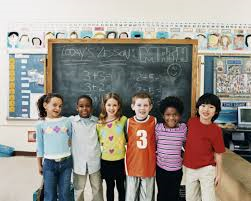
kids at school

1 . Muitos experts em educação concordam que quanto mais cedo a criança for introduzida à 2ª língua, maior é a chance dela se tornar verdadeiramente proficiente .

         2  . O aprendizado de uma língua adicional está diretamente relacionado à habilidade   duradoura de comunicação com muitas pessoas.

        3 . Crianças podem derivar outros benefícios com este aprendizado incluindo a melhora no desempenho escolar geral e na habilidade se resolução de situações problemáticas.


4 . Saber uma segunda língua possibilita uma vantagem competitiva na força de trabalho através da abertura de oportunidade adicional de emprego.Estudos demonstram que alunos de língua estrangeira, estatisticamente pontuam mais alto em testes de uma forma geral.

5 . Estudos confirmam que, estatisticamente alunos de uma língua estrangeira pontuam mais alto em testes de uma forma geral.


Homeschool tutoring

  • Global Program for Early Childhood Education

For children who turn 3 by August, this program integrates the American and Brazilian curriculum, with hands on activities, helping them to develop socially, emotionally, and physically. All the academic material is imported from Scott Foresman, Scholastic and Schoolzone in the USA and is the same used by the American schools in Rio and São Paulo.The annual certificate of accomplishment and the quarterly report card come from the Brazilian School, but together with the official transcript are the only necessary documents to enroll in any school abroad.


  • Global Program for Grades 1 to 8

This program is for children in 1st to 8th grades to develop academic abilities, problem solving skills, self-esteem, a sense of competence, and positive feelings toward learning. All the academic material is imported from Scott Foresman, Scholastic and Schoolzone in the USA and they are the same used by the American schools in Rio and São Paulo. It includes Reading, Writing, Science and Social Studies (Math grades come from the Brazilian curriculum). The certificate of accomplishment comes from the Brazilian School, but together with the official transcript are the necessary documents to enroll in any school abroad


  • Global Program for High School

This program is for 9th to 12th grades students who have adequate proficiency in English and the necessary pre-requisites to enroll in an American High School to work with specific methodology and receive a fully accredited American certificate of completion valid in any international school. For these specific grade levels, the student will have to purchase the material (on line) directly with the school in America www.keystonehighschool.com


1 – Please note that it is mandatory to have a Brazilian school as a background to valid the official transcript to each student from grade 1 until High school.


2 – The students become bilingual after a period of 8 months to 2 years of regular classes depending on their individual abilities.


3 – Mathematics is not included in the program, once it is a universal language there is no need to be seen in both curriculums, just in Brazilian program will do.


4 – Normally there are 4 hour classes from Monday to Thursday; no classes on Fridays, so the students can have an extra time to dedicate to another activity.


5 – The program follows the American School Year Calendar when classes start in August and end in June, but the Brazilian Summer vacation is during the same time as in Brazil.

American Curriculum Program

American Curriculum Program  


It is designated to American or non-American students whose parents are working abroad. The program consists in joining a Brazilian school part time while attending an American curriculum at the other part of the day.

This program can issue certificates of accomplishment from Kindergarten to High School, and serves not only foreign students but Brazilian students as well. Your child, at the end of his studies, will earn both Brazilian certificates of completion as well as American High School diploma. In addition, he will be able to decide whether to continue his studies in a university in Brazil or in any other part of the world. 


The program promotes multiculturalism, citizenship, fluency, and proficiency in the English language through content – based instruction (course curriculum) plus acquisition of a fundamental understanding of the real world.