Dear Students, Parents and Friends,
I would like to wish you all an excelent time together with your friends and family.
Lots of joy, peace, light and harmony.
Have a wonderful 2014! And thank you for your support.
Paula Lyra

Dear Students, Parents and Friends,
I would like to wish you all an excelent time together with your friends and family.
Lots of joy, peace, light and harmony.
Have a wonderful 2014! And thank you for your support.
Paula Lyra
This is a fantastic article developed by Kindergarten Nana, which I follow.
It has great ideas, games and Math exercises to do with the children using bears as counters.
With a set of colorful plastic little bears, you can do many interesting activities to develop the kids skills in different learning areas.
So, enjoy it!
Here is a peek at the games.

The children I plan to give these to range from 3 to 5 years old. I tried to include a range of things they would think are fun and also help them gain important math skills like sorting, counting, numeral recognition, one to one correspondence, concept of number, simple addition and subtraction, measuring, counting backward, skip counting and concrete graphing. Some games will be just right to play now, others will be good as they get a little older.
I am happy to share these games and activities, most will probably be familiar to any of you early childhood teachers.
Sorting Bears – basically I suggested that parents encourage their child to play with the teddy bears and practice sorting by color. In my class I realized that most children could easily do the task, but sometimes they were not familiar with the word “sort.” I also suggested using comparative language like most, least, and equal or the same.
Counting Bears

I found this game board online and thought it would be great to practice counting the dots, and putting the correct number of bears on each gameboard bear.
Patterns
I suggested starting out with a simple AB pattern. I always introduced an AB pattern by naming the colors: i.e. red, blue, red, blue. But I wanted the children to know that you could use any terms to “read” the pattern, including alphabet letters. After the child shows that he or she understands what a pattern is I suggested moving on to more complicated patterns.
One of the most popular games in my Kindergarten room was BEARS IN CHAIRS. Over the years I had several parents come in to ask where they could buy this game! Basically the children make a pattern with the colored tiles and keep it going to form a shape like a game board. Then they choose one bear, roll a die and move their bear from one chair (tile) to the next as they count to the number they rolled on the die. This game is great for 2 – 4 players, but one child can even play it alone. As children gain confidence with patterns they can make their tile game board more complicated. You could even use 2 dice that they would add together to make the game more challenging.
Jumping on the Bed

For this game I suggested asking the child to count out 10 bear counters and place them on the bed game board. Then you sing the song “Ten Bears in a Bed” and remove one bear at a time.
My Turn, Your Turn

This was another favorite game in my classroom. Two children play using only one game board and sharing one teddy bear counter. They begin by placing the bear on the star in the middle of the board. Then they roll a die, one child moves the bear toward the right side of the board, the other child moves the same bear toward the left side of the board. Play continues until the bear goes off the board in one direction. I made this strip by gluing together 2 of these pattern strips. You could make it as long as you like, but be sure to have an uneven number of squares and put a sticker or mark in the middle.

Bears in Caves
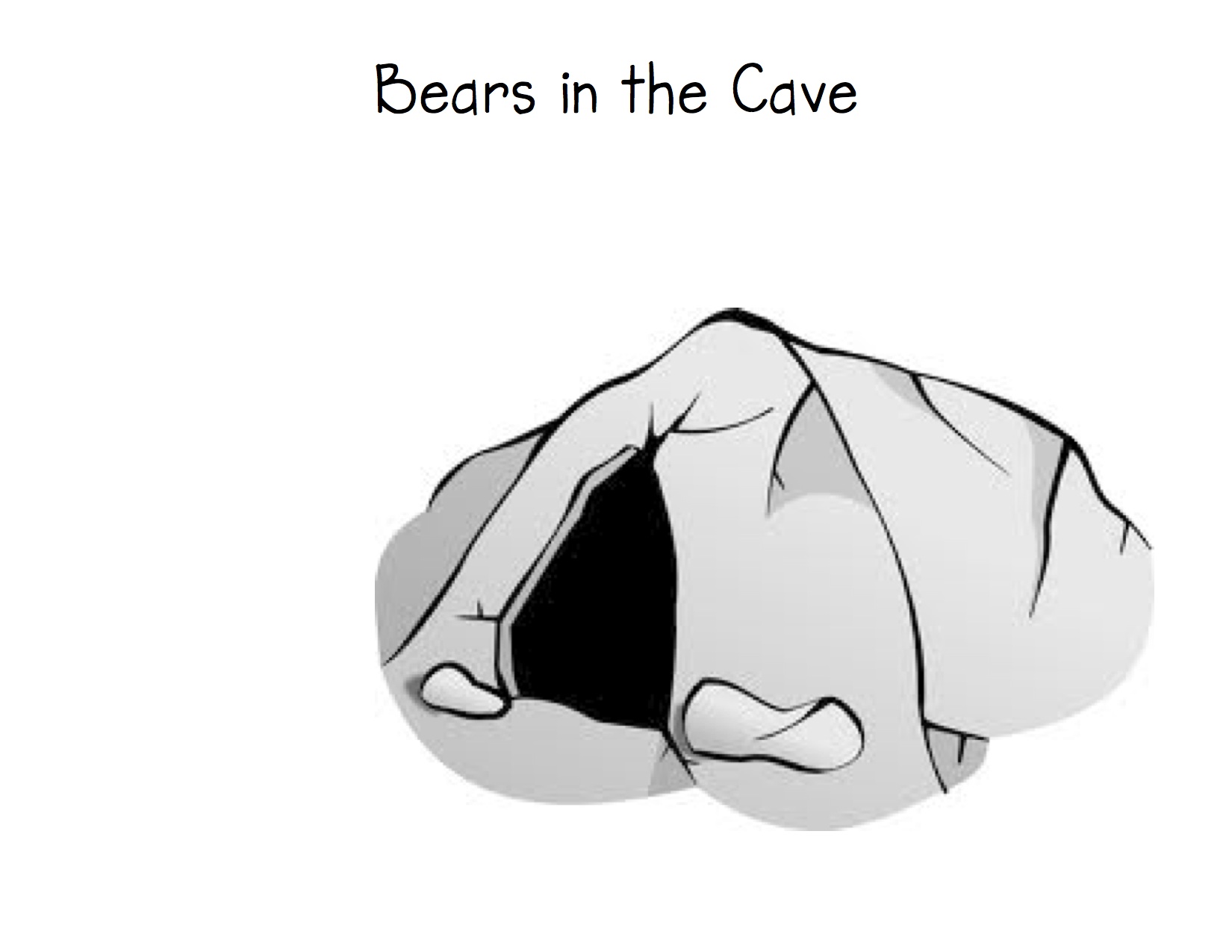
I loved telling math story problems with my Kindergartners. It is so much fun when each child has a set of materials to manipulate as they listen to the story. In my directions I suggested giving each child a small amount of bears and a gameboard. Then I would tell a story and the children would move their bears in and out of the cave, practicing very simple addition and subtraction problems. Check out the directions I am including if you need a suggestion of a story to tell.
In my class we often told stories like this using manipulatives we could eat like goldfish crackers, teddy graham cookies, Froot Loops, etc. At Halloween I could sometimes find Count Chockula cereal with ghosts and goblins that we placed in a simple haunted house. The kids really love these games!
Measuring Bears
It can be fun for the children to practice measuring by lining up a row of bears to match the length of simple things around the house like a pencil, book or favorite toy.
Bear Counting Game
Using the same bear game board you can play another game. The children take turns rolling a die. They place a bear counter on the gameboard bear that matches the number they roll. If they roll a 6, they place a counter on the bear with 6 dots. You can allow them to keep putting counters on until all the numbers have been rolled, or you can say they can only put one counter on each bear – so if they roll a number that matches a bear that already has a counter they lose a turn. Not all young children are ready to play a game where they lose a turn.
Bear and Crocodile
I was looking online for a simple number line that the children could use to pracitce naming numerals, counting forward and backward, and simple skip counting. I found this cute crocodile number line.


I also included the largest hundreds chart I could make, to give the children a chance to move bears along the numbers, and notice patterns in counting.

Graphing Bears
I also suggested scooping out bears and sorting them into a graph configuration. It is a good way to compare and practice all those important words like most, least, same.
In my Bear Game Gift Kit I also plan to include some tongs – the kids love using them to pick up things like the bears, and it is great fine motor practice. I got these big ones at a dollar store. The small ones are from Lakeshore.

I ordered a set of these big foam dice from Oriental Trading – they were good and cheap!

In school I always had plastic tiles, but I found the foam ones are a lot less expensive and should work great with kids at home. I ordered mine along with the Teddy Bear Counters from Learning Resources.

Here are the game directions that I made into a booklet to include with these math materials. I hope the kids love them! Maybe you are still thinking of a different kind of gift for a special child you know too!


By: Math, Nana Stuff | URL: http://wp.me/p18Ars-17o
It is with great pride and pleasure that I announce the end of my final work for Pedagogy course.
This was accepted, and on 14/12, we will face the examination board and answer questions.
During these three years we have learned a lot and develop a greater conception of Democratic and Participative Management, Educational Practices, Philosophers, Assessment, Inclusion and everything else that involves the world of Education.
Soon, I’ll post the work in full.
Thank you
“If you want to feel rich, just count the things you have that money can’t buy.” ~Proverb
I grew up on a farm with a father that was a hired hand and a mother that took care of the elderly.
I had six siblings and was the fifth in line. We had little money, but I always felt loved, not deprived. In many ways I was a rich person.
When I was four years old I lived in a two-room house, with two bedrooms built on within the year.
We had no real kitchen (it was just a room), no running water or indoor bathroom, no TV or telephone. (No, I did not grow up with the dinosaurs). We did have electric lights.
What did I learn by growing up in these conditions?
There were four of us girls and we all slept in the same bedroom—two in one bed and two in another (both twin beds). You name it, and we shared.
We each had one pair of shoes, very few clothes, and one toy for Christmas, so we took good care of what little we had and did not take it for granted. For birthdays, there was a cake baked and our present was getting to lick the bowl for the cake and icing.
With very few toys we had to make your own. We walked on tall tomato cans with strips of rubber attached to hold them on our feet. We played with old tires and five gallon barrels by rolling them on their side. And stilts, we made ourselves.
Food was limited, but balanced. We each got our share because my mother cut it up equally among us. (I never knew you could scoop ice cream out of the carton until I grew up, because my mother always cut a half gallon of ice cream into 10 equal pieces and that 10th piece was cut into 10 more pieces. (My father got the extra piece.)
I have never had a problem with weight, and this is because of the good eating habits and appreciation for the food we had.
We may not have had much, but we had each other. We had each other to talk to, play with, and laugh with. (Sometimes to fight with.)
When you live in a small space you have to work as a team. You learn good working skills and what hard work is.
We earned money by working in the fields for the farmers, helping irrigate when it came to watering the crops, and keeping the four rooms of our house picked up, so there was room to walk.
As I look back on my childhood and the values it fostered, I realize I was a very lucky child. Yes, things are much better and easier now, but I know what to appreciate and what’s important to be happy.
It’s the people you share your life with—the memories you build and laughter you share.
Things are not what make you happy. It’s living in the moment and living everyday with love in your heart.
I only buy what I need, which controls the clutter. I have food, shelter, and water, air to breathe, and people to love that love me.
I appreciate what I already have to add comfort to my life. I take good care of my furniture, appliances, and the little things that make life more comfortable and easier.
We have the choice to change our life if we want. With hard work and a dream anything is possible. Obstacles can always be overcome. We learn from them and keep moving forward.
True happiness does not come with a price tag. Happiness is something we choose with our own attitude and gratitude.
I look at people today and all the material things they acquire, thinking they are going to find happiness, but happiness cannot be bought.
It’s in our attitude. The love in our heart. The people we know and love. The memories life brings.
When death is knocking at our door, what will be important is the way we loved and the memories we leave for the people left behind. They’re not going to remember the house you lived in or the beautiful things you may have had.
People will remember the laughter they shared with you, the long talks, lessons they may have learned from you, and most important, the love that was shared.
In the end it is who we were, how we touched other’s lives, and the love we gave and received that is going to count and be remembered.
Are you building those kinds of memories? Are people going to smile and laugh when they think of how you touched their life someday?
I love this book and the kids, too!
After reading it together with the kids, do some activities related to the story.
Watch the story on video: http://www.youtube.com/watch?v=_4HI7q38VmQ
Make a butterfly: http://www.youtube.com/watch?v=bjI2xusPIBc
Spring is almost coming in Brazil, so Have fun this Spring!

Activities to color and cut.

Discover the incredible life of Beatrix Potter; artist, storyteller, countrywoman and world famous author of The Tale of Peter Rabbit.
A little about the characters

Published in 1902, The Tale of Peter Rabbit is Beatrix Potter’s first book and was expanded from an illustrated letter she had sent to a young friend who was ill.

In the tale, Jemima wants to hatch her own eggs so tries to find a secret nesting place away from the farm, but runs into the foxy-whiskered gentleman who ‘helps’ her to find a suitable place.
Published in 1908, The Tale of Jemima Puddle-Duck features Beatrix Potter’s Hill Top farm, and her surroundings.

Tom Kitten also appears in The Tale of Samuel Whiskers when rats capture him and they try to turn him into a roly-poly pudding to eat for dinner!

As a child Beatrix had known a charming old Scottish country washerwoman called Kitty MacDonald.
Mrs Tiggy-winkle is a similar small, round twinkly-eyed washerwoman; but has prickles under her cap and does the laundry for some surprising customers, including Peter Rabbit and Squirrel Nutkin!

The Tale of Benjamin Bunny continues the story of The Tale of Peter Rabbit as Peter and Benjamin venture into Mr. McGregor’s garden to retrieve Peter’s jacket and shoes.
However, the two young cousins end up trapped in a basket that Mr. McGregor’s cat decides to take a nap on. They are eventually rescued by Benjamin’s father.

Mr. Jeremy Fisher has a day full of the worst fisherman’s mishaps when he sets out to catch minnows for his dinner.
Not only does he fail to catch any minnows, but a trout tries to eat him and only spits him out because he doesn’t like the taste of his macintosh!

The Tale of Two Bad Mice follows Hunca Munca and her husband Tom Thumb as they run riot through a beautiful doll’s house.
They try to eat the food and are disappointed to find it glued to the plates and the tins in the larder full of beads.
They also steal furniture and clothes but realise the error of their ways and pay for the damage.

Squirrel Nutkin sails across Derwentwater with his cousins to gather nuts on Owl Island. Famous for his impertinent riddles, he soon finds himself in serious trouble with Old Brown the owl.
Nutkin is lucky to get away with only half his tail missing!
Published in 1903, The Tale of Squirrel Nutkin also originates as a picture letter.


The sensible little pig is sent to market but gets lost in the woods on the way.
He finds himself in Mr. Piperson’s farm where he discovers the little black pig, Pig-wig.

For more info or for games and activities go to http://www.peterrabbit.com/uk/fun_and_games
Se vc quer aprender mais sobre: culinária, matemática, literatura infantil, músicas, vídeos, games…. e tudo isso em Inglês, não deixe de visitar a minha página e curtir. Não se esqueça de deixar o seu comentário tbm.
Obrigada
 https://www.facebook.com/paulalyraeltschool
Olá, Pessoal.
Não deixem de visitar minha página no Facebook para ler artigos, ouvir músicas, assistir a vídeos e aprender várias coisas em Inglês.
Tem material interessante para crianças e adultos, receitas, conselhos e muito mais.
Vale a pena conferir e manter o Inglês em dia!
Obrigada and see you there!
https://www.facebook.com/paulalyraeltschool
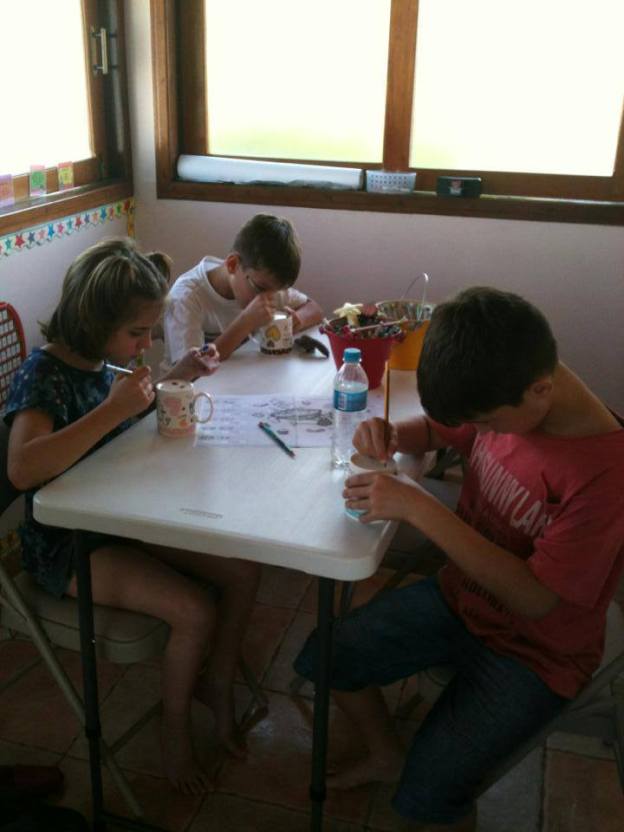
Kids are busy preparing their dads present for this Sunday
Happy Father´s day to all!
check more at Paula Lyra ELT School in Facebook


 Paula Lyra ELT School